
Short-winged conehead
Conocephalus dorsalis
Description
How to identify
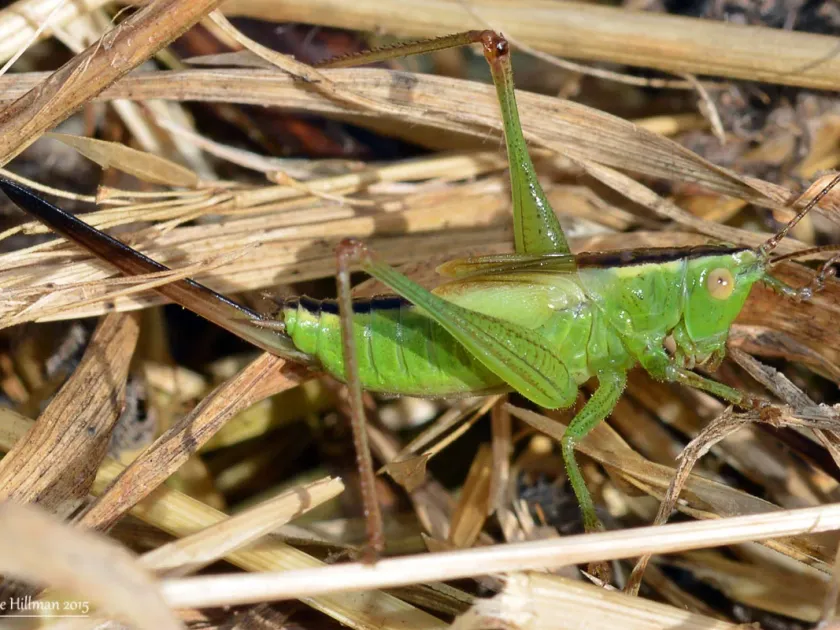
The short-winged conehead (Conocephalus dorsalis) is a small species of katydid belonging to the Tettigoniidae family. Adults typically measure between 13–17 mm and exhibit a slender, green or brownish body for camouflage.
A primary morphological feature of this species is its long wings, which extend well beyond the tip of the abdomen. Females possess a long, straight ovipositor used for laying eggs inside plant stems.
The head features long, thread-like antennae that significantly exceed the length of the body. Their eyes are well-developed, providing excellent vision for navigation and detecting potential predators.
Nymphs resemble smaller versions of the adults, though they lack fully developed wings. They progress through several growth stages, molting their exoskeleton each time to increase in size.
They prefer moist habitats, including wetlands, marshes, and field margins. Their ability to thrive in dense vegetation makes them common in areas adjacent to agricultural lands.
What it damages
While primarily a consumer of wild grasses, the short-winged conehead acts as a facultative pest that can cause damage to cereal crops when their preferred food sources are scarce.
Both nymphs and adults feed on the foliage of wheat, rye, barley, and oats. They chew ragged holes or notches in the leaf blades, which reduces the plant's overall photosynthetic capacity.
Seedlings are particularly vulnerable to attack. Significant feeding damage during the early vegetative stages can lead to thin stands, delayed growth, and, in severe cases, plant loss.
During the reproductive stages, these insects may feed on the generative parts of cereals, including the glumes and developing grains, directly impacting the final yield and quality of the harvest.
Mechanical damage caused by their feeding often serves as an entry point for secondary fungal or bacterial infections, further compromising the health of the cereal crop.
When it appears
The species completes one life cycle per year. They overwinter as eggs, which are carefully deposited into the stems of grasses or reeds by the females during the late summer and autumn.
Nymphs typically emerge in late spring or early June. This timing often aligns with the rapid vegetative growth phase of many cereal crops, providing an immediate food source.
Throughout the summer, the nymphs undergo multiple molts, gradually developing wings and reaching sexual maturity by mid-summer as they transition into the adult stage.
Adults are most active from late summer through early autumn. This period represents the time of highest pest pressure, as adults require substantial nutrition for reproduction.
By late September, the reproductive cycle concludes with egg-laying. These eggs enter a period of diapause, remaining dormant in the plant debris or soil until the following spring.
Signs of infestation
The most visible indicator of an infestation is the presence of irregular notches or ragged edges on the leaves of cereal plants. This damage is often distinct from the smooth cuts made by other pests.
Observing the field in the early morning or evening hours usually reveals jumping insects within the foliage. A high density of movement upon disturbing the canopy suggests a large population.
The presence of frass (insect excrement) on the leaves near the sites of injury confirms active feeding. This can help agronomists pinpoint specific areas of damage within a field.
In cases of reproductive tissue damage, one may notice empty or partially consumed grains within the head, which can indicate that the population density has reached an economic threshold.
The evening song of the males is a clear acoustic signal of their presence. Monitoring this sound can help determine the density and distribution of the coneheads across the field.
Control measures
Cultural control is the most effective approach. Implementing deep plowing of fields in the autumn helps bury and destroy the overwintering eggs located in plant stems and debris.
Managing weeds and maintaining clean field margins significantly reduces the habitats available for breeding, thereby limiting the population growth in the surrounding areas.
Chemical intervention should be reserved for scenarios where population density exceeds the economic injury level. Standard contact or systemic insecticides approved for cereal crops can be used.
Encouraging natural biological control agents, such as insectivorous birds and small mammals, can help suppress population spikes without the need for intensive chemical use.
Regular field scouting using insect nets during the peak activity season is essential for early detection and for making informed decisions regarding potential crop protection measures.
Taxonomy
- Latin name
- Conocephalus dorsalis
- Order
- Orthoptera (locusts)
- Family
- Conocephalidae
- EPPO code
- CONCDO
Discussion
No discussions yet — be the first.