
Japanese meadow katydid
Conocephalus japonicus
Description
How to identify
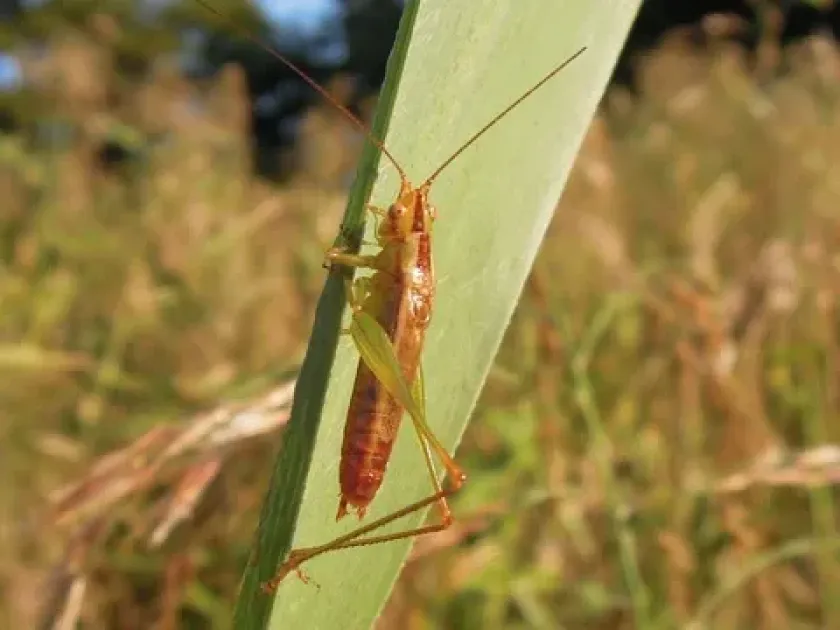
The Japanese meadow katydid (Conocephalus japonicus) is a species of the Tettigoniidae family, characterized by its elongated, cone-shaped head.
Adult insects generally exhibit green or brownish camouflage coloring, which allows them to blend in perfectly with cereal crops and dense grasses.
They possess well-developed wings in the adult stage, enabling them to migrate across fields, and strong hind legs adapted for jumping.
Nymphs resemble smaller, wingless versions of adults and undergo several instars before reaching maturity during the growing season.
Unlike many other orthopterans, this species shows a clear preference for humid environments, thriving in rice paddies and wetlands.
What it damages
This pest primarily attacks various cereal crops, with rice being its most significant and economically important host plant.
Both nymphs and adults cause damage by feeding on the tender tissues of leaves, leading to aesthetic and physiological stress to the plants.
During the heading stage, the katydid feeds on developing panicles, which can directly result in reduced grain fill and deformed heads.
The pest also utilizes wild grasses as secondary hosts, which helps maintain population levels even when cultivated fields are not in the susceptible stage.
High infestation levels can lead to significant yield losses, especially in regions where rice paddies are adjacent to natural marshland habitats.
When it appears
The life cycle of the Japanese meadow katydid begins in late spring, as rising temperatures trigger the hatching of overwintering eggs.
Population density typically peaks during the mid-summer months, corresponding with the maturation of cereal crops in many regions.
Activity remains high throughout the warm season and persists until cooler autumn temperatures signal the end of the breeding cycle.
The species overwinters in the egg stage, with eggs deposited securely inside plant stems or organic debris for protection.
Weather patterns, particularly rainfall and humidity levels, significantly influence the survival rate of the nymphs and the overall success of the generations.
Signs of infestation
Key indicators of infestation include irregular, jagged leaf edges caused by the insect's feeding behavior on the foliage.
A distinctive, high-pitched stridulation can be heard during the dawn and dusk hours, indicating the presence of a mature population within the field.
Observation of damaged panicles, which may appear chewed or prematurely withered, serves as a late-stage warning of significant pest pressure.
The presence of exuviae (shed skins) on the plant stems is a clear sign of active nymphal development and multiple molting events.
Frequent sightings of adult katydids sitting quietly on stalks or leaves are the most direct evidence of the pest's presence in the crop canopy.
Control measures
Effective management starts with the removal of weeds and dense grasses around field borders to eliminate the insect's preferred breeding sites.
Field drainage and irrigation management can be used to make the environment less favorable for the survival and reproduction of this species.
If population thresholds are exceeded, the application of targeted insecticides is necessary to protect the crop during vulnerable phenological stages.
Biological control methods, such as encouraging local predatory insects and birds, play a vital role in maintaining the katydid population at a low level.
Regular scouting using sweep nets or light traps is highly recommended to monitor pest trends and ensure timely intervention before damage reaches economic thresholds.
Taxonomy
- Latin name
- Conocephalus japonicus
- Order
- Orthoptera (locusts)
- Family
- Conocephalidae
- EPPO code
- CONCJA
Discussion
No discussions yet — be the first.