
Chamois
Rupicapra
Description
How to identify
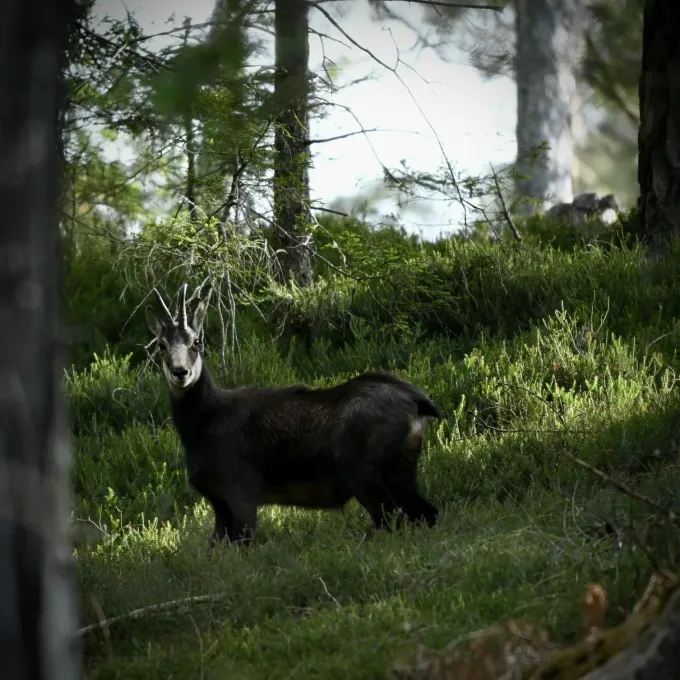
The chamois (Rupicapra rupicapra) is a species of goat-antelope belonging to the Bovidae family. Recognized by its distinctive black facial stripes and hooked horns, it is highly adapted to steep, mountainous terrain.
These animals are agile climbers, allowing them to traverse environments that are typically inaccessible. They live in herds, and their social structure influences their foraging behavior and migration patterns near agricultural areas.
Biologically, chamois reproduce annually, with kids typically born in spring. During this period, the herd's demand for high-quality forage increases, leading them to venture into lower-altitude agricultural zones.
They are primarily diurnal, meaning they feed mostly during dawn and dusk. Their keen senses, particularly their hearing and sight, make them highly cautious and difficult to manage once they establish a feeding routine.
Chamois possess a significant ecological footprint in mountain regions. Their presence near human settlements is often a consequence of habitat loss or the seasonal scarcity of natural wild grasses in their native high-alpine range.
What it damages
Chamois act as agricultural pests by grazing heavily on cereal crops and legumes. They consume tender sprouts, which can lead to the total loss of the initial growth stage of many staple crops.
Mechanical damage is a significant factor in their destructiveness. As herds move across fields, their hooves trample crops, destroying stalks and compressing the soil, which leads to poor growth and nutrient uptake.
In orchards and nurseries, chamois target young trees. By stripping the bark from the trunks and biting off the ends of branches, they cause irreparable injury to trees, exposing them to pathogens and winter frost.
The nutritional competition on grazing lands is another issue. Chamois feed on high-protein grasses, reducing the available feed for domestic livestock and impacting the overall productivity of mountain pastures.
Additionally, their foraging behavior often targets the most palatable crop varieties. This selective grazing reduces the market quality and commercial yield of harvestable products in farms located in proximity to mountainous forests.
Control measures
The most effective physical defense is the installation of high-tensile wire fencing. To be successful against chamois, these fences must be at least 2.5 meters tall to prevent the animals from jumping over.
Acoustic and visual repellents are commonly used to deter herds. Motion-activated devices that emit high-frequency sounds or flashes can discourage the animals, though their effectiveness requires regular maintenance.
Cultural control methods involve creating buffer zones. Planting non-palatable or aromatic vegetation around the border of the fields can act as a natural barrier, making the area less attractive for grazing.
Chemical repellents applied to the field edges are a temporary solution to redirect animal traffic. These substances rely on mimicking predator scents or unpleasant tastes to deter the herd from entering the plot.
Integrated wildlife management, involving local hunting or forestry authorities, is recommended to regulate herd populations in affected regions. This ensures a balanced approach that protects both the farmer's livelihood and the regional biodiversity.
Taxonomy
- Latin name
- Rupicapra
- Family
- Bovidae
- EPPO code
- RPCPSP
Discussion
No discussions yet — be the first.