
Ropalidia cincta
Ropalidia cincta
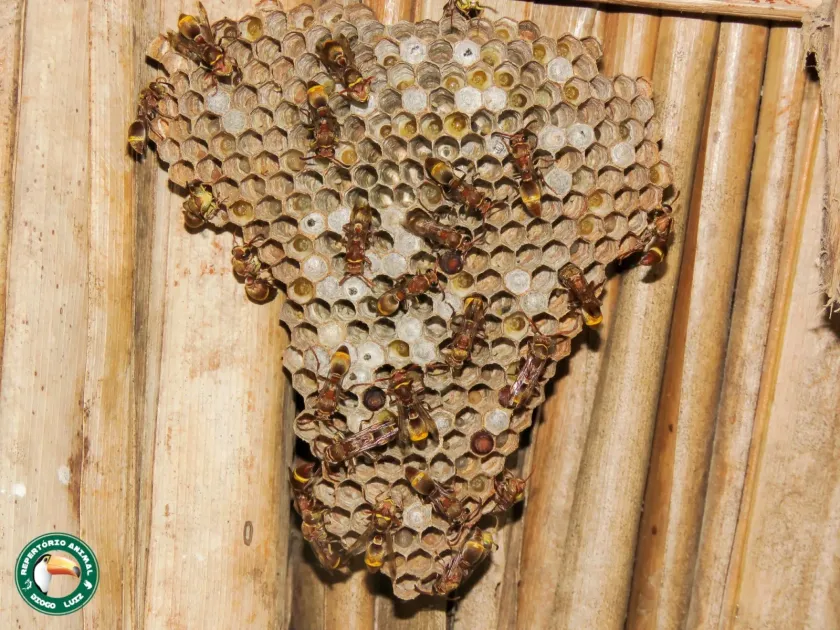
Description
How to identify
Ropalidia cincta is a social wasp species belonging to the family Vespidae (order Hymenoptera). These insects are commonly found throughout various tropical regions of Africa.
The species is characterized by its slender body structure, featuring a petiolate abdomen. Their coloration typically includes dark brown to black tones accented by distinct yellow bands on the abdominal segments.
As social insects, they construct nests composed of a paper-like substance, which they create by mixing chewed plant fibers with their own saliva. These nests are often open-comb structures attached to foliage.
A colony is composed of workers and fertile females, working in a coordinated manner to support the larvae and defend the nest from potential threats.
Their biological success is highly dependent on environmental stability, as they require specific conditions to maintain the appropriate internal temperature within their exposed nests.
What it damages
The primary concern regarding Ropalidia cincta in agricultural settings is not crop consumption, but rather the disruption they cause to standard farming operations.
Wasps often utilize living plant tissues to harvest cellulose fibers for nest construction, which can result in localized tissue damage and surface scarring on the plant.
Their presence on crops poses a significant safety risk to workers, as these wasps are highly territorial and defensive, often attacking those who approach their nests during harvest or maintenance.
By establishing nests on valuable plants, they create hazardous zones that may remain unmaintained or unharvested due to the danger posed to farm personnel.
Furthermore, these insects may outcompete beneficial pollinators for resources, indirectly affecting the long-term productivity and health of the managed ecosystem.
When it appears
In tropical climates, the activity cycle of Ropalidia cincta typically spans the entire year, provided that local weather conditions remain suitable for nest maintenance.
Growth and expansion of the colony are most rapid during the warm and humid seasons when resources for larvae development are abundant.
The life cycle of the wasp allows for multiple generations within a single season, leading to potential rapid population increases if left unmonitored.
Agricultural operations must be planned in coordination with regular field inspections to detect new colony establishments before they reach large sizes.
Heavy rainfall may temporarily inhibit the flight activity of the adults, but the structural integrity and protection of the nest usually ensure the survival of the colony.
Signs of infestation
The most reliable sign of an infestation is the visual identification of the characteristic paper-like nests attached to the undersides of leaves or tree branches.
Observing groups of wasps foraging consistently in specific areas of the crop indicates that a nest is likely situated in the immediate vicinity.
Patches of damaged or scraped bark and leaf tissue are indicative of the wasps collecting building materials, which often points towards a nearby nesting site.
An increase in defensive buzzing or aggressive flight patterns towards personnel moving near the plants is a clear indicator of a nest being protected.
- Discovery of papery open-comb nests on stems or leaves.
- Surface damage on plants where cellulose was harvested.
- Aggressive flight activity around specific parts of the plantation.
Control measures
The most effective management strategy is the early detection and manual removal of nascent nests before the colony becomes established and defensive.
Personnel conducting maintenance must utilize appropriate personal protective equipment (PPE) to prevent stings and manage potential risks during nest removal.
Insecticide use should be restricted and targeted; broadcast spraying is discouraged to preserve beneficial insects and pollinators within the plantation.
Sanitary pruning and the systematic removal of infested branches are practical, non-chemical methods for controlling the local wasp population on valuable crops.
Establishing an ongoing monitoring program is crucial for identifying areas of risk and ensuring that the work environment remains safe for all agricultural staff.
Taxonomy
- Latin name
- Ropalidia cincta
- Order
- Hymenoptera
- Family
- Vespidae
- EPPO code
- ROPACI
Discussion
No discussions yet — be the first.