
Ropalidia
Ropalidia
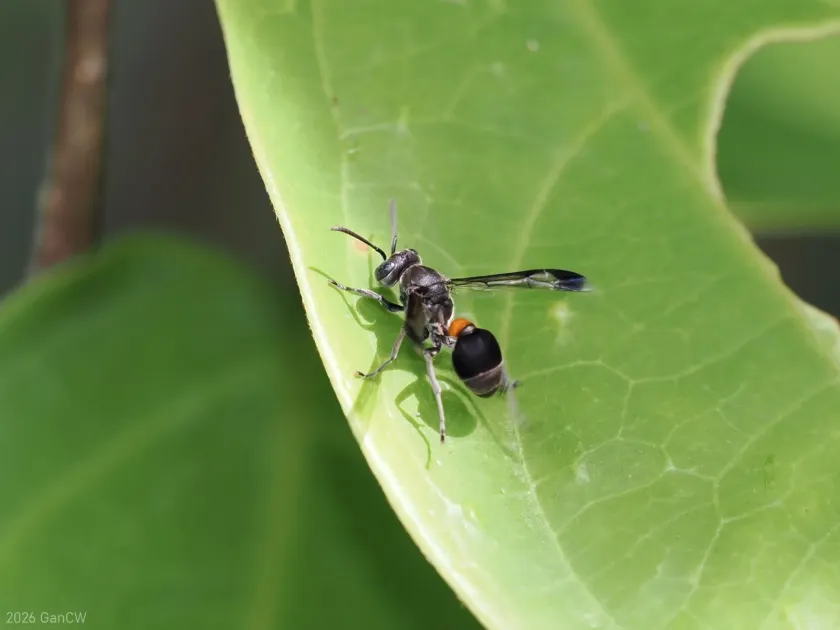
Description
How to identify
Ropalidia is a genus of social wasps belonging to the family Vespidae. They are known for their slender bodies and distinctive nest-building habits among the various species of paper wasps.
These wasps typically display a dark brown or black coloration, sometimes accented with yellow bands. Their body length usually ranges between 10 and 15 millimeters, depending on the species and caste.
The most recognizable feature of Ropalidia is their nest, which consists of open, uncovered combs attached directly to stems, leaves, or other substrates in the garden.
The colony structure is organized around a queen and workers, who collaborate to maintain the nest and forage for food and raw materials necessary for construction.
While they play a role in natural ecosystems, their presence in agricultural or horticultural settings can be problematic if their population becomes too dense.
What it damages
The primary concern regarding Ropalidia in an agronomic context is the physical damage they cause while harvesting materials to construct their nests.
Workers scrape off the epidermis from the surface of young leaves and tender shoots, which creates unsightly necrotic spots on the foliage.
These superficial lesions can compromise the plant's health by creating entry points for opportunistic fungal or bacterial infections that damage the vascular tissue.
In ornamental nurseries, significant activity by these wasps can ruin the commercial appeal of plants due to the visible leaf tissue removal.
Furthermore, their tendency to defend their nests aggressively makes routine maintenance, such as pruning or harvesting, difficult for farm workers.
When it appears
The activity of Ropalidia is highly seasonal and heavily dependent on prevailing temperatures and the availability of nesting resources.
Founding queens emerge during the early spring to seek suitable locations for starting a new colony, often opting for sheltered spots on host plants.
During the peak summer months, colony population reaches its maximum, leading to increased foraging activity and higher potential for plant damage.
As autumn approaches, the activity level starts to decline as the colony undergoes physiological changes in preparation for the upcoming dormant season.
Early seasonal monitoring is essential for effective management, as controlling initial colonies prevents the establishment of larger populations later in the year.
Signs of infestation
The most obvious indicator of Ropalidia presence is the visual discovery of their open combs attached to the undersides of leaves or tree branches.
Affected plants exhibit irregular, light-colored or brownish patches where the outer tissue has been scraped away by the foraging wasps.
Frequent flight paths of worker wasps near specific areas of the garden often reveal the proximity of a hidden nest within the vegetation.
In the case of larger colonies, the audible buzzing or vibration coming from the plant during the day is a clear sign of high wasp activity.
Rapid yellowing or wilting of the damaged leaf parts can also indicate that the area has been heavily exploited by the colony as a source of building material.
Control measures
The most effective strategy for managing Ropalidia is the direct removal of the nests when population levels are still low and the colony is inactive.
Nests should be removed early in the morning or late at night, ensuring appropriate protective gear is worn to prevent stings from defensive workers.
Insecticides should be used sparingly and only as a last resort to ensure that non-target beneficial insects, such as bees and pollinators, are not harmed.
Cultural control measures, such as maintaining healthy, vigorous plants and regular pruning, can minimize the attractiveness of the area to nesting wasps.
In cases where nests cannot be safely removed, utilizing natural deterrents like citrus or essential oil-based sprays can help discourage wasps from colonizing the area.
Taxonomy
- Latin name
- Ropalidia
- Order
- Hymenoptera
- Family
- Vespidae
- EPPO code
- ROPASP
Discussion
No discussions yet — be the first.