
New Zealand strawberry bug
Rhypodes anceps
Description
How to identify
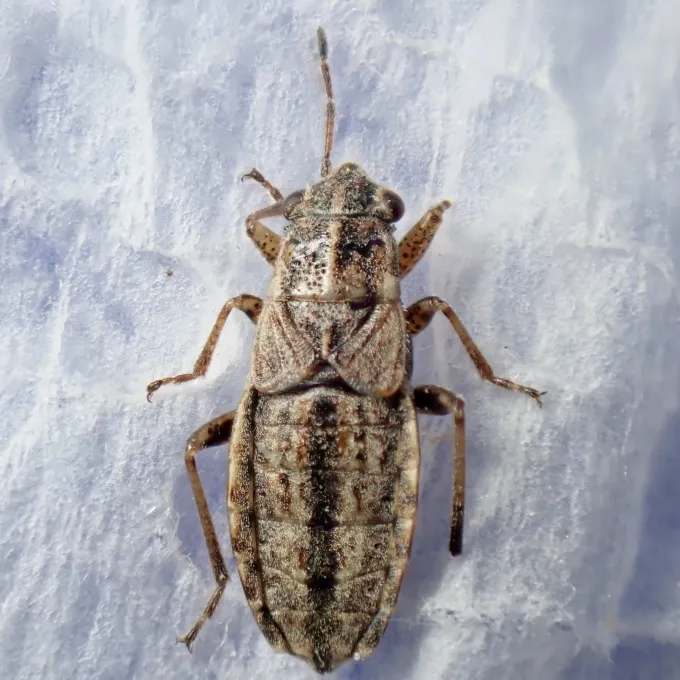
The New Zealand strawberry bug (scientific name Rhypodes anceps) is a small insect classified within the family Lygaeidae (seed bugs) of the order Hemiptera.
Adults typically feature an elongated body with a mottled brown or dark coloration, providing them with excellent camouflage against soil and decaying organic matter.
For accurate identification, agronomists examine key morphological features, such as the specific structure of the head, the shape of the pronotum, and the wing venation pattern.
Nymphs resemble the adults in appearance but are smaller and lack fully developed wings, progressing through several molting stages until reaching maturity.
The bug maintains a reclusive lifestyle, often sheltering near the base of plants or among dense foliage, making them difficult to spot during casual inspections.
What it damages
The primary host plant for this species is the strawberry, though it may occasionally feed on other related rosaceous plants found in the surrounding landscape.
These bugs feed by piercing plant tissues with their specialized mouthparts and extracting sap, which weakens the plant and hampers its overall development.
Damage is most severe during the active growing season, as the bugs target leaves, petioles, and developing flower buds, leading to stunted plant growth.
Saliva injected during feeding often triggers the development of necrotic spots on the foliage and can lead to severe deformation of the fruit itself.
High infestation levels result in significant yield losses, characterized by smaller berry sizes, uneven fruit development, and premature drop of blossoms.
When it appears
The activity cycle of the New Zealand strawberry bug is highly dependent on ambient temperature, typically commencing once the soil warms in the spring.
Peak population densities are commonly observed from late spring through mid-summer, overlapping directly with the flowering and fruiting stages of strawberry crops.
The species is capable of completing multiple generations within a single season, provided that the climate and food supply remain favorable for their development.
As autumn approaches and temperatures decline, the bugs begin to search for suitable overwintering sites, often moving into the soil surface or plant debris.
Adults overwinter in a state of diapause, allowing them to survive the cold winter months and re-emerge when spring conditions become suitable for reproduction.
Signs of infestation
Initial signs of infestation often include tiny, light-colored or necrotic puncture wounds on leaves that may eventually grow and merge into larger damaged patches.
Deformed flower stalks and lopsided or stunted fruit development are major indicators that this bug has been feeding on the plant's reproductive tissues.
Small black fecal spots found on the underside of leaves are a diagnostic sign of bug presence and indicate high feeding activity on the crop.
Stunted growth or chlorosis in specific areas of the plantation may suggest a localized infestation that requires immediate attention and inspection.
Using the tapping method—gently shaking the plant over a white collection sheet during the early morning—is an effective way to confirm the presence of these pests.
Control measures
Cultural management is essential, focusing on the removal of weeds and plant debris from the fields to eliminate potential overwintering shelters for the bugs.
Implementing crop rotation and ensuring spatial separation between new strawberry plots and older, infested fields can significantly reduce the risk of migration.
Biological control agents, such as predatory insects or entomopathogenic fungi, can be integrated to manage population numbers without harmful chemical inputs.
When infestation exceeds the economic threshold, targeted insecticide applications may be necessary, provided the products are registered for use on strawberries.
Regular scouting using pheromone traps or systematic visual surveys allows growers to catch early infestations and apply control measures before significant damage occurs.
Taxonomy
- Latin name
- Rhypodes anceps
- Order
- Hemiptera (bugs, aphids, leafhoppers)
- Family
- Lygaeidae
- EPPO code
- RHYXAN
Discussion
No discussions yet — be the first.