
Rhopalus tigrinus
Rhopalus tigrinus
Description
How to identify
Rhopalus tigrinus is a member of the Rhopalidae family within the order Hemiptera. This bug is recognized for its distinct appearance and specific feeding habits that affect various plant species.
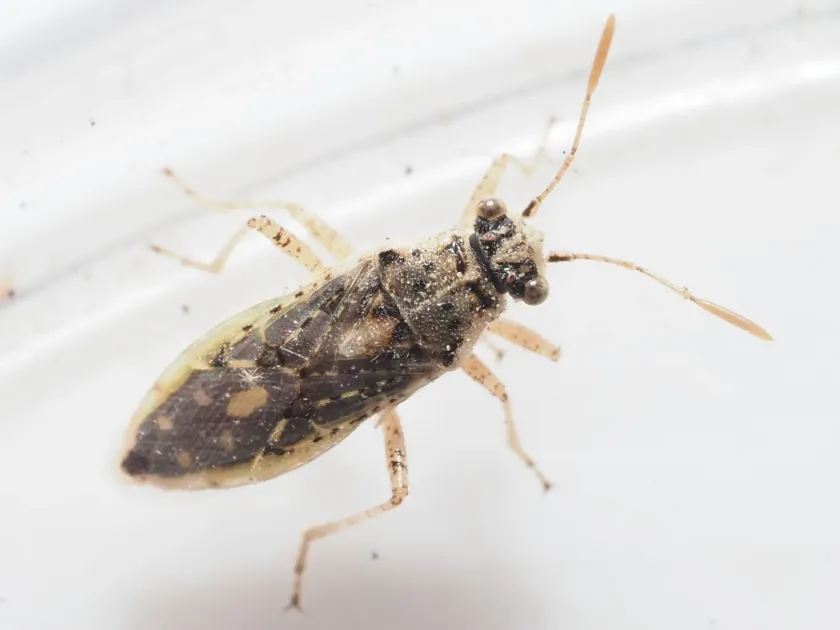
Adult bugs typically reach a length of 6 to 8 mm. Their coloration ranges from yellowish-brown to reddish-brown, often featuring darker markings on the dorsal side that resemble a tiger-like pattern, giving the species its name.
The mouthparts are specialized as a piercing-sucking proboscis, adapted for extracting sap from plant tissues. The antennae are four-segmented, which is a key diagnostic feature used by entomologists for accurate identification.
The wings are semi-transparent with characteristic dark spots visible when the bug is at rest. The nymph stages resemble miniature adults, though they lack fully developed wings and undergo several molts before reaching maturity.
The species overwinters as an adult, seeking shelter in plant debris, leaf litter, or crevices. Activity resumes in the spring, triggered by rising temperatures and the availability of suitable host plants for feeding and breeding.
What it damages
The primary damage is caused by both adults and nymphs, which puncture plant cells to ingest sap. This activity weakens the plant, disrupts nutrient transport, and leads to stunted growth.
The bug shows a preference for members of the Asteraceae family. In agricultural settings, it can negatively affect sunflower crops by feeding on the developing flower heads, leading to shriveled or empty seeds.
Beyond the loss of fluids, the bug injects saliva during feeding, which can cause localized necrosis, leaf yellowing, and deformation of young growing shoots and flower structures.
Rhopalus tigrinus is often associated with the transmission of secondary infections, as the puncture wounds serve as entry points for various fungal and bacterial pathogens that further degrade crop quality.
High population densities, particularly in drought-stressed environments, can lead to significant yield losses. The impact is most severe when infestations occur during critical developmental phases of the plant.
Signs of infestation
Common signs of an infestation include the appearance of yellowing spots and small necrotic lesions on the leaves and stems, resulting from the bug's piercing-sucking activity.
On sunflower heads, damage manifests as localized drying, deformation of the floral disk, and a noticeable decrease in seed set or the presence of poorly developed achenes.
Observing the insects directly is often possible during inspections, as they tend to congregate on the undersides of leaves or within the dense floral parts to avoid direct sunlight.
Young plants may exhibit curled or crinkled leaves, which is a clear indicator of physiological stress caused by the insect feeding during the early stages of plant development.
A general lack of vigor in the crop, combined with premature drop of pollen or flower buds, often suggests that a pest infestation is present and requires further investigation.
Control measures
Effective management of Rhopalus tigrinus relies on an Integrated Pest Management (IPM) approach, combining preventive cultural practices with targeted chemical treatments if necessary.
Cultural control is vital, involving the destruction of weeds, especially those belonging to the Asteraceae family, which act as primary reservoirs and breeding sites for the bugs.
Proper field sanitation, including the incorporation of crop residues into the soil after harvest, significantly reduces the survival rate of overwintering adults and limits the spring population.
If the economic threshold is reached, the application of registered insecticides is recommended. Systemic or contact-based products are most effective when applied during the nymphal stages.
Field monitoring using yellow sticky traps or sweep netting is essential for early detection. Timely action prevents the population from reaching levels that could cause substantial economic damage to the harvest.
Taxonomy
- Latin name
- Rhopalus tigrinus
- Order
- Hemiptera (bugs, aphids, leafhoppers)
- Family
- Rhopalidae
- EPPO code
- RPLUTI
Discussion
No discussions yet — be the first.