
Leptocoris
Leptocoris
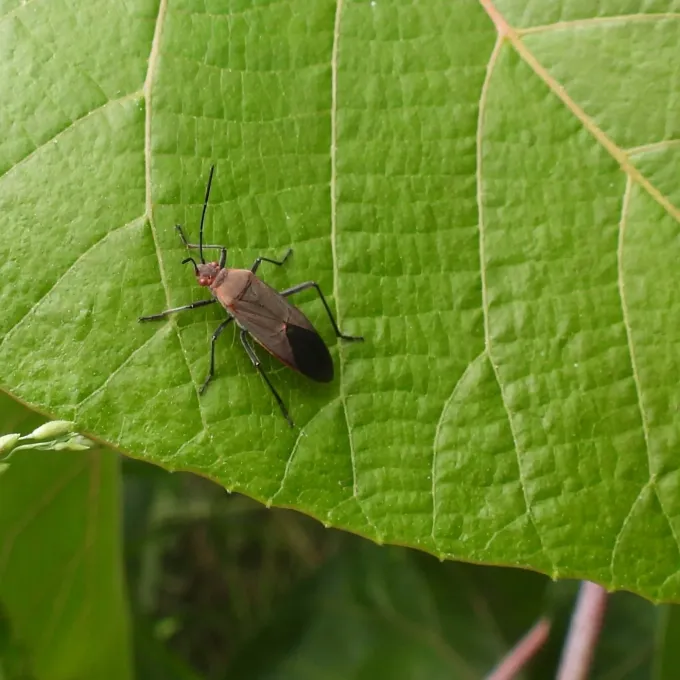
Description
How to identify
Leptocoris is a genus of true bugs belonging to the family Rhopalidae (scentless plant bugs) within the order Hemiptera. These insects possess an elongated body, often featuring distinctive reddish or orange markings on the abdomen and legs.
Adults typically measure between 10 to 15 mm in length. They have a small head with protruding eyes and four-segmented antennae. Their dorsal coloration ranges from dark brown to greyish-brown, providing excellent camouflage against tree bark.
The nymphs, particularly in early stages, display a bright red color that gradually fades as they mature. Morphologically, they resemble the adults but lack fully developed wings, which only appear during the final molting stages.
These bugs are equipped with piercing-sucking mouthparts specifically designed to penetrate plant tissues and extract cellular sap. This feeding mechanism is their primary source of nutrition throughout their entire life cycle.
They are gregarious insects, often congregating in large clusters on host trees, especially during seasonal migrations or when seeking protected sites for overwintering in crevices or wall cracks.
What it damages
Leptocoris bugs primarily target ornamental and fruit-bearing trees, with a strong preference for members of the genus Acer (maples) and Sapindus (soapberry trees). They can adapt to other plant species when their preferred food sources are scarce.
The main damage occurs when they feed on seeds, piercing the outer shell to consume essential nutrients. This feeding behavior results in reduced seed viability and can significantly impair the reproductive success of the plant.
Heavy infestations can cause stunted growth in young trees. Persistent feeding on developing buds and young shoots may lead to severe tissue deformation and the eventual necrosis of the terminal growth tips.
In addition to direct feeding damage, these pests can act as vectors for secondary pathogens. By puncturing plant tissues, they create entry points for various fungal and bacterial infections that further degrade plant health.
Their economic impact has grown in recent years as climate changes have allowed these insects to expand their range, frequently turning them from minor nuisances into significant horticultural pests.
When it appears
The life cycle of Leptocoris is highly synchronized with seasonal temperatures. Adults usually overwinter in a state of diapause, hiding under loose bark, leaf litter, or in protected cavities within man-made structures.
As temperatures rise in the spring, the adults emerge to migrate to host plants. This period is marked by intensive mating and egg-laying activities on the foliage and bark of trees.
The developmental period for a single generation typically lasts between 4 to 8 weeks, depending on climatic conditions. In warmer regions, they are capable of producing multiple generations per season.
Autumn triggers a distinct migratory phase as the bugs seek out overwintering sites. This behavior often leads to large aggregations near houses and storage facilities, which can be alarming to homeowners.
The optimal temperature range for their development is between +22°C and +28°C. Cold spells or excessive rainfall can drastically reduce reproductive rates and overall population density in a given area.
Signs of infestation
The most prominent sign of an infestation is the presence of numerous bright red nymphs clustering on tree trunks. They are highly visible during warm, sunny days as they move across the bark.
Close inspection of seeds or fruit may reveal small, dark necrotic spots, which are the puncture marks left by the bugs' feeding apparatus. Affected seeds often appear shriveled or empty inside.
Yellowing of leaves and the premature shedding of immature seeds are common indicators that the plant is under high feeding pressure and experiencing a significant loss of nutrient resources.
Like many members of the Rhopalidae family, these bugs emit a distinct, somewhat unpleasant odor when disturbed or crushed, which often alerts observers to their presence.
Damaged young shoots often exhibit twisting or curling, and their growth may be completely halted, providing a clear visual contrast to the healthy development of neighboring trees.
Control measures
The primary control strategy involves cultural management, specifically the removal of leaf litter and woody debris from the base of trees to eliminate potential overwintering habitats.
Mechanical control, such as washing clusters of bugs off tree trunks using high-pressure water streams, is highly effective for reducing populations early in the season.
The use of contact insecticides should be reserved for cases where the economic injury level is exceeded, particularly when protecting valuable seed stocks or nursery saplings.
Installing sticky bands or physical barriers around tree trunks can disrupt the movement of flightless nymphs, preventing them from reaching the most critical feeding areas of the tree.
Implementing biological control using products based on entomopathogenic fungi can help suppress population numbers while maintaining a balance that preserves beneficial predators and parasitoids.
Taxonomy
- Latin name
- Leptocoris
- Order
- Hemiptera (bugs, aphids, leafhoppers)
- Family
- Rhopalidae
- EPPO code
- LEPCSP
Discussion
No discussions yet — be the first.