
Leptocoris augur
Leptocoris augur
Description
How to identify
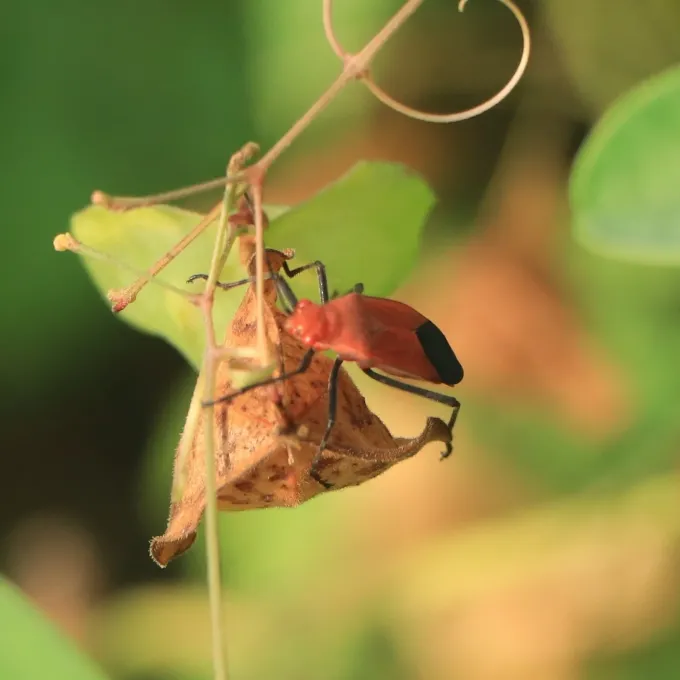
Leptocoris augur is a species of true bug belonging to the order Hemiptera and the family Rhopalidae. It is characterized by its slender body and distinctive reddish-orange and black coloration, which serves as a warning signal to predators in its natural habitat.
The adult bugs are equipped with functional wings, enabling significant dispersal capabilities across orchards and wooded areas. Nymphs, while smaller and wingless, share the same general morphological features as adults and undergo several molting stages before reaching sexual maturity.
What it damages
This pest is primarily known for feeding on the seeds and fruits of specific host plants, particularly within the Terminalia and Sapindus genera. Large populations often congregate on tree trunks and fruit clusters to extract plant sap.
Beyond its primary host trees, Leptocoris augur can also infest nearby crops, causing damage to developing seeds and fruits. This feeding behavior often leads to reduced seed viability, stunted growth of fruit, and overall economic losses for farmers in affected regions.
When it appears
The life cycle of Leptocoris augur is closely synchronized with the phenology of its host plants. In tropical and subtropical regions, the bug can produce multiple generations annually, driven by the availability of fruit and optimal temperatures.
Populations tend to peak during the warm season, coinciding with the maturation of fruits. During this period, the bugs congregate in large numbers, often resulting in sudden, high-intensity infestations that require immediate attention from agricultural managers.
Signs of infestation
The most obvious sign of infestation is the dense aggregation of nymphs and adults on the bark, leaves, and fruit of host trees. These clusters can be so numerous that they appear as vibrant patches of color on the plant surface.
Visible damage includes premature fruit drop, shriveled or deformed fruits, and localized yellowing or necrosis of plant tissue at the feeding sites. In severe cases, the vitality of the host plant may decline due to persistent sap extraction.
Control measures
- Remove and destroy fallen fruits to eliminate food and breeding sources.
- Maintain orchard hygiene to reduce shelter for overwintering or migrating adults.
- Apply contact or systemic insecticides if population thresholds are exceeded.
- Promote the presence of natural predators to achieve biological control.
- Monitor tree trunks regularly during the peak season to detect colonies early.
Effective management requires an integrated approach that focuses on both physical sanitation and targeted chemical application. By disrupting the life cycle through the removal of debris and implementing timely insecticide treatments, growers can significantly minimize the impact of Leptocoris augur on their plantations.
Taxonomy
- Latin name
- Leptocoris augur
- Order
- Hemiptera (bugs, aphids, leafhoppers)
- Family
- Rhopalidae
- EPPO code
- LEPCAU
Discussion
No discussions yet — be the first.