
Leptocoris mitellatus
Leptocoris mitellatus
Description
How to identify
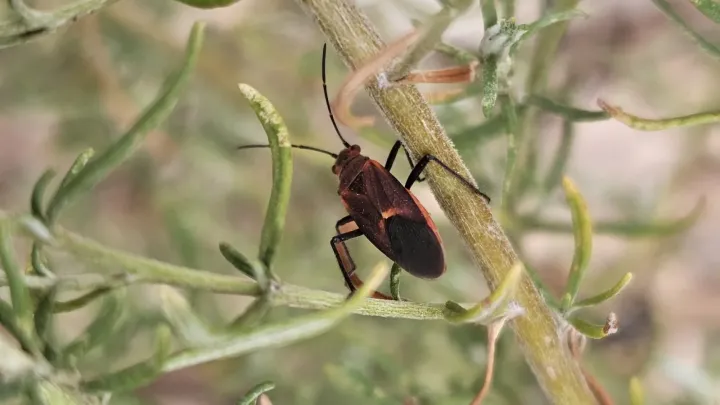
Leptocoris mitellatus belongs to the family Rhopalidae (scentless plant bugs) within the order Hemiptera. These insects typically have an elongated body, measuring between 10 to 14 millimeters in length.
Adult coloration ranges from reddish-brown to dark brown, often featuring distinct, contrasting patterns on the pronotum which are key identification features.
The insect is equipped with a piercing-sucking mouthpart, specialized for extracting sap from various plant tissues, including fruits and succulent stems.
Nymphs resemble smaller, wingless versions of the adults, progressing through several developmental stages (instars) before reaching maturity.
These bugs thrive in warm, dry environments and are often observed in clusters on host plants or searching for hibernation sites in sheltered areas.
What it damages
Leptocoris mitellatus acts as a specialized phytophagous pest, primarily attacking a wide variety of woody plants and shrubs.
The insects feed by inserting their stylets into plant tissue, targeting seeds, developing fruits, and tender young shoots to extract fluids.
Host plants include diverse botanical species, ranging from ornamental landscaping trees to wild flora that can serve as a reservoir for the pest.
In nursery settings, heavy infestations can lead to significant physiological stress, stunted growth, and loss of commercial value for saplings.
Damage to seeds is particularly critical, as it can reduce germination rates and overall seed quality, affecting propagation success.
When it appears
Adult activity typically commences in the spring as temperatures rise, signaling the end of the winter dormancy period for the population.
Population peaks are generally observed during the warmer summer months when environmental conditions are ideal for rapid reproduction and larval growth.
The lifecycle includes the egg stage, five nymphal instars, and the adult phase, with the potential for multiple generations per growing season.
As autumn temperatures decline, the bugs instinctively seek protective sites such as bark crevices, leaf litter, or debris to overwinter successfully.
Effective management requires consistent monitoring throughout the growing season to anticipate seasonal surges in pest numbers.
Signs of infestation
Initial signs of infestation often involve the direct observation of the insects congregating on leaves, stems, or developing fruit clusters.
Feeding sites on fruits and stems often display localized necrotic spots, which can expand and lead to tissue degradation if the infestation persists.
Twisting or deformation of young, tender shoots is a common symptom of the plant's reaction to the saliva injected by the bug during feeding.
The presence of fine dark specks of excrement on the foliage is another clear indicator of active feeding colonies in the area.
- Premature drop of buds, flowers, and developing fruits
- Yellowing (chlorosis) or spotting of leaf surfaces
- General vigor loss and retardation in the plant growth cycle
Control measures
Cultural management is the first line of defense, including the thorough removal and destruction of autumn leaf litter where the pests overwinter.
Sanitation practices such as weed management reduce alternative food sources and breeding grounds, lowering the overall risk of infestation.
If population levels exceed economic thresholds, the application of targeted insecticides labeled for the specific host crop may be required.
Integrated pest management (IPM) strategies, including the use of biological control agents, can help maintain populations below damaging levels.
Regular visual inspections of susceptible plants help in early detection, allowing for spot treatments rather than widespread chemical application.
Taxonomy
- Latin name
- Leptocoris mitellatus
- Order
- Hemiptera (bugs, aphids, leafhoppers)
- Family
- Rhopalidae
- EPPO code
- LEPCMI
Discussion
No discussions yet — be the first.