
Leptocoris tagalicus
Leptocoris tagalicus
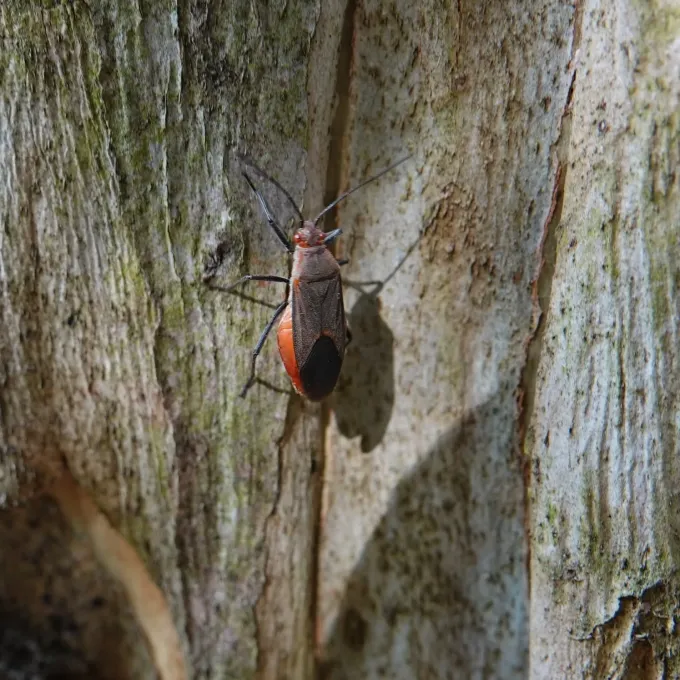
Description
How to identify
Leptocoris tagalicus belongs to the family Rhopalidae (scentless plant bugs) within the order Hemiptera. This insect typically features an elongated body ranging from 10 to 15 millimeters in length.
The appearance of adults is characterized by a vibrant coloration, often featuring a mix of red, orange, and black patterns on the pronotum and scutellum. The head is generally narrower than the pronotum, with distinct eyes and four-segmented antennae.
Nymphs resemble the adults but lack fully developed wings and are generally smaller in size. Their coloration is usually more muted, often dominated by shades of grey or dull red, depending on their developmental stage.
This pest prefers warm climates where favorable temperatures allow for multiple generations per year. In more temperate regions, its presence is usually limited or seasonal.
A key diagnostic feature is the piercing-sucking mouthpart, which the insect uses to feed on plant sap throughout its life cycle.
What it damages
The primary hosts for Leptocoris tagalicus include various fruit-bearing trees. It is particularly notorious for damaging figs, as the bugs tend to aggregate on ripening fruits in large numbers.
Beyond figs, this pest attacks various other fruit and ornamental crops. It feeds on the sap of vegetative organs and developing fruits, causing them to wither, discolor, or rot prematurely.
The pest often adopts a cryptic lifestyle, hiding within bark crevices or foliage, which makes early detection of an infestation quite challenging for growers.
Feeding is frequently accompanied by secondary infections, where fungal or bacterial pathogens enter the fruit through the puncture wounds created by the bug's proboscis, leading to spoilage.
In cases of high population density, Leptocoris can damage young shoots, weakening the plant's overall immune system and hindering its development during critical growth phases.
When it appears
The activity of Leptocoris tagalicus is directly correlated with ambient temperatures. Population peaks are usually observed during the hot summer months, coinciding with the fruit ripening period of many host plants.
Adults overwinter in sheltered locations, such as leaf litter, plant debris, or deep within tree bark. As spring temperatures rise, they emerge from diapause to begin their activity.
Mating and egg-laying occur during the spring and early summer. Females typically deposit eggs on the undersides of leaves or directly on the bark of host plants to ensure food availability for the emerging nymphs.
Development from egg to adult takes between a few weeks to a month, depending on temperature and food quality. Multiple generations can occur within a single growing season.
The peak of damage occurs in the second half of the summer, when gardens are filled with succulent fruits that serve as the primary nutritional source for the growing population.
Signs of infestation
The most common sign of infestation is the presence of numerous small puncture marks on the skin of the fruit, often surrounded by darkened, sunken, or rotting areas.
During routine inspections, one may observe clusters of brightly colored nymphs or adults in close proximity to the fruit or resting in leaf axils.
The presence of insect excrement on leaves and branches is a strong indicator of a high population density and is often associated with a distinct, unpleasant odor.
Premature fruit drop or deformation of fruits that have not yet reached maturity is another strong indicator of damage caused by these piercing-sucking insects.
General plant stress, manifested by leaf curling or the drying of shoot tips, indicates that the population has reached an economic threshold requiring intervention.
Control measures
Cultural control methods include regular cleanup of the garden to remove leaf litter and plant debris, which serve as primary overwintering sites for the bugs. Pruning tree canopies also helps limit habitats.
Biological control involves utilizing natural predators or parasitoids, as well as applying biological pesticides based on entomopathogenic fungi or bacteria to target nymph stages.
Chemical control is most effective when timed to coincide with the mass hatching of nymphs. Using contact or systemic insecticides can significantly reduce population levels when applied correctly.
- Deploying light traps to catch adults during nighttime.
- Applying insecticides in the late evening to maximize contact efficacy.
- Hand-picking and manual destruction of insects when populations are small.
When applying chemical control agents, it is essential to observe strict pre-harvest intervals to ensure that the produce remains safe for human consumption.
Taxonomy
- Latin name
- Leptocoris tagalicus
- Order
- Hemiptera (bugs, aphids, leafhoppers)
- Family
- Rhopalidae
- EPPO code
- LEPCLU
Discussion
No discussions yet — be the first.