
Rhopalus subrufus
Rhopalus subrufus
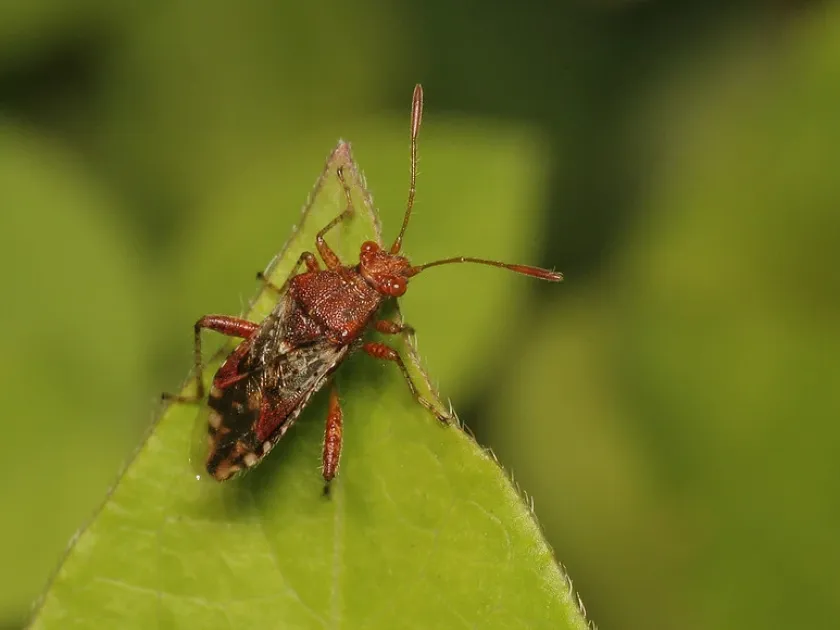
Description
How to identify
Rhopalus subrufus is a species of insect belonging to the order Hemiptera and the family Rhopalidae, commonly known as scentless plant bugs.
Adult insects typically measure between 6 and 8 mm in length, possessing a flattened, oval body with a coloration ranging from reddish-brown to tan.
A distinctive morphological feature is the four-segmented antennae which end in a noticeable club-like swelling, aiding in their specific identification.
They are equipped with fully functional wings, enabling them to disperse effectively across agricultural landscapes during the growing season in search of host plants.
The nymphs go through several developmental stages (instars) and resemble the adults in body shape, although they are smaller and lack wings until reaching the final maturity stage.
What it damages
This species is a polyphagous pest, capable of feeding on a wide range of wild herbaceous plants as well as several commercially important agricultural crops.
The damage is caused by both adults and nymphs, which use their piercing-sucking mouthparts to feed on plant sap from shoots, leaves, and reproductive tissues.
Direct feeding damage often manifests as tissue necrosis, growth retardation, and a decrease in the overall vigor of the affected host plant during critical growth stages.
In addition to direct damage, the feeding process can cause physiological stress to the plant, potentially making it more susceptible to secondary pathogens.
Heavy infestations can significantly reduce the quality and quantity of yields, particularly in legume or Asteraceae-based agricultural crops.
When it appears
Rhopalus subrufus survives the winter as an adult, seeking refuge in leaf litter, debris, or other protected habitats found in field margins and grasslands.
Emergence occurs in late spring as temperatures rise, signaling the beginning of the active feeding and mating phase of the population cycle.
The population tends to peak during the mid-summer months, when favorable environmental conditions allow for the rapid development of successive generations.
The life cycle is closely linked to the phenology of the host plants, with population densities fluctuating based on the availability of suitable food sources.
As autumn temperatures begin to decline, the adults move towards overwintering sites to enter a state of dormancy, preparing for the cold period.
Signs of infestation
Symptoms of infestation often start as small, discolored spots on the leaves or stems at the exact site where the bug has inserted its mouthparts to feed.
In severe cases, the foliage may show signs of yellowing or curling, and the growth of terminal buds can be noticeably stunted or deformed.
Reproductive parts of the plant, such as flowers or forming seed pods, may experience premature abscission or malformation due to heavy sap extraction.
The presence of these bugs, often found clustered on the underside of leaves or near the stem bases during early morning hours, confirms an active infestation.
- Small chlorotic spots on leaves.
- Twisted or stunted shoot growth.
- Flower bud shedding.
- Reduced seed and grain quality.
Control measures
Agricultural management begins with field sanitation, including the destruction of weeds and crop residues where the pests may overwinter safely.
Crop rotation and maintaining clean field margins are essential strategies to reduce the local population density and prevent recurrence of the pest.
If population numbers exceed the economic injury level, the application of approved systemic or contact insecticides may be necessary to protect the crop.
Early monitoring of fields allows farmers to identify the arrival of the pest and implement targeted control measures before significant damage occurs.
Promoting a healthy environment for natural predators and parasitoids can play a significant role in long-term suppression of the Rhopalus subrufus population.
Taxonomy
- Latin name
- Rhopalus subrufus
- Order
- Hemiptera (bugs, aphids, leafhoppers)
- Family
- Rhopalidae
- EPPO code
- RPLUSU
Discussion
No discussions yet — be the first.