
Rhopalus sapporensis
Rhopalus sapporensis
Description
How to identify
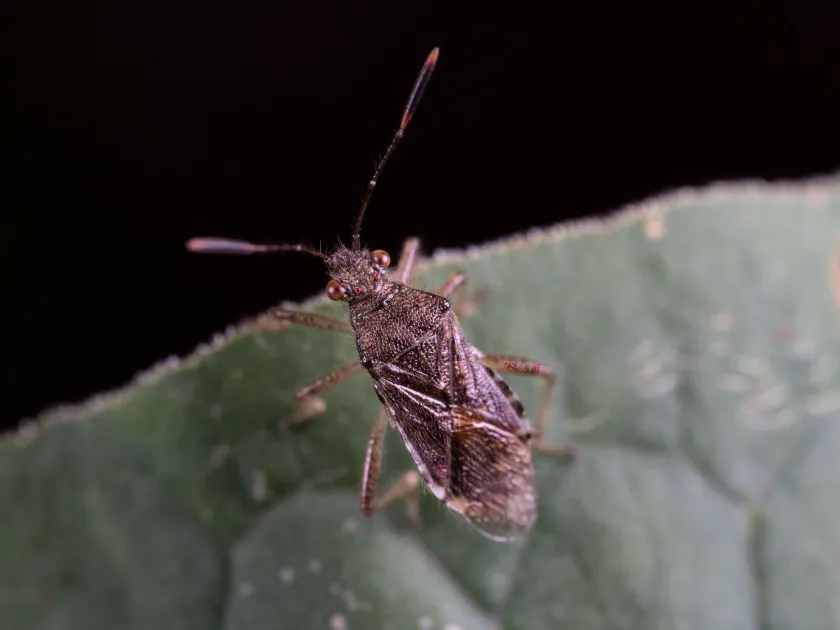
Rhopalus sapporensis belongs to the Rhopalidae family within the order Hemiptera. This small insect displays typical characteristics of scentless plant bugs, featuring an ochre, brownish, or reddish body with characteristic punctations.
Adults possess well-developed wings, allowing them to migrate actively across fields in search of host plants. They are equipped with piercing-sucking mouthparts, specifically adapted for penetrating plant tissues to extract nutrient-rich sap.
Nymphs morphologically resemble adults but are distinguished by their smaller size and the absence of fully formed wings. They progress through several developmental stages, gradually increasing in size and developing mature insect traits.
Identification in the field is challenging due to the visual similarity to other members of the Rhopalidae family. Agronomists often rely on taxonomic keys, specifically examining the structure of the pronotum and the venation patterns of the wings for accurate identification.
These insects prefer open, sunny areas, making them common inhabitants of legume fields and other agricultural lands across East Asia and the Far East regions.
What it damages
Legumes (Fabaceae) serve as the primary host plants for Rhopalus sapporensis. The most significant economic damage occurs in soybean fields, where these bugs feed on the developing parts of the plant.
The damage affects reproductive organs, including flowers, pods, and developing seeds. During feeding, the bugs inject enzymes into the plant tissue, which causes deformation, cell necrosis, and premature abscission of pods.
Beyond direct damage, the feeding process weakens the plant's immune system, creating entry points for secondary pathogens such as fungi and bacteria. This often results in reduced seed quality and lower overall market value of the harvest.
During outbreak years, populations may aggregate at the edges of fields. High density in these areas leads to critical levels of damage, requiring immediate scouting and management intervention from field agronomists.
Rhopalus sapporensis also thrives on various weed species, which act as secondary hosts and allow the pest population to persist even when primary crops are not present in the field.
When it appears
The life cycle of Rhopalus sapporensis is highly dependent on regional temperatures. Adults typically overwinter in leaf litter, debris, or upper soil layers that provide sufficient insulation against cold weather.
Spring emergence begins once consistent positive temperatures are established. After a period of supplementary feeding on early-season weeds, the bugs begin mating and laying eggs on suitable host plants.
Peak activity and the mass appearance of nymphs in crop fields usually coincide with mid-summer, matching the active reproductive growth phase of soybeans and other legumes.
Multiple generations can develop throughout the season depending on the length of the growing period. Warmer temperatures accelerate the insect's metabolism, significantly shortening the egg incubation period.
In autumn, as daylight hours decrease and temperatures drop, the new generation of adults seeks sheltered areas for hibernation. This period is marked by the intense migration of bugs from crop fields toward nearby wooded borders.
Signs of infestation
Signs of infestation are often identified by visual defects on soybean pods. Damaged seeds may appear shriveled, discolored, or malformed due to the disruption of the embryo development process.
A key indicator is the presence of puncture marks on the pods, which often turn dark over time. Surrounding the puncture, tissue necrosis is frequently visible, which can be spotted during routine crop inspections.
In early growth stages, heavy infestation can lead to the flower and pod abortion, which significantly impacts total yield potential. Affected plants often show clear signs of stunted growth compared to healthy ones.
Scouting is commonly performed using sweep netting or visual plant inspections during the early morning when insects are less active. This helps quantify the population density per square meter.
Accumulated excrement on the surface of leaves and pods can also serve as a secondary indicator of high pest pressure within a specific area of the field.
Control measures
Protection strategies for Rhopalus sapporensis rely on an Integrated Pest Management (IPM) approach. The most critical cultural practice is crop rotation and the rigorous management of weeds that serve as pest reservoirs.
Destroying crop residues after harvest is an effective control measure, as it removes hibernation sites and reduces the overwintering population density for the following season.
Chemical control is applied when economic injury thresholds are exceeded. Insecticides from various classes (e.g., pyrethroids or organophosphates) are utilized, provided they are approved for use on the specific crop.
Timing is crucial; applications should target periods of highest vulnerability, typically aligning with the active development stages of the pods. Selection of products should minimize impact on beneficial entomofauna.
- Monitoring population levels using pheromone or light traps.
- Adjusting planting dates to avoid the peak period of pest pressure.
- Utilizing biological control agents, such as entomopathogenic fungi.
- Applying perimeter barrier sprays to prevent migration into the field center.
Taxonomy
- Latin name
- Rhopalus sapporensis
- Order
- Hemiptera (bugs, aphids, leafhoppers)
- Family
- Rhopalidae
- EPPO code
- RPLUSA
Discussion
No discussions yet — be the first.