
Rhopalus
Rhopalus
Description
How to identify
The Rhopalus genus belongs to the family Rhopalidae and is commonly known as the scentless plant bug, named for the club-like tips of its antennae.
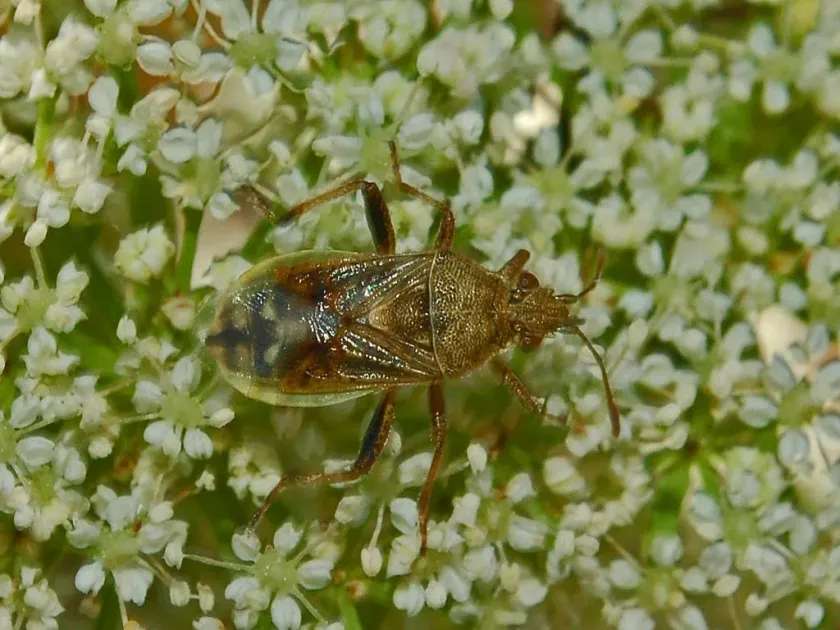
Adult insects typically range from 5 to 9 millimeters in length and feature a coloration that blends in with dry vegetation, varying from light brown to tan.
Their bodies are somewhat flattened, with a distinct triangular scutellum and wings that extend to or slightly beyond the tip of the abdomen.
Nymphs are smaller versions of the adults and lack fully developed wings, often undergoing several molting stages before reaching adulthood.
Due to their camouflage, they are often overlooked during routine field inspections, remaining hidden among leaves and stems during the daylight hours.
What it damages
These bugs are known as polyphagous pests, feeding on a wide variety of plants, including cereals, legumes, and various garden vegetables.
They damage plants by piercing tissues and sucking sap from stems, leaves, and particularly from developing reproductive organs like seeds and flowers.
Feeding often causes localized necrosis, stunted growth, and in severe cases, the premature abscission of fruit and seed set in affected crops.
The damage to seeds can lead to a decrease in the quality of the harvest, impacting both the weight and the germination potential of the grain.
By weakening the host plant, these bugs also open pathways for secondary bacterial and fungal infections to enter the plant's vascular system.
When it appears
Rhopalus species overwinter as adults, finding shelter in leaf litter, under bark, in hedge rows, or within crop stubble from previous harvests.
With the arrival of spring temperatures, they emerge and migrate to available host plants, often starting on early weeds before moving to crops.
They lay eggs on the leaves or stems of host plants, and the nymphs undergo development throughout the warmer summer months.
There is typically one or two generations per season, depending on the climatic conditions and the availability of food resources in the region.
As autumn approaches, the bugs search for suitable overwintering sites, where they will remain dormant until the following spring cycle begins.
Signs of infestation
Early signs of infestation include tiny, pale spots or speckling on the leaves, which indicate the exact points where the bug has pierced the plant tissue.
Flowering parts may turn yellow or brown, wither, and eventually fail to produce viable seeds due to the interruption of nutrient flow.
In infested fields, you may observe overall plant decline, including yellowing leaves and a lack of vigor compared to unaffected areas.
During the warmer parts of the day, insects move deep into the plant canopy, so visual identification is best done in the early morning or evening.
- Withered or deformed seed heads.
- Small necrotic lesions on stems and leaves.
- Reduced yields in affected sections of the field.
Control measures
Effective management starts with weed control, as removing host weeds in and around fields significantly reduces the population available to infest crops.
Cultural practices such as deep autumn plowing and the destruction of crop residues help eliminate favorable overwintering sites for the insects.
Crop rotation helps break the life cycle of the pest, preventing the buildup of large populations in areas where the bug has previously thrived.
When pest numbers exceed economic thresholds, chemical intervention with broad-spectrum or contact insecticides may be necessary to minimize crop loss.
Regular field scouting is essential for timing insecticide applications effectively and ensuring that control measures are focused on peak activity periods.
Taxonomy
- Latin name
- Rhopalus
- Order
- Hemiptera (bugs, aphids, leafhoppers)
- Family
- Rhopalidae
- EPPO code
- RPLUSP
Discussion
No discussions yet — be the first.