
Soldier beetle
Rhagonycha
Description
How to identify
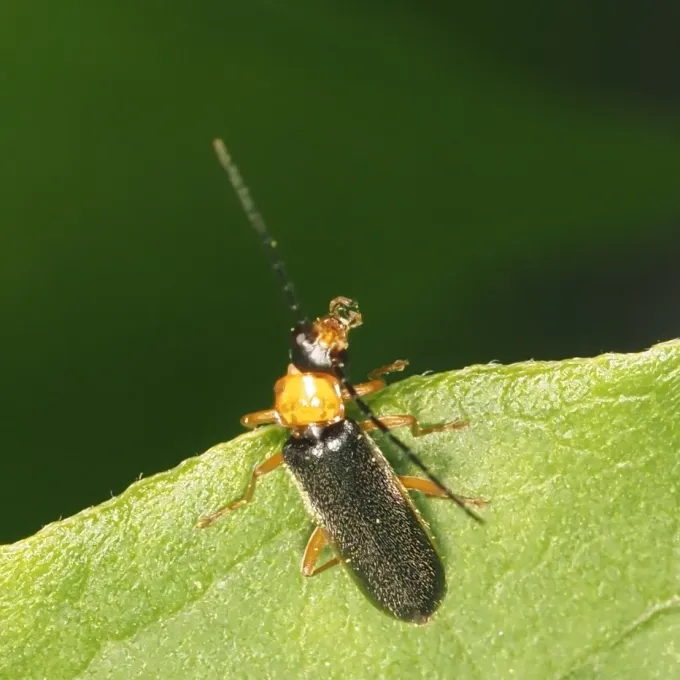
Soldier beetles, specifically of the genus Rhagonycha, belong to the family Cantharidae within the order Coleoptera. The common name refers to the soft, flexible elytra (wing covers) that distinguish them from the hard-shelled beetles commonly encountered.
Adult soldier beetles typically possess an elongated, slender body measuring between 5 to 15 millimeters. Their coloration ranges from dull yellow to reddish-brown, often with darker markings, which serves as a warning signal to potential predators.
The larvae of Rhagonycha are notable for their dense, velvety hair covering, giving them a fuzzy appearance. They are soil-dwellers and are often found in the organic layer near the base of plants, where they remain relatively elusive during their development.
The life cycle is holometabolous, passing through egg, larva, pupa, and adult stages. Most species overwinter in the larval stage, residing deep in the soil or protected under leaf litter, which ensures their survival throughout the winter months.
While often considered beneficial due to their predatory nature on aphids and other small pests, some species may occasionally consume floral parts of cultivated crops when their primary food sources are scarce, shifting their role from beneficial to minor pests.
What it damages
Damage caused by soldier beetles primarily occurs during the flowering season of fruit trees and ornamental shrubs. Adults are known to feed on petals, stamens, and young flower buds, which can lead to reduced fruit set and distorted flower development.
In orchards, heavy infestations can result in significant damage to the blossoms of apple, pear, and berry crops. By consuming generative parts of the flower, the beetles interfere with pollination and subsequent fertilization processes.
Larval feeding damage is less common but can occur at the roots of young seedlings. When natural food sources in the soil decline, larvae may chew on tender roots, leading to stunted growth, reduced vigor, or the wilting of the affected plants.
The physical injuries inflicted by adult beetles on floral tissues can create entry points for secondary infections. Fungal pathogens and bacteria often colonize these damaged areas, leading to localized rotting of buds and flowers.
The severity of damage is typically correlated with the local population density. While a few individuals are generally harmless, a massive presence during sensitive plant growth stages warrants attention to prevent cumulative negative impacts on crop yield.
When it appears
Adult activity peaks during late spring and early summer, typically coinciding with the main bloom period of many horticultural plants. This synchronization allows them to exploit abundant resources found in flowers.
These beetles are diurnal, preferring warm and sunny conditions for flight and mating activities. In cooler or rainy weather, they become less active and retreat to shelter underneath leaves, making them harder to spot during inspections.
The life cycle's speed is heavily influenced by soil moisture levels and temperature. Favorable spring conditions with high humidity in the soil promote larval survival and result in a larger emergence of adults later in the season.
After the peak of their activity, the population begins to decline by mid-summer. Females deposit their eggs into the soil, and after the completion of the reproductive phase, the adult generation dies off, leaving the next generation of larvae to develop.
Monitoring for the start of adult emergence is crucial for effective management. By observing the first appearances of the beetles, gardeners can implement preventative measures before the population reaches an uncontrollable scale.
Signs of infestation
The most prominent sign of soldier beetle damage is the presence of jagged, irregular holes in flower petals. These damaged areas often become dry and necrotic, clearly indicating recent feeding activity by the adults.
Visual confirmation is easy as adult beetles are often seen resting in clusters on blossoms. If a plant is disturbed, they may exhibit a "feigning death" response, dropping to the ground to avoid predation, which is a classic behavior of this family.
Buds that fail to open or appear stunted are another indicator. When beetles feed heavily on the internal parts of a developing bud, the structure is often permanently compromised, leading to premature drying and shedding.
Root-related distress, such as sudden wilting or yellowing of seedlings without an obvious water deficiency, may suggest larval feeding at the roots, especially in garden beds with high levels of decomposing organic matter.
- Irregular bite marks on petals and leaves.
- Premature bud drop or failure to blossom.
- Visible clusters of beetles on flowering plants.
- Slowed seedling development due to root injury.
Control measures
Effective management begins with good cultural practices. Keeping garden beds clean of excessive leaf litter and weeds reduces the availability of sheltered sites for larvae to overwinter and mature successfully.
Tilling the soil in autumn and early spring is highly effective at disrupting the larval stage. By turning the soil, many larvae are exposed to predators or desiccated by environmental conditions, drastically reducing the next generation's survival rate.
When chemical control is necessary, select insecticides that are low-impact on pollinators. Treatments should be timed during the evening or early morning to ensure that the impact on non-target species is minimized while still managing the beetle population.
Promoting biodiversity by installing birdhouses and planting native vegetation attracts natural predators. Birds and predatory insects are efficient at controlling adult beetle populations, often keeping them well below the damage threshold.
Light traps can be utilized for both monitoring and control. These traps capture active adults at night, providing the gardener with immediate data on the population size and effectively reducing the number of fertile females in the area.
Taxonomy
- Latin name
- Rhagonycha
- Order
- Coleoptera (beetles)
- Family
- Cantharidae
- EPPO code
- RHAOSP
Discussion
No discussions yet — be the first.