
Black soldier beetle
Cantharis nigricans
Description
How to identify
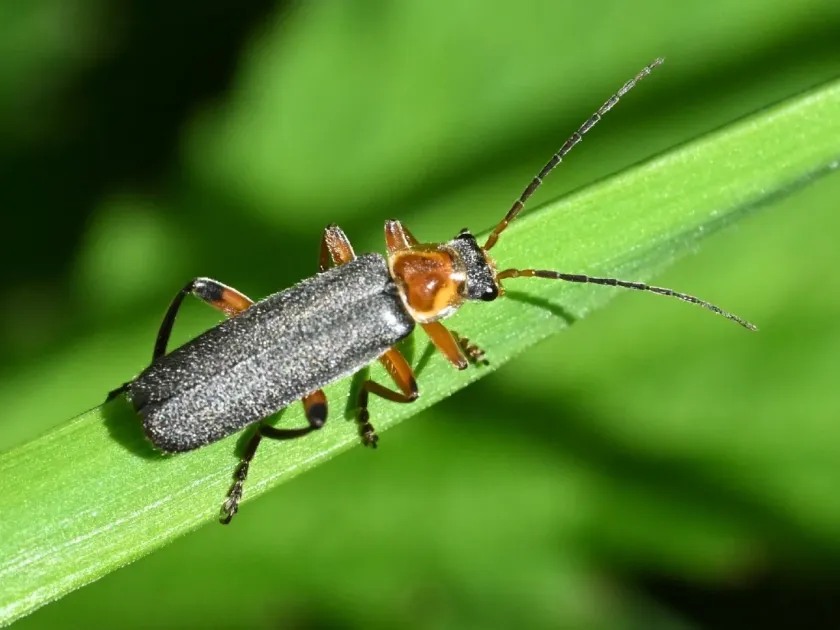
The black soldier beetle (Cantharis nigricans) is a species of beetle belonging to the Cantharidae family. Adults typically measure between 9 and 14 mm in length and possess soft, flexible elytra, which is the primary morphological characteristic of the entire family.
The coloration is generally black, occasionally with brownish nuances on the legs and antennae. The head and pronotum often exhibit a subtle metallic luster. Larvae have a distinctive appearance, resembling caterpillars, characterized by a dark color and a dense covering of fine, velvety hairs.
While often categorized as beneficial predatory insects, their role in agricultural ecosystems is complex. Adults are frequently observed on flowering plants, where they feed on nectar, pollen, and smaller insects like aphids.
Taxonomically, they are members of the order Coleoptera. Their life cycle is closely linked to soil moisture and the presence of organic debris, where they spend a significant portion of their development as larvae.
The larvae are notably cold-hardy, enabling them to survive harsh winters in the upper layers of the soil or beneath accumulated crop residues, ensuring their survival until the following spring.
What it damages
Damage to crops occurs primarily during the flowering and fruit-setting stages. Although these beetles often act as predators, they can cause incidental damage to the reproductive organs of plants when natural prey is scarce.
Crops such as oilseed rape, cereals, and various fruit-bearing plants are susceptible. In cases of high population density, adults may feed on petals, stamens, and pistils, potentially disrupting the pollination process and reducing yield.
The larvae, which reside in the soil, are primarily predatory, consuming small soil-dwelling invertebrates. However, in the absence of prey, they may occasionally damage the root zones of seedlings, causing plant stress.
The extent of damage is generally localized. However, favorable weather conditions during spring can lead to population spikes, causing noticeable harm to the generative parts of plants in specific field sections.
Economic impact assessments are necessary, as the direct destruction of flower parts can decrease seed set and overall crop productivity, particularly in sensitive high-value seed crops.
When it appears
The life cycle of Cantharis nigricans is univoltine, meaning it completes one generation per year. Adults typically emerge in May and remain active until mid-summer, coinciding with the peak flowering period of many agricultural crops.
Mating and oviposition occur in late spring, with females depositing eggs in moist, nutrient-rich soil or beneath dense vegetation. Larvae undergo development throughout the summer and autumn months.
Overwintering takes place in the soil or protected niches like leaf litter. Pupation occurs in early spring, leading to the emergence of the next generation of adults as temperatures begin to rise.
Beetle activity is most pronounced during sunny days, as they move actively across the canopy searching for food and mates. During overcast or cool weather, their activity decreases significantly.
Agronomic monitoring should be focused on the flowering stage, particularly when assessing the edges of fields adjacent to meadows, hedgerows, or uncultivated land where populations may thrive.
Signs of infestation
Visual identification of adult beetles on inflorescences is the most reliable sign of presence. Characteristic ragged damage on petals and reproductive structures confirms feeding activity.
In cases of significant infestation, the flowers may appear stripped or damaged, with visible gnaw marks on the stamens and pistils, which hinders proper fertilization and subsequent pod or fruit development.
Larval presence can be confirmed by examining the upper soil layer, where they appear as mobile, dark-colored, worm-like larvae that quickly retreat into the substrate when disturbed.
Infestations often display a patchy distribution. It is recommended to survey fields, paying close attention to borders, as these areas are typical points of entry for the beetles moving from surrounding habitats.
- Visual presence of black beetles on flowers.
- Irregular feeding damage on flower petals.
- Loss of floral reproductive parts.
- Recovery of larvae in soil samples.
Control measures
Chemical control is rarely the primary management strategy for the black soldier beetle. Due to their predatory nature, they are often considered beneficial for controlling other pest populations, such as aphids.
Cultural practices, including thorough autumn plowing, are effective in disrupting larval development and reducing overwintering success by turning over soil and destroying habitats.
Maintaining clean field borders and managing weed growth can reduce the attractiveness of the field environment for oviposition, as the species prefers stable, moist, and protected sites.
Insecticides should only be applied if population levels exceed established economic injury thresholds, prioritizing selective chemicals that minimize harm to pollinators and beneficial predatory species.
Integrated Pest Management (IPM) focuses on maintaining ecological balance. Regular monitoring is encouraged to ensure that intervention is only used when the economic benefits of control outweigh the costs and environmental impacts.
Taxonomy
- Latin name
- Cantharis nigricans
- Order
- Coleoptera (beetles)
- Family
- Cantharidae
- EPPO code
- CANTNI
Discussion
No discussions yet — be the first.