
Brown soldier beetle
Cantharis fusca
Description
How to identify
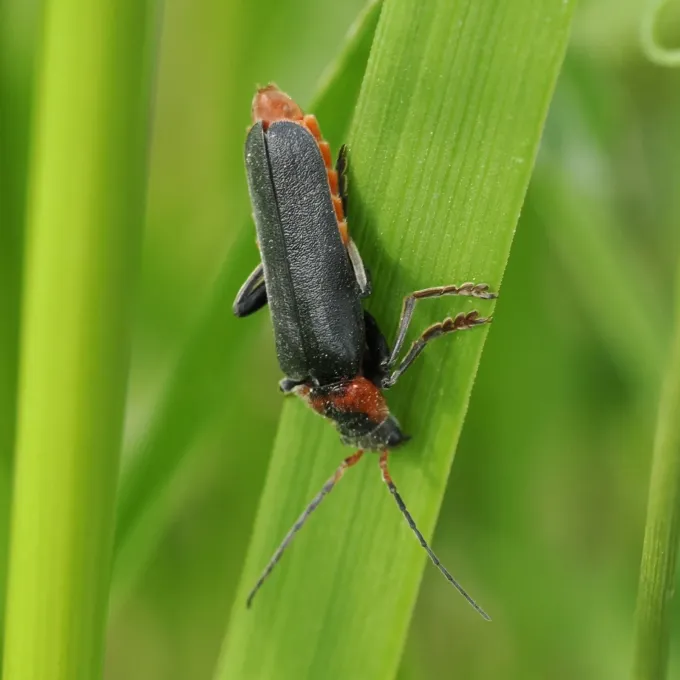
The brown soldier beetle, known scientifically as Cantharis fusca, belongs to the family Cantharidae within the order Coleoptera. Adult beetles are typically 10–15 mm long with a distinctive, somewhat soft body structure.
Their coloration is generally brownish-black, often with reddish or orange markings on the pronotum. Their head is large, and they possess long, thread-like antennae.
The larvae are velvet-like in appearance and dark-colored, with a segmented body designed for movement within soil layers and organic debris.
While often considered beneficial due to their predatory habits against aphids and small caterpillars, they can become a nuisance under specific environmental conditions.
These insects prefer damp, humid environments, commonly found in lush garden vegetation, grassy areas, and near water sources.
What it damages
In addition to their predatory role, brown soldier beetles can occasionally switch to feeding on plant parts if their natural prey population is scarce.
They can cause damage to flowers and young buds of fruit trees and berry bushes, eating the tender internal tissues and potentially preventing fruit set.
Foliage can be marred by irregular holes as beetles consume leaf tissue, which can stress young plants and impact their overall vigor during the growing season.
Larvae, residing in the soil, have been reported to nibble on the roots of seedlings, which can negatively affect the early growth stages of vegetable crops.
Damage is often localized, occurring in areas with high vegetation density, which provides both shelter and food sources for the beetle population.
When it appears
Adult beetles are most active during the late spring and summer months, typically between May and July, when they emerge to feed and reproduce.
The life cycle involves complete metamorphosis, consisting of the egg, larva, pupa, and adult stages, which allows the species to thrive in various climates.
Larvae overwinter in the soil or under leaf litter, becoming active again as soon as the soil temperatures rise during the early spring period.
Pupation typically takes place within the soil, and the emergence of new adults is synchronized with the blooming period of many common garden plants.
The population density fluctuates based on the previous winter's conditions and the availability of prey, influencing the intensity of potential crop damage.
Signs of infestation
The most reliable sign of presence is the visual detection of the beetles themselves on the leaves, stems, or inside the floral structures of plants.
Visible symptoms include ragged leaf edges, chewed flower petals, and buds that dry up or fail to open due to internal damage by adult beetles.
Disturbed soil around the base of plants might reveal the presence of dark, segmented larvae when carrying out routine gardening or weeding tasks.
Early-season stunting of seedlings, combined with unexplained root damage, can indicate that larvae are feeding on the underground parts of the plants.
Observations of beetle activity on the foliage combined with minor cosmetic damage to ornamental or crop plants confirm their status as potential pests.
Control measures
Effective management includes regular weeding and clearing of plant debris, which removes the necessary habitat for larvae and limits overwintering success.
Mechanical cultivation of the soil, such as hoeing or shallow tilling, disrupts the life cycle of the larvae and reduces the number of successful pupations.
If population levels cross the threshold of economic damage, approved insecticides targeting coleopteran pests can be applied as a last resort.
Encouraging natural predators, such as insectivorous birds and spiders, can keep the soldier beetle population at manageable levels without chemical intervention.
- Regular monitoring of crop development.
- Sanitation of the garden area.
- Crop rotation to reduce soil-dwelling larvae.
Taxonomy
- Latin name
- Cantharis fusca
- Order
- Coleoptera (beetles)
- Family
- Cantharidae
- EPPO code
- CANTFU
Discussion
No discussions yet — be the first.