
Short-winged Soldier Beetle
Cantharis brevipennis
Description
How to identify
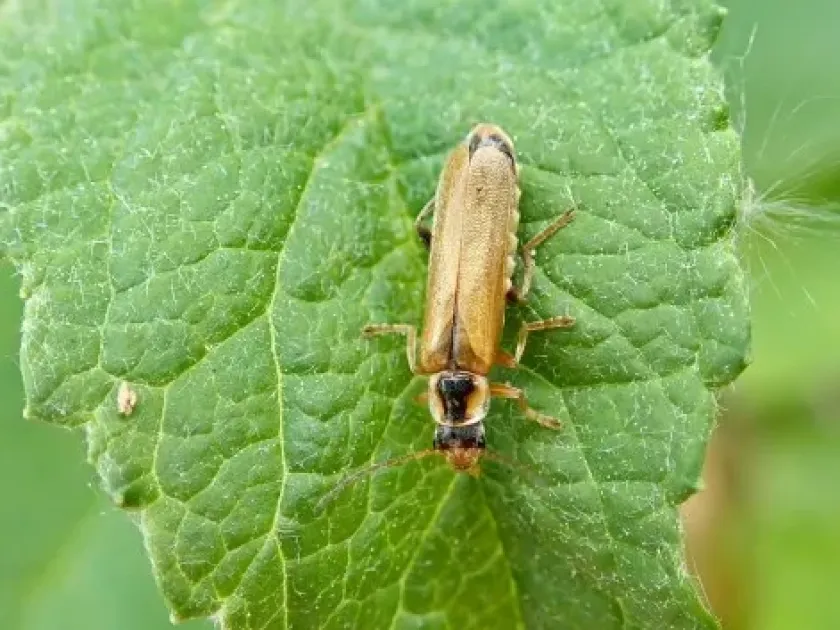
The short-winged soldier beetle (Cantharis brevipennis) belongs to the Cantharidae family within the Coleoptera order. Adult beetles typically measure between 7 and 12 mm in length.
A distinctive feature of this species is its shortened elytra (wing covers), which do not fully conceal the abdomen. Their coloration ranges from yellowish-brown to a darker metallic hue, aiding in camouflage among dense vegetation.
The head and pronotum are usually smooth. They possess thread-like antennae composed of eleven segments, which allow them to navigate effectively and detect potential food sources.
Larvae of this beetle are dark-colored and covered in dense hair. They primarily reside in the soil, where they are often found near decaying organic matter or among the roots of various plants.
Due to their agile nature, adult beetles are frequently overlooked during routine field scouting, often requiring specific observation techniques to detect their presence early in the season.
What it damages
The primary concern regarding this species is the feeding behavior of adults on the reproductive organs of crops. They particularly target cereals and asteraceous plants during the flowering phase.
By consuming anthers, filaments, and stigmas, the beetles disrupt the pollination process. This directly leads to reduced seed set and decreased overall yield in the affected crops.
The mechanical damage inflicted by the beetles creates open wounds, which frequently serve as entry points for various fungal and bacterial pathogens, further weakening the plant's health.
During outbreak years, these beetles can cause significant economic damage to technical crops like rapeseed. Feeding on buds and flowers leads to blossom drop and distorted growth.
While larvae typically prefer decaying matter, in instances of high soil moisture and lack of organic food, they may occasionally feed on tender crop roots, causing stunted growth in young seedlings.
When it appears
Adult flight activity begins in late spring, typically in May, and continues throughout mid-summer. The beetles are most active during warm, sunny hours of the day.
Their life cycle is tightly synchronized with the phenology of host plants. The highest risk of damage to crops occurs during the budding and blooming stages of development.
Following mating, females lay eggs in moist soil or under organic debris. Optimal conditions for egg development are characterized by high soil moisture levels, often following spring rains.
Larval development proceeds through the summer and autumn months. The beetles overwinter in the soil, entering a diapause stage, and complete their pupation cycle in the following spring.
Agronomic management must prioritize field inspections during the critical flowering window to assess beetle population density and take preemptive action if necessary.
Signs of infestation
The first sign of infestation is the visual detection of the beetles feeding directly on flower heads or inflorescences. Closer examination often reveals ragged edges on petals and missing anthers.
Irregular seed set or sparse fruit formation across the field is a strong indicator of pest impact. In severe cases, the flower heads may show signs of premature wilting or necrosis.
Excrement deposits on leaves near the flower stalks indicate localized high concentrations of beetles. Feeding marks on the foliage are also common where beetles congregate.
- Presence of adult beetles on cereal spikes or flower buds.
- Visible damage to reproductive organs such as anthers and stigmas.
- Premature flower or bud drop without visible drought stress.
- Reduced grain quality due to incomplete fertilization.
To detect the presence of Cantharis brevipennis, scouts should use sweep nets or carefully examine the interiors of flower clusters, especially in the early morning hours.
Control measures
Chemical control is the most effective method when populations exceed the economic injury level. Insecticides must be applied before the onset of mass flowering to minimize impact on pollinators.
Cultural control strategies include deep autumn plowing to disrupt the soil, which destroys larval and pupal overwintering sites, significantly reducing the pest population for the following year.
Crop rotation serves as a critical preventive measure. By alternating host crops with non-host species, growers can effectively break the life cycle of the beetle and limit its survival.
Biological control, including the encouragement of natural predators like ground beetles or insectivorous birds, can help suppress beetle populations in integrated pest management programs.
Monitoring using light or pheromone traps allows for precise timing of interventions, ensuring that control measures are executed only when necessary and strictly following safety guidelines.
Taxonomy
- Latin name
- Cantharis brevipennis
- Order
- Coleoptera (beetles)
- Family
- Cantharidae
- EPPO code
- CANTBR
Discussion
No discussions yet — be the first.