
Cantharis lateralis
Cantharis lateralis
Description
How to identify
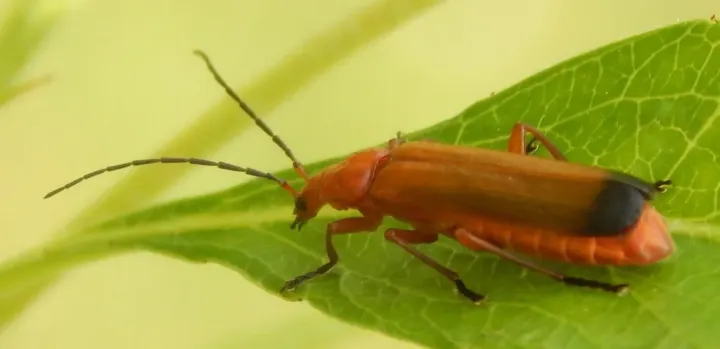
Cantharis lateralis is a species of soldier beetle belonging to the family Cantharidae, within the order Coleoptera. Adult beetles are typically 10–12 mm long and possess soft elytra, which is the defining characteristic of this entire beetle family.
The coloration usually includes reddish or yellowish patterns on the pronotum, contrasted by dark, often black, elytra. They have well-developed antennae and legs, enabling them to navigate effectively through foliage during the summer months.
The larvae of this species are dark in color, covered with fine, velvety hairs. They are highly active predators, equipped with strong mouthparts that allow them to consume various prey items, including other small invertebrates found in the soil.
The life cycle encompasses egg, larval, pupal, and adult stages. While adults are commonly seen on flowers during the summer, the larvae spend the majority of their time in the soil or under organic debris, particularly during overwintering.
Although soldier beetles are often considered beneficial as predators, populations can occasionally become a nuisance in agricultural settings when larval food sources are scarce, leading them to feed on crop roots.
What it damages
The primary damage to agricultural crops is caused by the larvae dwelling in the soil. They are known to chew on the root systems and the base of stems of young seedlings, which can lead to weakened plants and retarded growth.
In cases of high infestation, particularly during wet spring seasons, the larvae can compromise the structural integrity of young shoots, leading to reduced stand density or complete seedling failure in susceptible crops.
Adult beetles, while feeding on nectar and pollen, may occasionally cause mechanical damage to flower structures, which can affect pollination success and fruit set in certain fruit-bearing horticultural plants.
Plants affected by larval feeding in the root zone are also more susceptible to opportunistic soil-borne pathogens, as the damage to roots creates entry points for various fungal and bacterial infections.
The economic impact of this species is variable and typically depends on the crop type and the population density present in the soil prior to planting, requiring careful field monitoring by growers.
When it appears
Adults are typically active from late spring through mid-summer, coinciding with the flowering phase of many host plants. During this time, they mate and lay eggs in the moist soil layers.
Larval activity peaks in the early spring, when soil temperatures rise and moisture levels are favorable for germination. This is the period when seedlings are most vulnerable to root damage caused by foraging larvae.
As autumn approaches, larvae retreat deeper into the soil profile to overwinter. During this dormant phase, they do not cause significant damage to crops, as their metabolic processes slow down significantly.
Climate factors such as temperature and humidity levels greatly influence the survival rate of each generation. Years with moderate rainfall often correlate with higher pest pressure in subsequent seasons.
Monitoring for adults using yellow sticky traps or visual inspection during the bloom period is recommended to assess population levels and determine the necessity of intervention.
Control measures
Effective agrotechnical measures include thorough soil cultivation and autumn plowing, which disrupt the overwintering sites of larvae and expose them to predatory birds and environmental stressors.
Crop rotation remains a fundamental strategy to disrupt the life cycle of the pest, preventing the buildup of larval populations in the soil over successive growing seasons.
Biological control agents, such as entomopathogenic fungi, offer an environmentally friendly alternative to chemical pesticides, effectively managing larval densities in the soil without harming beneficial organisms.
Chemical control should be reserved for situations where population thresholds are exceeded. If necessary, selective insecticides that minimize impact on non-target species and natural enemies should be prioritized.
Supporting the presence of natural enemies, such as ground beetles, spiders, and insectivorous birds, is crucial for long-term pest management and maintaining ecological balance in the field.
Taxonomy
- Latin name
- Cantharis lateralis
- Order
- Coleoptera (beetles)
- Family
- Cantharidae
- EPPO code
- CANTLA
Discussion
No discussions yet — be the first.