
Rhabditid nematode
Rhabditis ornata
Description
How to identify
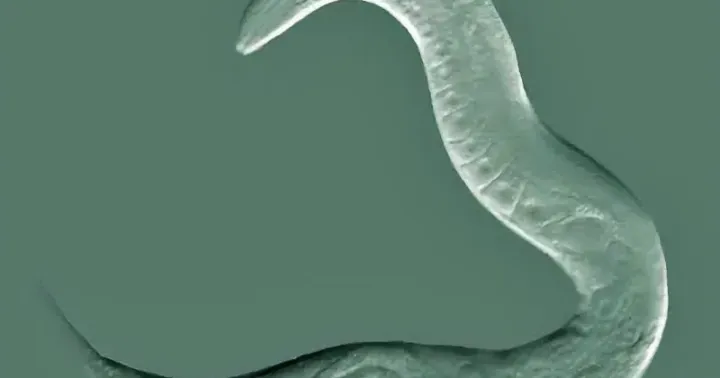
The Rhabditid nematode (Rhabditis ornata) is a microscopic worm belonging to the order Rhabditida. These organisms are commonly found in soils rich in organic matter, where they primarily exist as saprophytes, consuming bacteria and decaying plant tissues.
The biology of this species is characterized by a rapid reproductive cycle, which allows populations to explode under favorable conditions. They are well-adapted to high-moisture environments, such as water-logged soils or decomposing organic composts commonly used in agricultural settings.
Rhabditis ornata possesses a specialized developmental stage known as the dauer larva. This stage is highly resistant to desiccation and environmental stress, enabling the nematode to survive in the soil for extended periods even when food resources are temporarily depleted.
Systematically, they are classified within the family Rhabditidae. While many species in this group are harmless, under specific agricultural conditions—such as over-fertilization with organic matter or poor aeration—they can exhibit opportunistic parasitic behavior towards plant tissues.
Laboratory identification of this nematode requires expert analysis of anatomical features, such as the stoma structure and reproductive organs. Distinguishing between strictly saprophytic species and those capable of damaging crops is essential for correct field management.
What it damages
These nematodes primarily target vegetables and seedlings in greenhouses and nurseries. Crops such as tomatoes, cucumbers, and potatoes are particularly susceptible, especially when grown in heavy, poorly drained soils that promote the decay of organic material.
The damage caused by Rhabditis ornata is often indirect, occurring as the nematode feeds on roots already weakened by bacterial or fungal rot. By grazing on these tissues, they accelerate the destruction of the root system and inhibit nutrient uptake.
Severe infestations result in stunted growth, yellowing of leaves (chlorosis), and general loss of vigor. The inability of the plant to maintain a healthy vascular connection through the roots leads to permanent wilting and significant yield loss.
Nematodes also act as vectors, transporting pathogenic bacteria and fungi deep into the root cortex. This synergy between the nematode and secondary pathogens makes the infection significantly harder to treat than simple mechanical damage.
In hydroponic systems or substrates with high organic content, the rapid migration of nematodes through the water film allows them to colonize entire beds quickly. Without intervention, this leads to widespread mortality among young, sensitive transplants.
Signs of infestation
The initial signs of an infestation often mimic nutrient deficiencies or drought stress. Plants show a gradual loss of turgor in the afternoon, followed by premature leaf yellowing starting from the lower parts of the stem.
Upon inspection of the root zone, one may notice necrotic lesions, softening of the roots, or a slimy appearance. A distinct, unpleasant putrid odor often accompanies an active infestation, signaling the breakdown of plant cells and subsequent decay.
Affected plants fail to respond to standard fertilization programs because their damaged roots cannot transport minerals to the upper parts of the plant. This creates a visible disparity in growth between healthy and infested plants in the same row.
- Wilting during peak sunlight hours.
- Darkening and necrosis of root tips.
- Formation of lesions on the base of the stem.
- Reduced branching of the root system.
If a plant is carefully uprooted, the root structure appears degraded, with missing root hairs and dark, brittle patches. Advanced cases show total destruction of the small lateral roots, leaving only the primary thick roots behind.
Control measures
Effective management begins with strict sanitation practices. Removing crop debris and maintaining proper aeration in the root zone are the most important steps to prevent the proliferation of these nematodes in the first place.
Soil sterilization, such as steam treatment or solarization, is highly recommended for greenhouse soil beds before planting. These methods successfully eliminate both active larvae and resistant dauer stages from the growing medium.
Implementing a balanced irrigation strategy is crucial. Since Rhabditis ornata thrives in water-saturated environments, ensuring good drainage helps create a hostile environment for the pest, effectively reducing its population density.
Biological control agents, particularly nematophagous fungi, can be introduced into the soil to prey on the nematodes. This approach provides sustainable management without the environmental risks associated with synthetic chemical treatments.
Chemical control with nematicides is a last-resort option. If used, these products must be applied in strict accordance with safety regulations to minimize potential toxic effects on the soil ecosystem and non-target beneficial microorganisms.
Taxonomy
- Latin name
- Rhabditis ornata
- Order
- Nematodes
- Family
- Rhabditidae
- EPPO code
- RHATOR
Discussion
No discussions yet — be the first.