
Phasmarhabditis
Phasmarhabditis
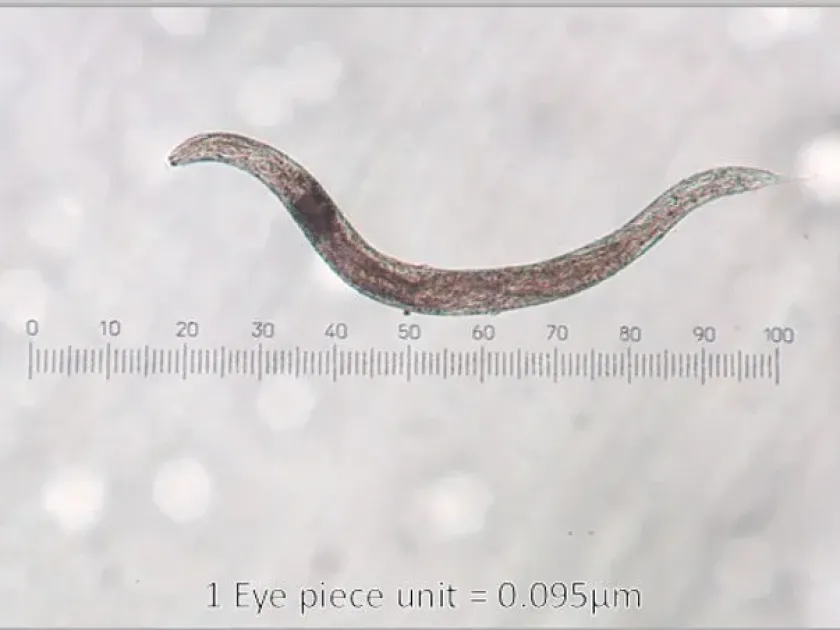
Description
How to identify
Phasmarhabditis is a genus of rhabditid nematodes characterized by their unique relationship with gastropod mollusks, specifically slugs and snails.
These nematodes belong to the family Rhabditidae and are commonly found in soil environments where their hosts are present in high densities.
The genus consists of several species, some of which are strictly associated with decomposing organic matter, while others have evolved specific parasitic behaviors towards slugs.
Morphologically, these nematodes are very small and transparent, making identification via conventional field observation impossible without the use of specialized laboratory equipment.
They possess a complex life cycle that involves both free-living stages in the soil and parasitic stages inside the mollusk, where they reproduce rapidly.
What it damages
Phasmarhabditis nematodes are not direct pests of plants; instead, they act as natural biological agents that parasitize and often kill slugs and snails.
By reducing slug populations, these nematodes significantly decrease the damage to various crops, including leafy vegetables, strawberries, and young seedlings.
The damage caused by slugs usually involves the consumption of plant tissues, leading to yield loss and potential secondary infections, which these nematodes help prevent.
In the context of agricultural management, their presence is considered highly beneficial, as they provide an eco-friendly alternative to chemical molluscicides.
They do not affect plant roots or foliage directly, making them safe for use in organic farming and integrated pest management systems.
When it appears
The presence and activity of Phasmarhabditis nematodes are strictly seasonal, depending primarily on soil moisture and ambient temperature conditions.
Spring is typically the period of highest activity, when increased precipitation provides the necessary moisture for the nematodes to emerge and search for hosts.
During dry and hot summer months, the nematodes enter an inactive state or reside in deeper, moister soil layers to survive the adverse conditions.
Autumn brings a resurgence in nematode activity as soil temperatures drop and moisture levels increase, creating optimal conditions for slug infection cycles.
In greenhouse settings, where environmental variables are controlled, these nematodes can remain active and perform their biological control duties throughout the entire year.
Signs of infestation
A primary sign of nematode efficacy is a significant and unexplained decline in the slug population within the treated area over a few weeks.
Slug specimens infected by Phasmarhabditis may exhibit reduced mobility, swelling of the mantle, and a cessation of feeding activities before their eventual death.
The absence of typical slug damage, such as irregularly shaped holes on leaves and shiny mucus trails on the soil, is a strong indicator of successful biological control.
Confirmation of nematode presence requires microscopic analysis of collected slug corpses, where mass populations of these nematodes can be observed within the tissues.
Regular monitoring of slug damage indices provides the necessary evidence to evaluate the efficiency of the biological control process in the field.
Control measures
There are no control measures intended to eliminate Phasmarhabditis, as they are essential beneficial organisms in sustainable agricultural practices.
To support their population, growers should focus on maintaining healthy soil structure, avoiding the excessive use of broad-spectrum pesticides, and incorporating organic matter.
In cases where slug pressure is extreme, commercial applications of specific nematode strains are available as an effective bio-control product.
Moisture management through mulching and proper irrigation practices enhances the survival rate and searching efficiency of these beneficial nematodes.
Adopting integrated pest management (IPM) strategies ensures that the chemical load on the field is reduced, allowing natural predator and parasite populations to thrive.
Taxonomy
- Latin name
- Phasmarhabditis
- Order
- Nematodes
- Family
- Rhabditidae
- EPPO code
- PHSMSP
Discussion
No discussions yet — be the first.