
Caenorhabditis elegans
Caenorhabditis elegans
Description
How to identify
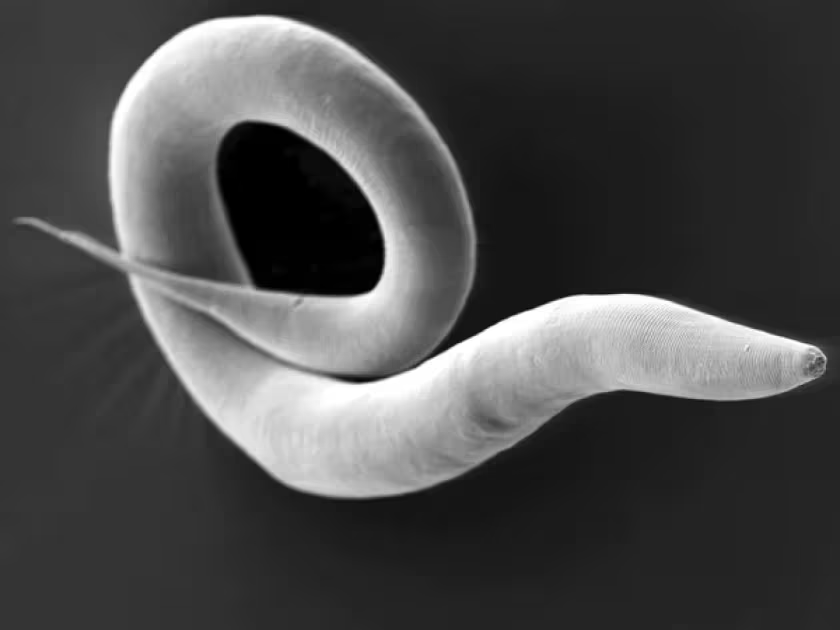
Caenorhabditis elegans is a free-living, microscopic nematode belonging to the family Rhabditidae. Widely recognized as a model organism in biological research, it is roughly one millimeter in length and has a transparent body structure.
These nematodes naturally inhabit soil environments rich in organic matter, where they feed primarily on bacteria. Their biology is characterized by a rapid lifecycle consisting of egg, four larval stages, and an adult phase.
When environmental conditions become unfavorable, C. elegans can enter a specialized stage known as a dauer larva. This stage allows the nematode to withstand extreme stress, ensuring the survival of the population until conditions improve.
Reproduction occurs through self-fertilization in hermaphrodites or sexual reproduction, enabling rapid colonization of nutrient-rich substrates. The rapid generation turnover makes it highly adaptable to varying soil conditions.
While not a primary plant pathogen, their high density in the rhizosphere serves as a biological indicator of significant organic decomposition processes occurring within the soil profile.
What it damages
Caenorhabditis elegans is not an obligate plant parasite. Unlike many other nematode species, they do not feed directly on the vascular tissues or cell sap of living plants. However, their presence can indirectly impact crop performance.
The primary concern arises when massive populations aggregate in the root zone. By consuming bacteria that are involved in the decay of plant matter, these nematodes can create a localized microenvironment that promotes the spread of soft rot bacteria.
These nematodes can act as mechanical vectors for various plant pathogens. By transporting bacteria on their cuticles, they facilitate the entry of diseases into weakened or damaged plant tissues.
Indirect damage manifests as reduced plant vigor and stunted growth, particularly in young seedlings. High nematode density often correlates with an imbalance in the rhizospheric microbiome, which is essential for healthy plant development.
In greenhouse settings, excessive C. elegans populations can signal problems with irrigation management or the overuse of raw organic fertilizers, leading to an environment where secondary infections thrive.
Signs of infestation
Initial signs of a large nematode population include slower-than-expected growth of seedlings and reduced seedling establishment rates. Root systems may appear slightly compromised or exhibit signs of bacterial soft rot.
An unmistakable sign is the presence of an unpleasant odor in the soil near the root zone, often resulting from the accelerated decomposition of organic matter facilitated by the nematode-microbe interaction.
Plants may show symptoms of chlorosis and wilting even when soil moisture levels are adequate, as the integrity of the root surface is compromised by the surrounding intense bacterial activity.
Diagnosis requires laboratory analysis, such as microscopic inspection of soil samples or root washes, as it is impossible to distinguish these nematodes from other soil-dwelling organisms with the naked eye.
If professional scouting detects a high concentration of these organisms, it is usually an indicator of poor soil aeration and the accumulation of uncomposted organic material that needs immediate remediation.
Control measures
Effective management begins with proper soil preparation. Ensuring that all organic amendments, such as manure or compost, are fully matured and mineralized is essential to prevent attracting high nematode populations.
Implementing a robust crop rotation plan helps to naturally disrupt the lifecycle of soil-dwelling organisms. Crop rotation improves soil structure and promotes a balanced microbiome that is less conducive to nematode outbreaks.
Biological control agents, particularly those based on nematophagous fungi, provide a sustainable and safe way to keep nematode populations under control without relying on broad-spectrum chemical treatments.
Good agricultural practices such as improving soil drainage and preventing waterlogging are critical. C. elegans populations thrive in damp, anaerobic environments; hence, improving soil aeration significantly limits their activity.
- Utilize fully composted organic matter to prevent bacterial spikes.
- Maintain optimal soil drainage to discourage nematode colonization.
- Monitor microbial soil health using professional testing services.
- Integrate green manure crops to enhance beneficial soil organisms.
Taxonomy
- Latin name
- Caenorhabditis elegans
- Order
- Nematodes
- Family
- Rhabditidae
- EPPO code
- CAEOEL
Discussion
No discussions yet — be the first.