
Rhabditids
Rhabditis
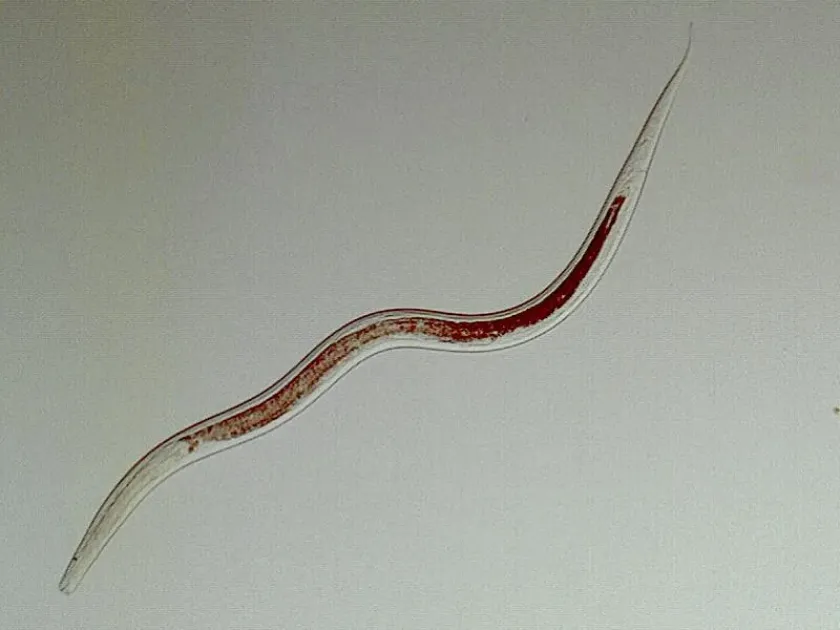
Description
How to identify
Rhabditids (genus Rhabditis) belong to the order Rhabditida and the family Rhabditidae. These are microscopic soil nematodes that typically live as saprophytes but can act as facultative parasites under stress.
They appear as thread-like, translucent, or whitish worms. Usually ranging from 0.5 to 2 millimeters in length, they are invisible to the naked eye and require microscopic examination for identification.
Their life cycle involves several larval stages. They possess a survival mechanism that allows them to enter a state of dormancy during harsh environmental conditions, such as drought or lack of organic matter.
Biologically, these organisms are specialized for environments with high levels of decaying organic matter, feeding primarily on bacteria and various microorganisms.
Taxonomy of these nematodes is complex, as many species easily shift from feeding on decaying debris to invading tissues of weakened or stressed plants.
What it damages
Rhabditids affect a wide range of crops, particularly those exhibiting root rot or tissue degradation in tubers and succulent organs.
Potatoes, carrots, bulbous vegetables, and various crops grown in waterlogged or high-organic soils are most susceptible to infestation.
The harm caused by these nematodes involves colonizing damaged plant tissues, which deepens cellular destruction and accelerates the rotting process significantly.
Often, their presence is secondary, as they occupy tissues already compromised by fungal or bacterial pathogens, forming complex infections that destroy harvest quality.
In cases of mass reproduction, rhabditids can cause seedling mortality and severe losses in stored produce due to rapid decay.
Signs of infestation
The primary sign of infestation is the presence of wet, soft rot patches on roots, stems, or tubers, often accompanied by a distinct unpleasant odor.
Plants may show stunted growth, leaf yellowing, or wilting despite adequate irrigation, indicating damage to the plant's vascular and root systems.
Upon inspecting the underground parts, one can observe tissue softening that turns into a slimy mass, often attracting secondary pests and scavengers.
In greenhouse settings, infestations appear as patches of seedling collapse, which are frequently misidentified as fungal infections like damping-off.
To confirm the diagnosis, professional phytopathological analysis of soil samples or infected plant tissues is highly recommended.
Control measures
The fundamental strategy for control is strict adherence to crop rotation to prevent the accumulation of plant debris in the soil.
Ensuring proper field drainage is critical, as excessive soil moisture is the primary driver for rapid population growth of these nematodes.
- Deep plowing and soil cultivation to bury and decompose crop residues.
- Using only certified, disease-free planting material to avoid introducing nematodes to new areas.
- Promptly removing and disposing of decaying plant materials from fields or greenhouses.
Biological control agents, particularly entomopathogenic fungi, are effective in reducing nematode populations without chemical hazards.
In severe infestation cases, specialized nematicides may be applied, provided that all agronomic safety regulations and dosage requirements are strictly followed.
Taxonomy
- Latin name
- Rhabditis
- Order
- Nematodes
- Family
- Rhabditidae
- EPPO code
- RHATSP
Discussion
No discussions yet — be the first.