
Remaudiereana inornata
Remaudiereana inornata
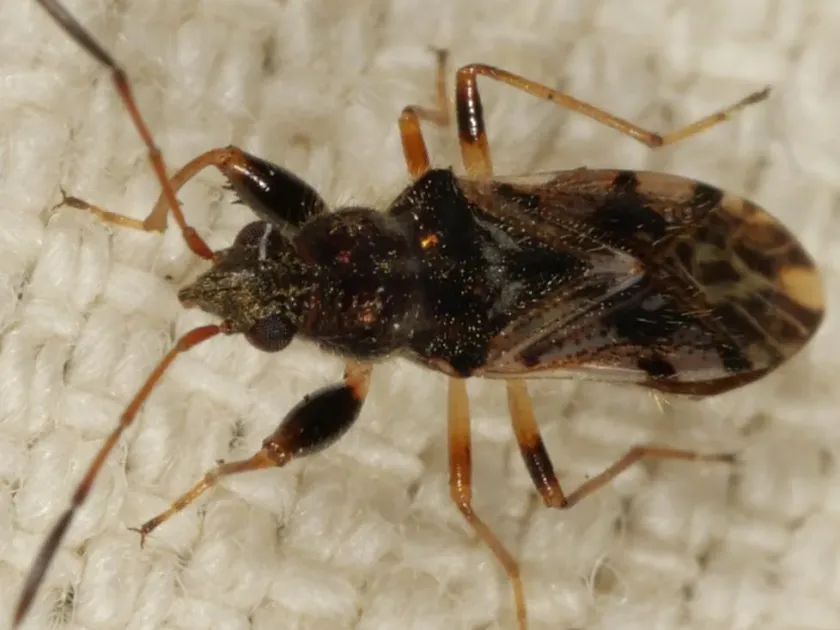
Description
How to identify
Remaudiereana inornata belongs to the Anthocoridae family, commonly known as minute pirate bugs, within the order Hemiptera. This insect is often overlooked due to its small size and cryptic nature, making early detection a primary challenge for agronomists.
Adults typically exhibit a flattened, brownish body structure which serves as effective camouflage on leaves and bark. While many family members are beneficial predators, this specific species can cause localized damage to cultivated crops under certain conditions.
Identification is highly technical, as morphological similarities exist between Remaudiereana inornata and other related species. Precise classification often requires expert entomological examination of internal anatomical structures in a laboratory setting.
The biology of this species is complex and not fully documented across all agricultural regions. They demonstrate a high level of environmental plasticity, which allows them to adapt to different crop systems and climates successfully.
Understanding the life cycle is crucial for effective monitoring. Their populations can expand rapidly when environmental conditions are stable and food sources are abundant, leading to potential outbreaks in commercial farming.
What it damages
This pest affects a variety of agricultural and ornamental crops by feeding on plant cellular fluids. By piercing the plant tissue with its specialized mouthparts, the insect extracts vital nutrients, which weakens the host plant significantly.
Cereal crops and certain vegetables are particularly susceptible during the vegetative growth phase. When feeding pressure is high, the plant loses its vigor, and photosynthesis is impaired due to tissue necrosis caused by saliva injection.
Damage is often localized, appearing as small, necrotic spots where the pest has fed. If infestations are severe, these spots coalesce, leading to large areas of withered leaf tissue and eventual loss of the plant's structural integrity.
The damage caused by Remaudiereana inornata can be mistaken for symptoms of viral diseases or other sucking insects like aphids. Detailed examination of the underside of leaves usually reveals the distinct puncture marks left by this pest.
In addition to direct physiological damage, the feeding sites can serve as entry points for secondary pathogens. This often results in a complex disease scenario that complicates the recovery of the affected crop.
When it appears
The seasonal appearance of this pest is synchronized with rising spring temperatures, usually when the thermometer consistently reaches above 15°C. This timing corresponds with the emergence of young crop shoots, which are highly attractive to the insects.
Peak populations are generally observed in mid-summer, coinciding with the development of multiple overlapping generations. Agronomists should prioritize field inspections during this period to assess potential risk levels.
As autumn temperatures drop, adults enter a state of diapause. They seek shelter in protected environments, such as plant debris, leaf litter, or the upper layers of soil, to survive the winter months until the next season.
Environmental factors like prolonged droughts can accelerate the insect's reproductive cycle, leading to higher population densities. Conversely, high humidity can sometimes limit their spread, depending on the microclimate of the field.
Early spring monitoring is essential because the overwintering adults are immediately active upon crop germination. Preventive strategies implemented early in the season can significantly mitigate the risk of later infestations.
Signs of infestation
Initial infestation signs include the appearance of small, chlorotic flecks on the foliage. Over time, these flecks may turn yellowish or white, indicating that the insect has been actively feeding on the plant tissue.
The presence of tiny black fecal spots on the underside of leaves is a definitive indicator of an infestation. These spots are often clustered, reflecting the feeding habits of the insect colonies on specific leaf areas.
Visible leaf curling and shoot deformity are common consequences of prolonged feeding. Stunted growth in young plants is a clear sign that the pest population has reached a level that compromises plant development.
- Small light-colored feeding spots on leaves.
- Presence of tiny black excrement dots on the foliage.
- Deformation or curling of young shoot tips.
- Presence of nymphal exuviae (shed skins) on the stems.
In cases of high infestation, a noticeable scent may be produced by the colonies when disturbed. This behavioral trait can be used as a field indicator of the presence of Remaudiereana inornata in a specific crop plot.
Control measures
Integrated Pest Management (IPM) practices are highly recommended for controlling this species. Cultural practices, such as removing crop residues and weeds, drastically reduce the availability of wintering sites for the pest.
Biological control agents, including naturally occurring predators and parasitoids, play a key role in keeping population numbers in check. Encouraging biodiversity within the field environment supports these beneficial insect populations.
Chemical intervention should be reserved for situations where economic thresholds are exceeded. If necessary, systemic insecticides applied during the early stages of infestation can provide effective control with minimal impact on non-target species.
Timing the application of treatments is critical. Evening sprays are generally more effective as the insects are less active and more likely to be settled on the plant foliage, allowing for better contact with the product.
Continuous monitoring using yellow sticky traps is a recommended strategy to detect the arrival of the pest. Early detection allows for targeted, smaller-scale treatments, which preserves the ecological balance of the farmland.
Taxonomy
- Latin name
- Remaudiereana inornata
- Order
- Hemiptera (bugs, aphids, leafhoppers)
- Family
- Lygaeidae
- EPPO code
- REMAIN
Discussion
No discussions yet — be the first.