
Remaudiereana
Remaudiereana
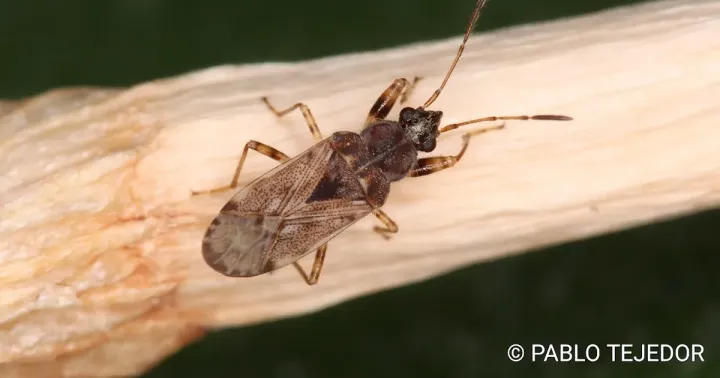
Description
How to identify
Remaudiereana belongs to the order Hemiptera and the family Miridae (plant bugs). These small, agile insects are characterized by their specialized mouthparts, which are adapted for piercing and sucking plant juices.
Adult bugs typically exhibit colors that provide effective camouflage, ranging from pale green to brownish tones. This makes them difficult to spot during routine field inspections, as they often hide on the undersides of leaves or within dense vegetation.
Morphologically, they possess distinct antennae and a segmented body typical of mirids. Identifying them often requires examining the structure of their wings and head under magnification to ensure accurate species determination.
The nymphs go through several developmental stages. Unlike adults, nymphs lack fully developed wings and may be smaller and more vulnerable to environmental changes, though they remain active feeders throughout their growth.
These pests are known for their high mobility. When disturbed, they often fly short distances or drop to the ground, which is a behavioral trait that field technicians use to locate them quickly during monitoring.
What it damages
This pest primarily feeds on a variety of agricultural and horticultural crops, damaging both vegetative and generative plant tissues. By extracting sap, they cause significant physiological stress to the host plant.
Feeding damage begins with the creation of minute, discolored spots on leaf surfaces. These spots are caused by the injection of salivary enzymes that break down plant cells, leading to localized necrosis.
In severe infestations, the cumulative effect of these punctures leads to leaf curling, stunted development, and reduced overall plant vigor. The plant's ability to photosynthesize is impaired, negatively impacting yields.
Generative damage is also common, particularly during the flowering stage. The bugs may feed on developing buds and flowers, resulting in deformed fruit or premature drop of blossoms, which directly reduces harvest quality.
Additionally, Remaudiereana can act as a vector for various plant pathogens. The open wounds caused by their feeding provide easy entry points for fungi and bacteria, further complicating the plant health situation.
When it appears
The seasonal emergence of Remaudiereana is heavily influenced by temperature and humidity levels. Activity generally increases with the onset of warm spring weather when temperatures remain consistently above certain thresholds.
They overwinter in sheltered areas, typically as adults or in the egg stage, buried within plant debris or leaf litter. As the spring season progresses, they emerge to find host plants for feeding and mating.
Multiple generations can occur within a single growing season, provided the weather conditions stay favorable. Mid-summer often marks the period of highest pest pressure and population density.
As daylight hours decrease and temperatures drop in the autumn, the population growth slows down. The insects eventually migrate to hibernation sites to survive the winter months.
Monitoring the cumulative sum of active temperatures helps agronomists predict the emergence of subsequent generations, allowing for better-timed intervention strategies.
Signs of infestation
The most visible sign of infestation is the appearance of mottled or stippled leaf patterns. These points of damage turn yellowish or white as the plant cells die off around the feeding puncture.
Distorted growth, such as twisted or crinkled leaves, is a frequent symptom of prolonged feeding. This indicates that the insect's saliva has disrupted the hormonal and metabolic processes within the plant tissue.
During field assessments, one might observe the cast skins (exuviae) left behind by nymphs during molting. Finding these skins is a reliable indicator that an active population is present.
Premature blossom drop or misshapen fruit are critical warning signs. If these occur in conjunction with stippling on the leaves, it strongly suggests a pest infestation requiring immediate attention.
Secondary infections, such as small patches of mold or rot developing on damaged areas, often follow the initial insect damage, serving as a secondary indicator of high pest activity.
Control measures
A comprehensive integrated pest management (IPM) approach is recommended. The first line of defense is the rigorous control of weeds and alternate host plants in and around the field to minimize breeding grounds.
Crop rotation is essential to break the insect's life cycle. Furthermore, clearing crop residues immediately after harvest reduces the number of overwintering sites for the adults and eggs.
When the economic threshold is reached, the application of selective insecticides is necessary. It is crucial to choose products that are effective against mirids while minimizing impact on beneficial insects.
Biological control, using natural predators like lady beetles, lacewings, or predatory bugs, should be encouraged. Enhancing habitat for these natural enemies is a sustainable way to manage Remaudiereana.
Frequent monitoring using sticky traps and visual inspection is vital for early detection. Timely action prevents population explosions and preserves the overall health and productivity of the crop.
Taxonomy
- Latin name
- Remaudiereana
- Order
- Hemiptera (bugs, aphids, leafhoppers)
- Family
- Lygaeidae
- EPPO code
- REMASP
Discussion
No discussions yet — be the first.