
Damsel bug
Reduviolus
Description
How to identify
Damsel bugs of the genus Reduviolus belong to the family Nabidae, which are widely recognized for their predatory habits in fields.
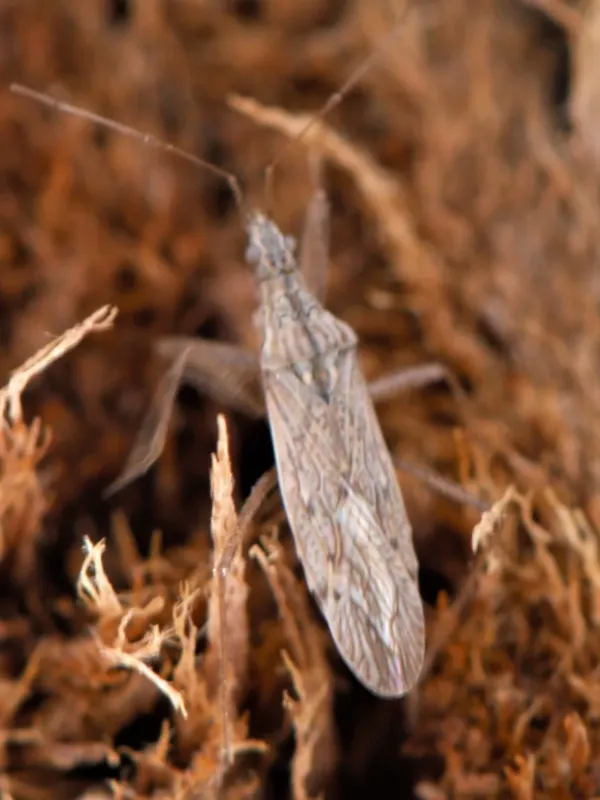
The adult damsel bug is typically slender, measuring about 7-10 mm in length, with a tan, gray, or yellowish-brown coloration that blends into the foliage.
They possess a prominent, three-segmented, curved beak designed for piercing the exoskeleton of their prey and consuming body fluids.
Their front legs are slightly thickened and specialized for grasping prey, a feature common among many predatory hemipterans.
Nymphs resemble smaller, wingless versions of adults and are highly active hunters from the early stages of their development.
What it damages
Although primarily predators of aphids, mites, and caterpillars, damsel bugs may occasionally feed on plant tissues under conditions of prey scarcity.
Crops such as alfalfa, soybeans, and wheat are occasionally subject to feeding damage if the predator population density becomes too high.
Feeding marks appear as tiny, necrotic spots on leaves and stems where the insect has inserted its proboscis into the plant tissue.
This incidental herbivory rarely reaches economic threshold levels; in most cases, the benefits provided by their predation outweigh the minor damage.
Heavy infestations of these bugs are unusual, as they maintain their own population levels based on the abundance of available prey insects.
When it appears
The life cycle of the Reduviolus usually involves overwintering as adults in sheltered areas like field borders or crop residues.
In spring, they emerge and begin searching for host plants where they lay their eggs into the soft tissues of the stems or leaves.
The nymphs go through several instars during the growing season, reaching maximum activity levels during mid-summer when aphid populations peak.
The number of generations per year depends on the local climate, but they are typically well-adapted to sync with the life cycles of their primary prey.
As temperatures cool down in the fall, adults prepare for diapause, reducing their overall activity within the agricultural ecosystem.
Signs of infestation
Field scouting for damsel bugs involves the use of sweep nets to estimate population density within the crop canopy.
Observing the presence of small, puncture-like wounds on tender plant parts can indicate feeding, especially if prey is scarce.
The most common sign of their beneficial presence is a noticeable reduction in the numbers of aphids and other small soft-bodied insects.
Nymphs may be spotted moving quickly across leaves, often mistaken for ants due to their body shape and rapid movement.
If plant damage occurs, it is usually localized and restricted to the youngest growth, rarely causing systemic plant health issues.
Control measures
Integrated Pest Management (IPM) strategies emphasize the conservation of damsel bugs rather than their extermination.
Avoid applying broad-spectrum insecticides, especially during peak growth periods, as these chemicals eliminate beneficial populations.
Maintain semi-natural habitats around field margins to provide refuge and overwintering sites for the predator populations.
Use selective pesticides only when pest populations cross established economic thresholds, ensuring minimal impact on beneficial insects.
Field monitoring is essential to distinguish between periods of useful predation and rare incidents of plant damage, guiding responsible management decisions.
Taxonomy
- Latin name
- Reduviolus
- Order
- Hemiptera (bugs, aphids, leafhoppers)
- Family
- Nabidae
- EPPO code
- REDVSP
Discussion
No discussions yet — be the first.