
Damsel bug
Nabis
Description
How to identify
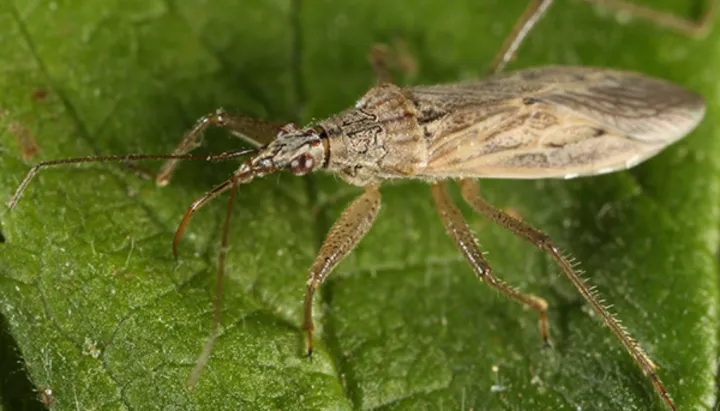
Damsel bugs, belonging to the genus Nabis (family Nabidae), are highly effective predatory insects. Adult bugs typically have a slender body, ranging from 6 to 12 mm in length, and are colored in shades of tan, brown, or grey, which provides camouflage within vegetation.
A distinctive feature of these bugs is their thickened, raptorial front legs, which are specifically adapted for grasping and holding onto active prey. Their head is relatively large with prominent eyes and a slender, sharp proboscis designed for piercing and feeding.
Nymphs resemble the adults but lack developed wings and are generally smaller in size. They go through several developmental stages, during which they become increasingly capable of hunting various smaller insects found in the field.
In agronomy, it is crucial to distinguish these beneficial predators from plant-feeding bugs like Mirids. Damsel bugs do not cause damage to crops, and their presence is a positive indicator of ecological health in an agricultural setting.
Their active hunting style makes them highly mobile and efficient at seeking out prey populations across different strata of the crop canopy, from the soil surface to the upper leaves.
What it damages
Damsel bugs are not agricultural pests; they are predatory insects that provide essential biological control services. They do not consume plant tissues and do not cause economic loss to crop yields.
Their diet primarily consists of aphids, leafhopper nymphs, spider mites, small caterpillars, and other soft-bodied insects. By regulating the populations of these pests, they act as natural protectors of the crop.
They contribute significantly to reducing the need for chemical interventions. By naturally suppressing the pest load throughout the growing season, they save farmers money and contribute to more sustainable farming practices.
While they may occasionally probe plant tissue for moisture during extreme drought conditions, this behavior is negligible and never results in crop failure or significant damage to plant health.
Therefore, damsel bugs are widely recognized in integrated pest management programs as valuable allies that should be encouraged and protected rather than targeted for control.
When it appears
Adult damsel bugs typically overwinter in protected areas, such as leaf litter, crop residues, or grassy margins surrounding fields. As temperatures rise in the spring, they emerge to begin their search for food.
Their activity peaks during the growing season as they migrate into agricultural fields to colonize crops like wheat, soybeans, and alfalfa. This migration is often timed with the arrival or population growth of major crop pests.
Multiple generations can occur throughout the summer, ensuring that the predatory pressure remains consistent as pest populations evolve. They are highly responsive to changes in prey availability.
In the autumn, as crops are harvested and temperatures drop, they move out of the field to find suitable overwintering sites, often congregating in hedge-rows or permanent vegetation areas.
Maintaining diverse field borders is one of the most effective ways to ensure that damsel bug populations survive the off-season and are ready to return to the fields the following year.
Control measures
No control measures are needed for damsel bugs, as they are beneficial insects. Agronomic efforts should focus on habitat preservation rather than eradication of these natural enemies.
The most critical management practice is the judicious use of pesticides. Broad-spectrum insecticides can significantly reduce damsel bug populations; therefore, targeted and selective treatments are preferred whenever possible.
Integrated Pest Management (IPM) strategies emphasize the importance of monitoring beneficial insect populations. Before applying any chemical treatment, farmers should assess the balance between pests and their natural predators.
Providing habitats for damsel bugs, such as buffer strips or wildflower borders, helps to bolster their numbers and ensures they can effectively control pest outbreaks within the field.
- Reduce reliance on broad-spectrum chemical insecticides.
- Maintain perennial vegetation at field edges for overwintering.
- Conduct regular scouting to assess the presence of beneficial predators.
- Use biological control methods when possible to preserve natural enemy populations.
- Integrate crop management practices that favor biodiversity.
Taxonomy
- Latin name
- Nabis
- Order
- Hemiptera (bugs, aphids, leafhoppers)
- Family
- Nabidae
- EPPO code
- NABISP
Discussion
No discussions yet — be the first.