
Nabis alternatus
Nabis alternatus
Description
How to identify
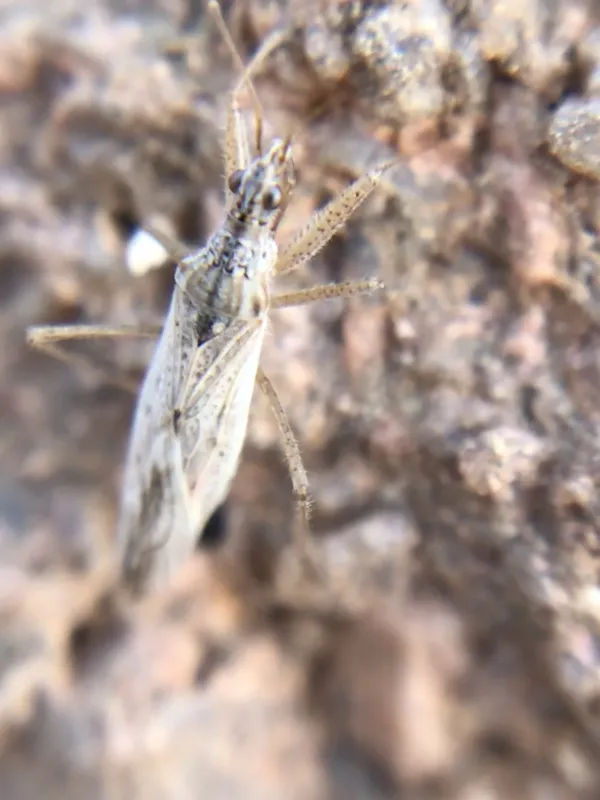
Nabis alternatus, known as a type of damsel bug, belongs to the order Hemiptera and the family Nabidae. The insect has an elongated body, typically yellow-brown, which provides excellent camouflage among foliage.
It possesses a strong, segmented proboscis adapted for piercing the tissues of prey or plants. The front legs are slightly thickened, a characteristic feature of predatory bugs used to grasp food or anchor on plant surfaces.
Adults are small, usually measuring between 6 and 8 mm in length. They have well-developed eyes, allowing them to track the movement of small insects or react to external threats effectively.
The lifecycle follows a hemimetabolous pattern: egg, five nymphal instars, and the adult stage. Eggs are often inserted into plant tissue, making them difficult to detect and protect from conventional treatments.
Although most Nabids are primarily predators, Nabis alternatus can switch to phytophagous behavior, causing damage to crops when preferred insect prey is scarce in the field.
What it damages
The primary economic damage occurs when the bug feeds on plant sap due to a lack of preferred insect prey like aphids, leafhoppers, or small caterpillars in the agro-ecosystem.
Crops frequently affected include small grains, alfalfa, and various legumes. In some instances, it has been recorded on vegetable crops in both open fields and greenhouses.
By piercing leaves and young shoots to extract sap, the bug disrupts photosynthesis and the overall physiological health of the plant, leading to weakened growth and reduced yield potential.
Symptoms include necrotic spots on leaves, leaf deformation, and stunted growth. These signs often result in a significant decrease in both the quality and quantity of the harvest.
Damage to the generative parts of plants is particularly critical, as it can cause flower drop or shriveled seeds, directly impacting the economic output of the agricultural operation.
When it appears
Adult activity typically begins in early spring as soon as soil temperatures rise, allowing them to emerge from overwintering sites in leaf litter, stubble, or dense vegetation.
Peak population density is generally observed in mid-summer, coinciding with the massive development of early-instar nymphs that require intensive feeding for rapid maturation.
Multiple generations may occur throughout the season, meaning the pest can remain a persistent threat to crops over an extended period of the growing year.
As autumn approaches, the bugs begin to migrate toward sheltered areas such as field edges, grassy borders, or windbreaks to survive the winter dormant period.
The total number of generations per year is highly dependent on the local climate and temperature; warmer regions support a faster reproductive cycle and higher pest pressure.
Signs of infestation
One of the earliest signs of infestation is the appearance of tiny puncture marks on the leaves, often surrounded by small, yellowish or brown necrotic zones.
Field monitoring is best conducted using the sweep-net method. Early morning or late evening surveys are ideal for counting individuals and estimating the current population density.
Nymphs, which resemble small ants in appearance but feature the characteristic proboscis of a bug, can often be found hiding on the underside of leaves or within plant stems.
General crop stress, appearing as wilting or leaf yellowing that cannot be explained by pathogens or water deficiency, often indicates the presence of sucking pests like this bug.
Severe infestations often show a progressive drying of leaf margins or entire sections of the plant, significantly lowering the overall vitality and green canopy of the field.
Control measures
Implementing a diverse crop rotation is a highly effective preventive measure, as it disrupts the life cycle of the pest and limits its establishment in permanent fields.
Sanitation practices, such as removing weeds around the edges of fields and destroying crop residues, significantly reduce the available habitats for overwintering and early-season survival.
Biological control agents, including natural predators and parasitoids, play a crucial role in maintaining bug populations below economic thresholds without the need for intensive chemical use.
Chemical control should be employed only when monitoring reveals that the pest population has exceeded the economic threshold, using selective insecticides to minimize harm to beneficial insects.
Regular field scouting using traps or visual inspection is essential for early detection, allowing for targeted intervention before the pest reaches its peak reproductive phase.
Taxonomy
- Latin name
- Nabis alternatus
- Order
- Hemiptera (bugs, aphids, leafhoppers)
- Family
- Nabidae
- EPPO code
- NABIAL
Discussion
No discussions yet — be the first.