
American damsel bug
Nabis americoferus
Description
How to identify
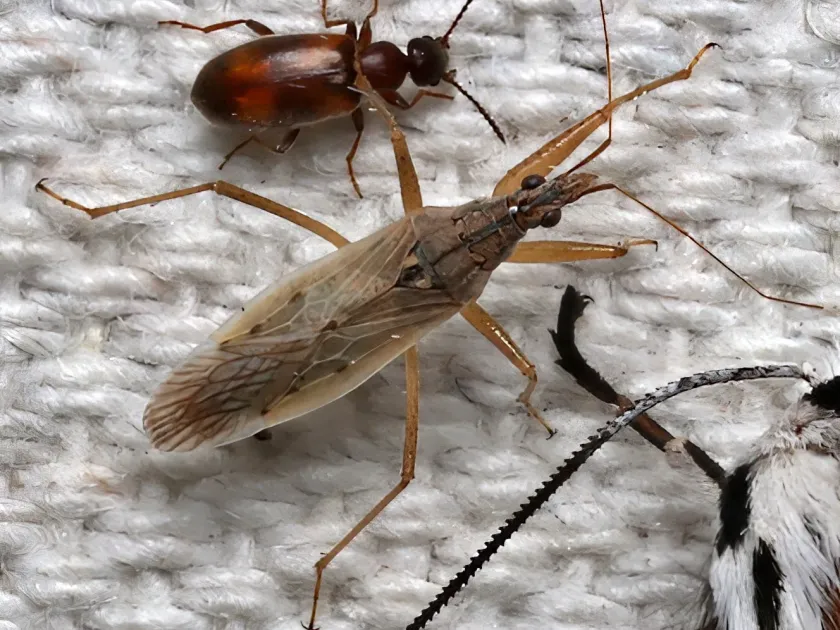
The American damsel bug (Nabis americoferus) is a member of the Nabidae family, commonly known as damsel bugs. These insects are typically 7–9 mm long and have a slender, elongated body.
The coloration of these bugs usually ranges from light tan to brownish-grey, which helps them blend in with dry plant material and soil surfaces in agricultural fields.
They possess a prominent, segmented proboscis tucked beneath the head, which is highly specialized for piercing and sucking fluids from plants or their prey.
The life cycle of the American damsel bug involves gradual metamorphosis, consisting of the egg, five nymphal stages, and the winged adult stage.
Although widely recognized as predators of other insect pests, they can become phytophagous (feeding on plants) when prey availability is low, making them opportunistic pests.
What it damages
The American damsel bug is known to infest various crops including soybeans, alfalfa, wheat, corn, and several types of vegetable and pulse crops.
Damage occurs when the insects use their proboscis to pierce plant tissues, such as stems, leaves, and developing pods, to extract cell sap for nourishment.
This feeding behavior causes localized tissue damage, often resulting in chlorotic spots, leaf wilting, and overall stunted development of the affected plants.
Persistent feeding by a large population can significantly stress the crop, lowering its physiological resistance and reducing the potential market yield.
While their impact is often subtle, cumulative injury across a field can lead to economic losses if the population density reaches high levels during critical growth stages.
When it appears
Adults emerge from hibernation sites during the early spring as temperatures begin to rise, seeking out early-season hosts to establish their first generation.
The bugs remain active throughout the entire growing season, with multiple generations overlapping, causing population numbers to peak during mid-to-late summer.
Their activity is strongly influenced by temperature and moisture levels, with warm, stable weather providing ideal conditions for rapid reproduction and spread.
As autumn approaches and temperatures drop, the adults seek protected areas such as crop residues, fence rows, or field edges to survive the winter season.
Regular scouting is recommended from germination through grain fill to track population dynamics and prevent significant outbreaks within sensitive crops.
Signs of infestation
The most recognizable sign of infestation is the presence of small, pale, or whitish spots on leaf surfaces where the bugs have been actively feeding.
Observing stunted or twisted leaves on young plants may also indicate feeding stress caused by piercing-sucking insects like the American damsel bug.
Nymphs are often found hiding on the undersides of leaves or within the canopy, making them harder to detect without careful examination of the crop.
- Visible chlorotic or necrotic spots on leaves.
- Abnormal curling or shriveling of young foliage.
- General reduction in crop vigor across the infested area.
- Presence of adults or nymphs in sweep net samples.
Increased susceptibility to secondary infections in the puncture wounds is another indirect sign that feeding activity has been occurring for some time.
Control measures
Management of the American damsel bug primarily focuses on cultural control practices, such as removing weeds that provide alternative hosts between seasons.
Maintaining diverse field borders can support natural predator populations, which helps keep damsel bug numbers within manageable limits naturally.
If population thresholds are exceeded, targeted applications of insecticides may be necessary to protect the crop from significant yield reduction.
Selecting chemicals that have low toxicity to beneficial insect populations is crucial for maintaining a balanced agro-ecosystem within the field.
Always follow local guidelines and threshold recommendations to determine the optimal timing for interventions, ensuring both economic and ecological safety.
Taxonomy
- Latin name
- Nabis americoferus
- Order
- Hemiptera (bugs, aphids, leafhoppers)
- Family
- Nabidae
- EPPO code
- NABIAM
Discussion
No discussions yet — be the first.