
Common frog
Rana temporaria
Description
How to identify
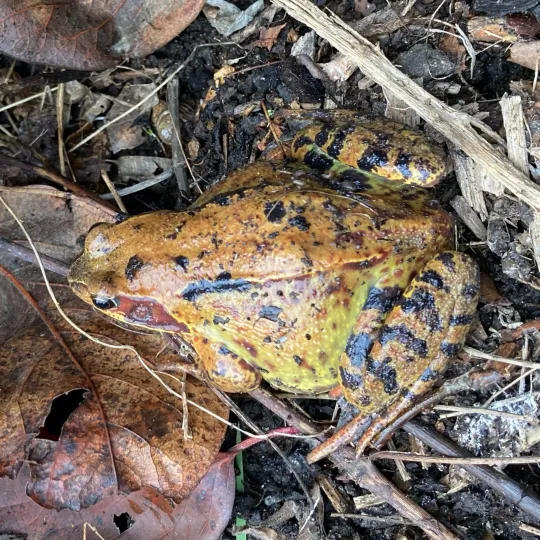
The common frog (Rana temporaria) belongs to the order Anura, family Ranidae. It is a medium-sized amphibian reaching up to 10 centimeters, characterized by a brown or olive skin color with dark spots and a distinct dark patch on the temple.
The skin of these amphibians is moist and smooth, making them highly dependent on humidity and proximity to water sources. They are primarily nocturnal, seeking shelter in damp or shaded areas during the day.
Reproduction occurs in ponds in early spring. After metamorphosis, juveniles migrate to nearby garden plots, where they begin to search for food, moving across the surface of the soil.
It is important to distinguish this species from other amphibians, as the common frog frequently colonizes agricultural areas located near forests or natural bodies of water.
Due to their well-developed vision, they react quickly to disturbances, which makes detecting them during evening agricultural operations quite challenging for the gardener.
What it damages
The primary damage is caused by the mechanical crushing of young seedlings and delicate vegetable crops as the frogs move across garden beds. This physical pressure often leads to bent stems and root disturbance.
A secondary issue is the disruption of the local entomofauna. As predators, common frogs consume beneficial insects, such as ground beetles, which serve as natural pest controllers in the garden ecosystem.
Damage is most severe during the early vegetative stage when tender crops like cabbage, lettuce, or tomatoes lack structural strength, making them vulnerable to any weight pressure.
Furthermore, high concentrations of frogs in greenhouses can increase local humidity levels, creating an environment favorable for the development of various fungal pathogens.
While the overall damage is usually localized, in small home gardens with high amphibian density, the cumulative impact can significantly affect crop uniformity and plant health.
When it appears
The active season begins in late April or May after the amphibians emerge from hibernation. During this period, they are highly mobile in the vicinity of ponds and damp lowland areas.
Summer is characterized by maximum activity of juvenile frogs as they disperse across the territory in search of prey. This is when they are most likely to interact with garden crops.
During the autumn, the frogs look for overwintering sites, often selecting cellars, sheds, or thick layers of organic debris, which can cause inconvenience to the property owner.
The life cycle is closely tied to humidity levels and temperature. Dry summers limit their surface activity, forcing them to remain closer to water sources.
Monitoring for the presence of these amphibians is recommended between May and August, as this period carries the highest risk of mechanical damage to young plants.
Signs of infestation
Visual signs include the presence of adult frogs or froglets found under shelter or mulch during morning inspections.
Areas of flattened seedlings without visible signs of chewing, which would indicate insect or rodent activity, often point to mechanical impact by amphibians.
Characteristic tracks on moist soil in the inter-row spaces provide clear evidence of intensive movement of these animals throughout the garden beds.
Audible signals (croaking) in the evening hours confirm the presence of a population in the immediate vicinity, serving as a warning to the farmer.
Leaves that are pressed down by the weight of the frogs often show signs of loss of turgor and may yellow as a secondary effect of the mechanical stress.
Control measures
The most effective control method is the installation of mesh fencing or borders that physically restrict the access of amphibians to high-value plant beds.
Regular maintenance of the site, including the removal of debris, wood piles, and organic waste, helps to eliminate daytime hiding spots for the frogs.
Optimizing the irrigation schedule to reduce excessive soil and air humidity in greenhouses can make the area less hospitable to amphibians.
Creating natural barriers, such as dry gravel paths around garden beds, significantly hinders the movement of common frogs across the territory.
Ecological management includes providing alternative habitats far from the garden to redirect the amphibian population away from the crops.
Taxonomy
- Latin name
- Rana temporaria
- Family
- Ranidae
- EPPO code
- RANSTE
Discussion
No discussions yet — be the first.