
Marsh frog
Pelophylax ridibundus
Description
How to identify
The marsh frog (Pelophylax ridibundus) is a large amphibian species belonging to the true frog family, common across European and Asian water bodies.
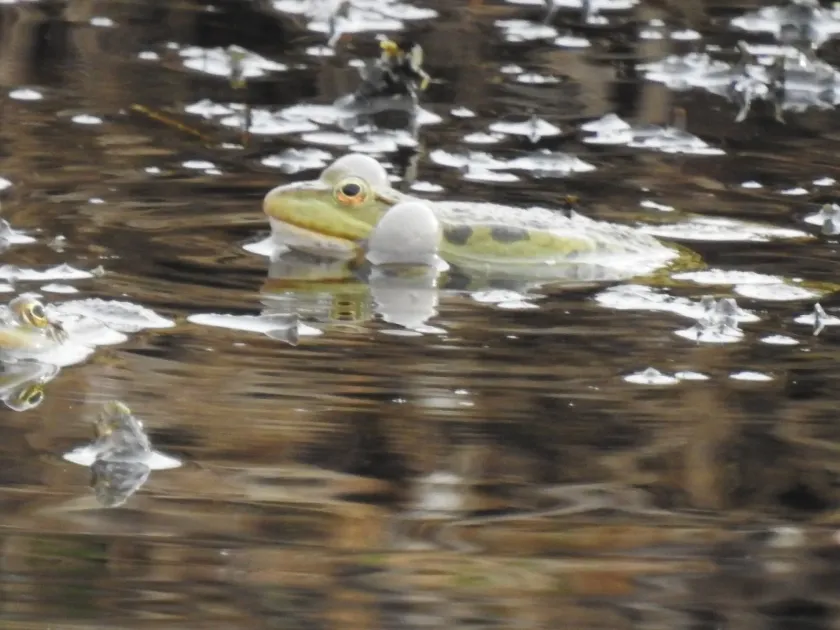
They are characterized by a robust body, usually reaching up to 17 cm in length, with an olive-green or brown back covered in dark blotches.
Their belly is typically pale or whitish, often marked with darker spots, and their eyes are positioned high on the head to monitor the surface.
Highly developed hind limbs with strong webbing allow these frogs to be exceptional swimmers and powerful jumpers in aquatic environments.
The species is almost entirely aquatic, spending the majority of its life within or immediately adjacent to permanent water bodies.
What it damages
In the context of commercial aquaculture, the marsh frog acts as a significant predator of juvenile fish, threatening the profitability of hatcheries.
Adult frogs consume large numbers of fish fry, particularly targeting carp and other cultivated species during their most vulnerable growth stages.
High population densities in nursery ponds can lead to substantial losses in fish recruitment, directly impacting the annual harvest output.
Additionally, they serve as biological vectors for various parasites and diseases that can negatively affect the health and growth rate of commercial fish stock.
Their presence significantly alters the ecological structure of managed ponds, often forcing fish farmers to implement costly control measures.
When it appears
The activity cycle begins in early spring, usually as water temperatures surpass 10 degrees Celsius, signaling the end of hibernation.
The breeding season typically peaks during May and June, characterized by intense vocalization and large egg clusters throughout the pond area.
Throughout the summer months, these frogs are most active during the night, though they may hunt during the day in overcast conditions.
As water temperatures drop below 5 degrees Celsius in autumn, they migrate to deeper sections of the pond to settle into the mud for winter.
They remain in a state of brumation (winter dormancy) at the bottom of the pond until the following spring thaw begins.
Signs of infestation
A primary indicator of their presence is the characteristic loud, rhythmic croaking of males, audible from a distance during the warmer months.
The visual observation of large egg masses attached to aquatic vegetation is a definitive sign of active reproduction within the water body.
Frequent sightings of adult frogs basking along the pond banks or leaping into the water are indicators of a high population density.
Disappearing fry populations in ponds where other predators are absent strongly suggest predation by frogs on juvenile fish.
Post-mortem examination of frog stomach contents in suspicious areas often reveals remains of small fish, confirming their role as a pest.
Control measures
Effective management begins with maintaining clear pond banks and removing excessive aquatic vegetation to reduce shelter for the frogs.
Installing fine-mesh fencing around nursery and hatchery ponds is a proven physical deterrent that prevents frog migration into fish zones.
Draining and sanitizing ponds during the off-season can help eliminate egg clusters and tadpoles before the next fish stocking cycle.
Biological control involves encouraging the presence of natural predators, such as predatory birds, which help regulate local frog populations.
Manual removal of adults during the peak breeding season can be an effective supplementary measure for smaller aquaculture operations.
Taxonomy
- Latin name
- Pelophylax ridibundus
- Family
- Ranidae
- EPPO code
- PELXRI
Discussion
No discussions yet — be the first.