
Frog
Rana
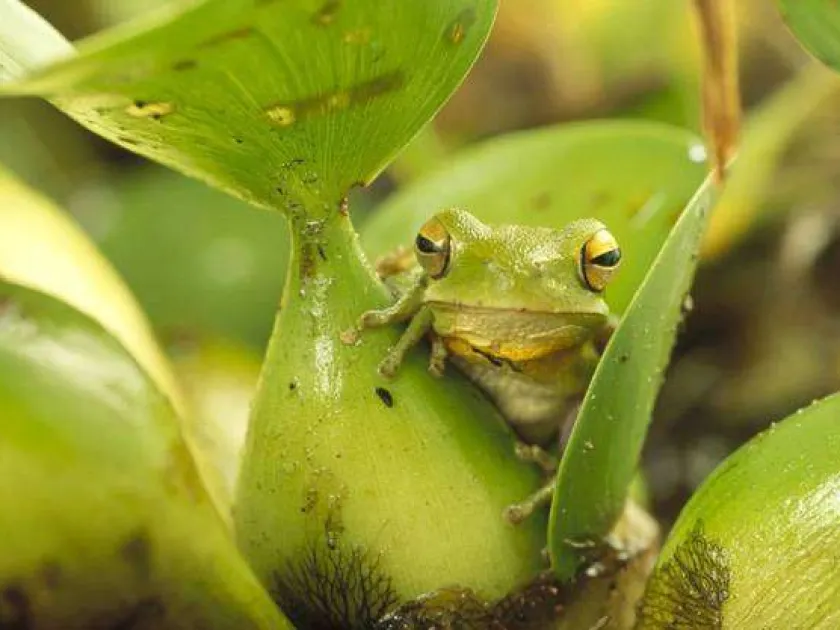
Description
How to identify
Frogs belonging to the family Ranidae are tailless amphibians that can occasionally pose challenges in intensive farming or nursery environments.
They are characterized by smooth, moist skin, powerful hind legs adapted for jumping, and a wide mouth, with coloration typically blending into the surroundings.
Their life cycle involves a transition from eggs and tadpoles to adults, a process heavily dependent on the presence of water sources for metamorphosis.
Adults lead a semi-aquatic lifestyle and are often found in garden areas that provide suitable moisture, humidity, and hiding spots.
Taxonomically, they are classified within the class Amphibia, order Anura, which dictates their physiological need for wet habitats to maintain health.
What it damages
While often viewed as ecological indicators, in professional nurseries or seedbeds, frogs can cause mechanical damage to tender young plants.
The primary issue arises from physical trampling and contact as they move across greenhouse benches or tightly planted vegetable rows.
High population densities can lead to significant compaction of soil around delicate root zones and crushing of fragile stems.
In limited food conditions, frogs may accidentally consume seeds or newly emerged sprouts while foraging for other insect prey.
Furthermore, their presence introduces organic waste and slime onto leaves, which can promote unhealthy conditions for seedling development.
When it appears
Frog activity generally begins in early spring as soon as temperatures rise, signaling the start of their movement towards breeding sites.
The peak period for their presence in crop fields often coincides with the germination and early growth phases of various spring vegetables.
During the summer, they tend to congregate in irrigated zones and damp areas, which remain cooler and more suitable for their metabolism.
Activity gradually tapers off in autumn as individuals seek out overwintering sites, such as mud at the bottom of ponds or under thick debris.
Rainy summers significantly increase their movement across garden plots, making them more likely to interact with and damage sensitive crops.
Signs of infestation
Visual evidence includes broken or bruised foliage and crushed stems near the base of the plant, often occurring overnight.
Mucus trails found on the surface of the soil or on the undersides of leaves act as clear indicators of amphibian movement in the area.
The presence of tadpoles in water reservoirs or irrigation systems is a strong signal of a thriving population in the immediate vicinity.
Nocturnal croaking is the most common auditory sign that helps gardeners identify the presence of frogs in their greenhouses or patches.
Direct sightings during the early morning hours, particularly under cover or damp mulch, confirm their presence among the vegetation.
Control measures
Control strategies should focus on habitat modification, such as removing excess vegetation and debris that provide shelter for amphibians.
Installing fine-mesh barriers or fences around greenhouse entrances is highly effective in preventing unwanted entry of frogs.
Improving drainage systems to eliminate standing water and damp hollows will reduce the attractiveness of the garden plot to frogs.
Using abrasive mulch materials, such as crushed stone or coarse gravel, can create an environment that frogs prefer to avoid.
- Maintaining clean paths and weed-free perimeters.
- Closing off ventilation gaps in greenhouses with mesh screens.
- Reducing excessive irrigation during late evening hours.
Taxonomy
- Latin name
- Rana
- Family
- Ranidae
- EPPO code
- RANSSP
Discussion
No discussions yet — be the first.