
Pool frog
Pelophylax lessonae
Description
How to identify
The pool frog (Pelophylax lessonae) is a species of frog belonging to the family Ranidae, commonly found across various water bodies in Europe.
Adult pool frogs are relatively small, typically ranging from 5 to 9 centimeters in length, with females usually being larger than males.
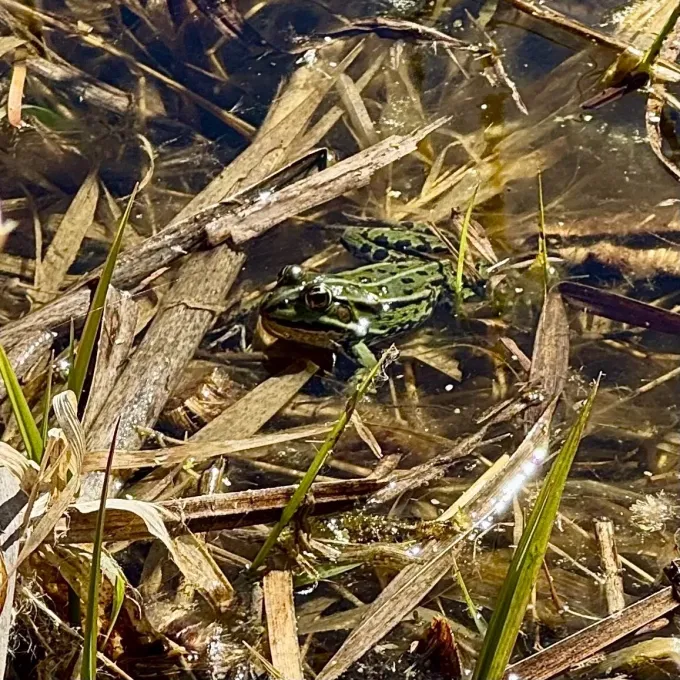
They are characterized by a vibrant green or brownish dorsal color, often with dark spots, and a pale yellow or whitish belly and throat.
A distinctive feature of this species is the rounded, yellowish-white inner metatarsal tubercle on the hind feet, which helps in identifying them.
They prefer still, sun-warmed waters with abundant aquatic vegetation, though they frequent agricultural landscapes to forage for insects.
What it damages
The primary concern regarding the pool frog in agriculture is its role as an opportunistic predator that consumes beneficial predatory insects.
By feeding on ground beetles, spiders, and parasitoid wasps, they can negatively impact the natural biological control of crop pests.
In aquaculture environments, these frogs can consume fish fry and spawn, leading to direct economic losses for farmers operating fish ponds.
Their presence in irrigation ditches can contaminate water quality through fecal matter, which may be detrimental for specific delicate crop irrigation.
Furthermore, they serve as hosts for various parasites that can occasionally affect the health of livestock grazing near stagnant water sources.
When it appears
Pool frogs emerge from their winter hibernation in early spring, typically once water temperatures rise above 10-12 degrees Celsius.
The peak breeding season occurs between late April and June, when frogs congregate in water bodies to lay their eggs in gelatinous clumps.
During the summer months, they are highly active foragers, often moving into damp fields and pastures to hunt for a wide variety of prey.
As autumn approaches and temperatures drop, the frogs gradually reduce their activity and begin seeking suitable sites for overwintering.
Hibernation takes place underwater in the silt of pond bottoms or in moist burrows, where they remain dormant until the following spring.
Signs of infestation
The most audible sign of pool frog presence is the distinctive, loud croaking of males, especially during the mating season in spring.
Visual confirmation is possible by observing their rapid escape behavior into the water as one approaches the banks of canals or ponds.
The discovery of large gelatinous egg masses attached to underwater plants is a definitive indicator of a local breeding population.
Finding high concentrations of insect chitin remains near water edges often suggests the area is being used as a hunting ground by adult frogs.
Field workers may encounter adult frogs in the tall grass or under debris, particularly following heavy irrigation or rain events.
Control measures
Effective management begins with landscape sanitation, specifically removing unnecessary stagnant water pools and draining stagnant ditches.
Clearing vegetation along banks and keeping the area around irrigation infrastructure tidy reduces the cover required for frog concealment.
Physical barriers like fine-mesh fencing can be used around sensitive nurseries or high-value garden crops to prevent frog entry.
Reducing the attractiveness of the site by minimizing surface water accumulation is a sustainable way to limit local population growth.
Always verify the local conservation status of the pool frog before implementing any aggressive control measures, as they may be protected.
Taxonomy
- Latin name
- Pelophylax lessonae
- Family
- Ranidae
- EPPO code
- PELXLE
Discussion
No discussions yet — be the first.