
Indian bullfrog
Hoplobatrachus tigerinus
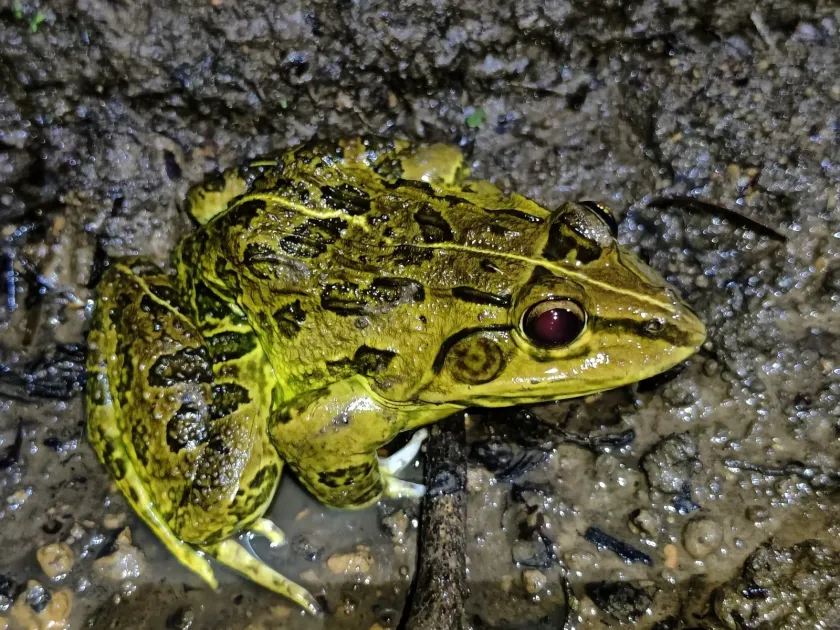
Description
How to identify
The Indian bullfrog (Hoplobatrachus tigerinus) is a robust species within the Dicroglossidae family, capable of growing up to 17 centimeters in total length.
The species is characterized by a pointed snout and skin covered in distinct longitudinal folds, distinguishing it from other native frog populations in its range.
Coloration typically ranges from olive to brownish-yellow, often featuring irregular dark spots that provide excellent camouflage in muddy or vegetated environments.
During the mating season, males develop bright yellow coloration and specialized vocal sacs, making them highly conspicuous in water bodies and agricultural fields.
The species is highly territorial and displays aggressive foraging behavior, allowing it to dominate resources in both natural and artificial aquatic habitats.
What it damages
In aquaculture, the Indian bullfrog is considered a significant pest due to its predatory nature, as it consumes large quantities of fish fry and shrimp larvae.
By preying on local insect-eating fauna, these frogs can disrupt the natural biocontrol mechanisms that manage agricultural pests in and around field areas.
Their presence in irrigation canals can reduce the overall ecological quality of water, negatively impacting the efficiency of fish farming and rice cultivation.
As a highly invasive species in some areas, they outcompete native amphibians for food and breeding grounds, leading to a significant loss of local biodiversity.
The economic impact is particularly felt in managed fish hatcheries, where losses from unchecked predation can be substantial if preventative measures are absent.
When it appears
The activity of the Indian bullfrog is closely linked to the monsoon season, which provides the necessary hydration and water bodies for successful breeding.
During peak summer months, activity is generally higher at night, while the animals may seek refuge in damp soil or deep mud during the hottest parts of the day.
During periods of extreme drought, individuals undergo estivation, burying themselves to conserve energy and moisture until the environment becomes favorable again.
The life cycle is timed to coincide with the availability of standing water, which often correlates with the flooding of agricultural fields and rice paddies.
Young frogs are most active during the immediate post-metamorphosis period, rapidly colonizing surrounding areas in search of high-density food sources.
Control measures
Physical barriers such as fine-mesh fences around the perimeter of aquaculture ponds are the most effective method for preventing intrusion by large bullfrogs.
Maintenance of pond edges, including the regular removal of tall grasses and weeds, reduces the available hiding spots and discourages colonization.
Draining and drying out temporary pools during the off-season can significantly reduce the recruitment rate by destroying eggs and developing larvae.
Manual collection or the use of light-based traps during peak evening hours can help manage population densities in localized commercial settings.
Encouraging natural predators and keeping irrigation channels clear of debris helps to maintain a more balanced ecosystem that is less favorable to invasive bullfrogs.
Taxonomy
- Latin name
- Hoplobatrachus tigerinus
- Family
- Ranidae
- EPPO code
- RANSTI
Discussion
No discussions yet — be the first.