
Green frog
Rana clamitans
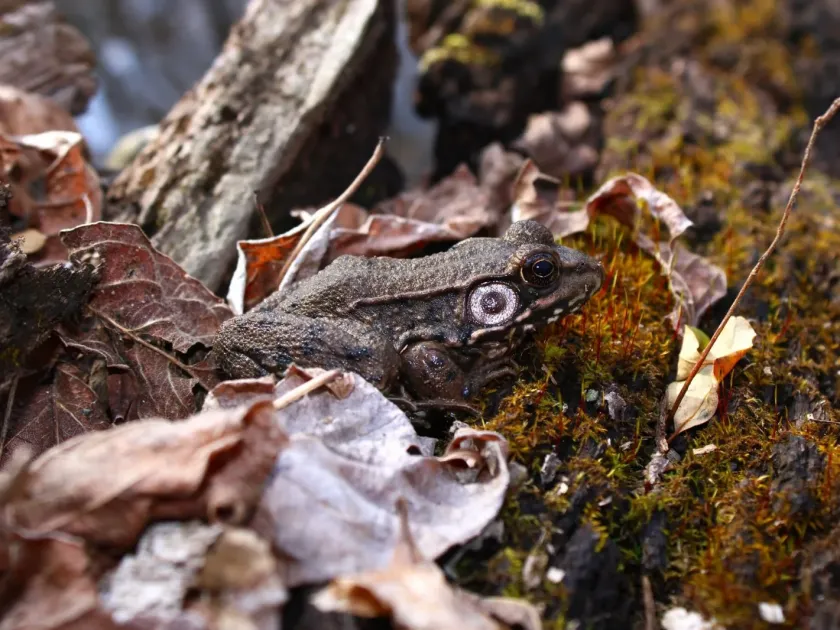
Description
How to identify
The green frog (Rana clamitans) is a member of the Ranidae family, commonly found in moist agricultural areas. It is identified by its greenish-brown skin and distinctive skin folds running along its back.
Adults typically grow up to 10 cm in length. They are frequently found in irrigation ditches, ponds, and near hydroponic or field-based water supply systems in agricultural settings.
Visual identification is complemented by their unique call, which is often described as resembling the plucking of a banjo or guitar string.
Their presence is highly dependent on humidity levels. In agricultural fields, they tend to congregate in areas with high soil moisture or near irrigation infrastructure.
Recognizing the species is important for farmers to differentiate between beneficial biological controllers and potential sources of infrastructure disruption.
What it damages
The primary concern for farmers is the obstruction of irrigation equipment. Green frogs frequently enter pipes and filtration systems, causing blockages that halt water flow.
During the early stages of crop development, mass movement of frogs through field beds can cause mechanical damage to seedlings, affecting plant density and uniformity.
The presence of frogs in water storage tanks can degrade water quality, potentially introducing pathogens or sediment that interfere with precise fertigation systems.
While frogs eat various insects, their concentrated presence in greenhouses or intensive cultivation areas can disrupt the delicate balance of the artificial ecosystem.
Increased maintenance costs associated with clearing irrigation components and repairing damaged piping represent the most significant economic loss linked to this species.
When it appears
Activity begins in early spring as temperatures rise, signaling the start of the breeding season and a shift from hibernation sites to active foraging areas.
Summer is the peak period of activity, especially at night when irrigation systems are active, attracting frogs to the wet conditions of the fields.
As temperatures drop in the autumn, the frogs return to the bottom of water bodies, entering hibernation in mud or silt until the following spring season.
The intensity of the season's impact on agricultural infrastructure is directly correlated with local precipitation levels and the frequency of irrigation cycles.
Agronomists should monitor irrigation hubs particularly during the mid-summer months when frog movement through the field infrastructure is at its highest.
Control measures
Installing fine-mesh filters at pump intakes and irrigation headers is the most effective way to prevent frogs from entering and clogging distribution lines.
Maintaining clear margins along irrigation ditches by mowing vegetation reduces the attractive habitat that supports large populations near sensitive crop areas.
Physical barriers or exclusionary fencing can protect high-value plots or seedbeds from mechanical disturbance caused by the movement of these amphibians.
Ensuring that water storage reservoirs are covered or screened effectively prevents the establishment of breeding populations within the farm's water supply.
Focusing on preventative mechanical solutions is preferred over chemical interventions, which are generally not recommended for managing amphibian populations in farmland.
Taxonomy
- Latin name
- Rana clamitans
- Family
- Ranidae
- EPPO code
- RANSCL
Discussion
No discussions yet — be the first.