
Raglius
Raglius
Description
How to identify
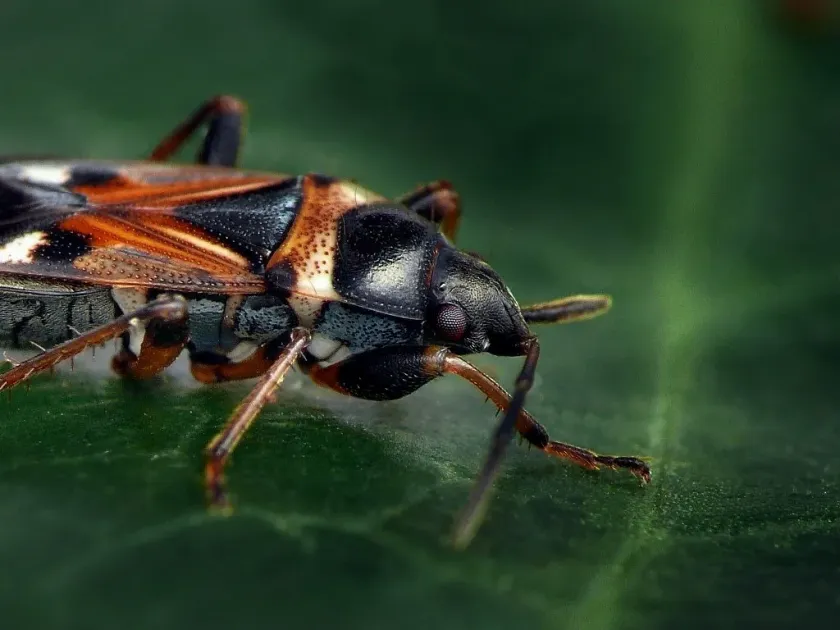
Raglius is a genus of insects belonging to the family Rhyparochromidae, part of the order Hemiptera. These insects are commonly referred to as ground bugs and typically possess a body length ranging from 5 to 8 millimeters.
The adult form is characterized by a dark brown to black coloration with distinct light-colored spots on the hemelytra and pronotum. Their mouthparts consist of a well-developed rostrum used for piercing and sucking plant fluids.
Nymphs undergo several developmental stages, resembling miniature adults but lacking fully developed wings. Their coloration is usually lighter, providing effective camouflage against soil particles and plant debris.
These bugs are primarily terrestrial, preferring moist environments found under decaying vegetation or soil crevices. They are well-adapted to life in the ground cover of cereal fields.
Agronomists identify these insects by inspecting the soil surface and the base of plant stems during the early morning hours, when the bugs are most active in their feeding behavior.
What it damages
Raglius mainly affects cereal crops such as wheat, barley, and rye. In some cases, they also feed on various wild grasses and garden crops, depending on the availability of preferred hosts.
Both adults and nymphs cause damage by piercing the plant epidermis and extracting sap. This feeding action disrupts nutrient translocation and general plant metabolism, leading to stunted growth.
The most severe damage occurs at the early development stages of the crop. Infested seedlings often turn yellow, wilt, and may eventually die if the pest pressure is sufficiently high during the early growth period.
Feeding sites serve as entry points for secondary pathogens, including various fungi and bacteria. These secondary infections often cause more extensive damage than the initial physical harm caused by the bug.
Economic damage is observed in reduced yield quality and quantity, including a lower thousand-grain weight and a reduced number of productive ears per plant due to overall plant stress.
When it appears
The activity cycle of Raglius begins in early spring as soil temperatures rise. Overwintering adults emerge from their dormant state to seek out emerging cereal crops for feeding and reproduction.
The peak period for reproduction and nymph development occurs during late spring and early summer. These months provide the ideal thermal and moisture conditions for rapid population growth.
In mid-summer, high temperatures and dry conditions can trigger a slowdown in insect activity, forcing them to seek shelter in deeper soil layers or dense vegetation to minimize water loss.
The life cycle is highly dependent on seasonal weather patterns. A warm autumn extends the feeding window, allowing the next generation of adults to build up sufficient fat reserves for the coming winter.
As winter approaches, the population enters diapause, hiding in stubble, hedgerows, or soil surface litter, where they are protected from freezing temperatures until the next spring season.
Signs of infestation
Initial signs of infestation include patches of yellowing or wilting plants within the field. Close inspection of the stem base reveals puncture marks, often surrounded by necrotic tissue.
The presence of the pest is often indicated by a distinct odor and small fecal deposits near the base of the plants. In cases of high infestation, leaf curling and stem deformation can be observed.
During evening surveys, one might find clusters of these insects at the base of the stems. Affected plants exhibit significantly reduced vigor and stunted height compared to neighboring healthy plants.
- Yellowing of lower leaves unrelated to nutrient deficiency.
- Loss of plant turgor despite adequate soil moisture.
- Presence of nymphs or adults in pitfall traps or near the stem base.
- Deformation of ears during the grain-filling stage.
Field margins and areas adjacent to uncultivated land are the primary zones where infestation often starts, making these areas critical for early detection and monitoring.
Control measures
Cultural control is the most effective management strategy. Deep plowing of the soil after harvest destroys overwintering sites and disrupts the life cycle of the bug before the next season.
Maintaining clean field borders by removing weeds and wild grasses is essential, as these areas provide crucial secondary host sites for Raglius populations during the off-season.
Crop rotation helps significantly by interrupting the host-pest cycle. Avoiding continuous cultivation of cereal crops in the same field helps to keep pest populations below the economic injury level.
Chemical control should be implemented only when the economic threshold is exceeded. Insecticides from the pyrethroid or organophosphate groups are generally effective when applied during periods of peak bug activity.
Integrated pest management strategies emphasize the importance of rotating insecticide classes to prevent the development of resistance within local Raglius populations.
Taxonomy
- Latin name
- Raglius
- Order
- Hemiptera (bugs, aphids, leafhoppers)
- Family
- Lygaeidae
- EPPO code
- RAGLSP
Discussion
No discussions yet — be the first.