
Ear pond snail
Radix auricularia
Description
How to identify
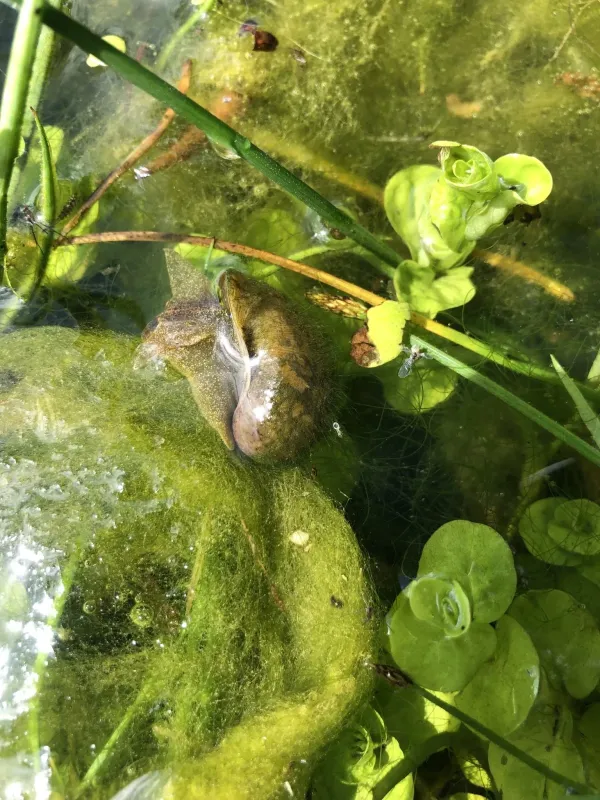
The ear pond snail (Radix auricularia) belongs to the phylum Mollusca, class Gastropoda, and the family Lymnaeidae. It is a common freshwater air-breathing snail found in various water bodies.
The shell is the most identifying feature, characterized by a large, expanded final whorl and a wide aperture that resembles the shape of a human ear, hence its common name.
The soft body is typically grayish-brown. The head features two flat, triangular tentacles with eyes located at their base, which are highly sensitive to light changes.
Unlike some other pond snails, this species thrives in both flowing and standing water, often inhabiting irrigation channels, ponds, and waterlogged fields where crops are cultivated.
Reproduction involves laying gelatinous egg masses attached to the underside of submerged leaves or hard substrates, allowing for rapid colonization of new areas.
What it damages
This pest poses a significant threat to aquatic crops such as rice, lotus, and watercress, as well as various ornamental plants cultivated in nursery greenhouses.
Snails feed on the soft tissues of leaves, stems, and buds, causing morphological damage that stunts plant growth and reduces the overall yield quality.
Young snails are particularly destructive, capable of skeletonizing leaf surfaces within a short time, which weakens the plant significantly and makes it prone to secondary infections.
In hydroponic setups, these snails can infiltrate irrigation systems and feed on delicate root systems, often leading to the collapse of the plant's nutrient uptake.
Beyond physical damage, they serve as intermediate hosts for various trematodes, which can complicate the health status of the aquatic environment and nearby crops.
When it appears
Activity typically begins in early spring as water temperatures rise, triggering metabolic processes and feeding after the winter dormant period.
The peak of their life cycle occurs during the summer months, from May through August, which coincides with the rapid growth of most aquatic plants and optimal breeding conditions.
During periods of drought or water withdrawal, the snails can survive by burrowing into the moist substrate or mud, entering a state of temporary dormancy.
As temperatures drop in autumn, activity levels decrease, and the snails migrate to deeper parts of the water body to overwinter in the benthic layer.
Their life cycle is highly adaptive, allowing them to withstand fluctuating environmental conditions and maintain population stability across different seasons.
Signs of infestation
The most visible signs of infestation are irregular, jagged holes in leaves, often found at or near the water line, caused by the snails' radula during feeding.
Slime trails left behind on stems and surrounding soil are clear indicators of nocturnally active snails, helping to identify the pest presence.
General wilting and stunted growth of plants, especially when no other visible pests are present, often indicate root damage caused by snail activity below the water surface.
The presence of transparent, jelly-like egg masses on the submerged parts of plants confirms an active and reproducing population within the area.
Direct sightings of the snails on stems or leaves, particularly during early morning hours or overcast weather, are common evidence of their presence in the field.
Control measures
Cultural control measures include regular draining of irrigation channels, weed removal to reduce food sources, and maintaining proper water flow to limit snail nesting.
Manual collection and the use of physical traps with bait are effective in smaller, contained areas where chemical usage must be minimized to protect water quality.
Biological control methods involve introducing natural predators, such as carp or other mollusk-eating fish, into the aquatic system to manage the snail population density.
Chemical control (molluscicides) should be used with extreme caution, as these substances can have detrimental effects on non-target aquatic organisms and water ecosystems.
Regular monitoring of water bodies and field margins is essential for early detection and prevention of population explosions, ensuring effective management throughout the growing season.
Taxonomy
- Latin name
- Radix auricularia
- Order
- Molluscs
- Family
- Lymnaeidae
- EPPO code
- RADXAU
Discussion
No discussions yet — be the first.