
Great pond snail
Lymnaea stagnalis
Description
How to identify
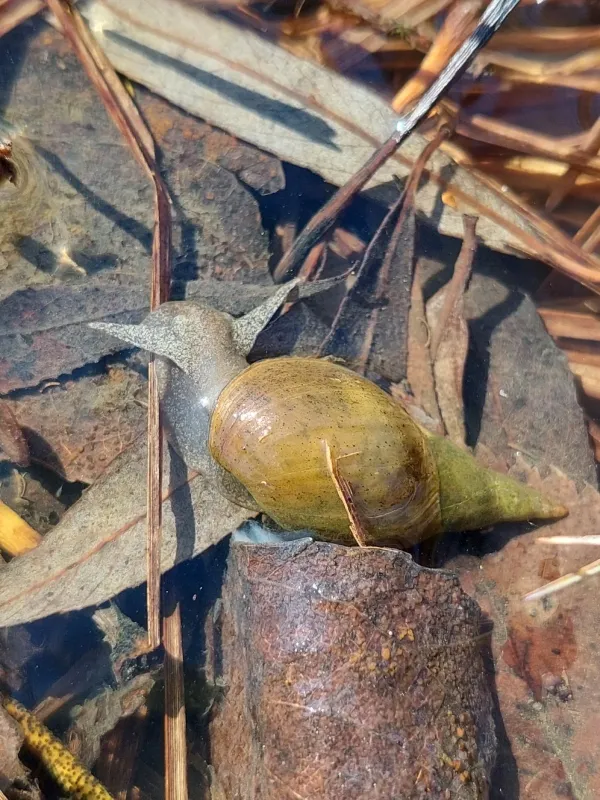
The great pond snail (Lymnaea stagnalis) is a large air-breathing freshwater snail, belonging to the family Lymnaeidae. It is characterized by a high, conical, dextral shell that can reach up to 70 mm in length.
The soft body of the snail is usually grey or yellowish-brown, and it possesses a large muscular foot used for locomotion on underwater surfaces and plants.
As a pulmonate snail, it must rise to the water surface to breathe air, storing it in a specialized mantle cavity. This biological trait makes them visible and identifiable in water bodies.
These snails are hermaphrodites, meaning each individual can reproduce, which allows for rapid colonization of new aquatic environments.
They deposit their eggs in transparent, jelly-like capsules attached to the stems of aquatic vegetation or solid substrates like rocks or submerged wood.
What it damages
The great pond snail is known to feed on a wide variety of aquatic macrophytes, often causing significant damage to water lilies, lotuses, and other ornamental species.
By using their specialized rasping tongue, known as a radula, they scrape away the surface tissue of leaves and stems, resulting in large, irregular holes.
In agricultural settings, such as rice paddies, they can consume young seedlings, thereby hindering crop establishment and reducing overall yields.
Excessive grazing by large populations of these snails leads to the rapid decline and thinning of submerged plant life in both natural and artificial ponds.
The damaged tissue caused by feeding activities often becomes a portal for pathogens, facilitating the spread of various plant diseases in the aquatic ecosystem.
When it appears
Activity usually begins in early spring, once water temperatures exceed 10 degrees Celsius, triggering the snails to emerge from their dormant state.
The summer season marks the period of peak metabolic rate and reproduction, resulting in the highest density of snails and most aggressive feeding behavior.
As water temperatures drop in the autumn, the snails gradually decrease their activity and seek deeper areas of the pond to prepare for overwintering.
During the winter, they typically remain in the bottom sediment, entering a state of dormancy until environmental conditions improve in the spring.
The survival of the population is highly dependent on the quality of the water and the availability of organic matter during the transition seasons.
Signs of infestation
The primary sign of infestation is the presence of irregular, ragged holes on the leaves of aquatic plants, which are characteristic of snail grazing.
Visual observation of the snails themselves, often seen attached to the undersides of leaves or floating near the surface, confirms their presence.
Jelly-like egg masses found on submerged stems or stones are clear evidence of a reproductive cycle taking place within the water body.
Stunted growth or sudden yellowing of aquatic plants can often be linked to heavy grazing pressure from large snail colonies.
Visible trails of mucus left on the surfaces of rocks and stems provide evidence of recent snail movement and feeding activity.
Control measures
Mechanical control, such as hand-picking snails and removing egg capsules, is highly effective for maintaining the health of small water gardens.
Biological control can be achieved by introducing molluscivorous fish species, which naturally prey upon snails and help regulate their population levels.
Draining and drying out ponds during the winter months is a proven method to expose and eliminate both adult snails and their overwintering eggs.
Reducing the amount of decaying organic material in the water helps to decrease the available food sources, thereby limiting the carrying capacity for snails.
- Maintain a balanced ecosystem by encouraging natural predators to ensure long-term population suppression.
Taxonomy
- Latin name
- Lymnaea stagnalis
- Order
- Molluscs
- Family
- Lymnaeidae
- EPPO code
- LYMNST
Discussion
No discussions yet — be the first.