
Galba truncatula
Galba palustris
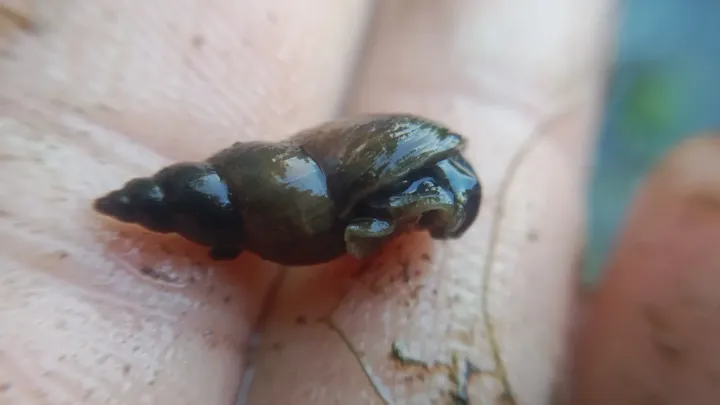
Description
How to identify
Galba truncatula, commonly known as the dwarf pond snail, is a small air-breathing freshwater snail belonging to the Lymnaeidae family. Its shell is dextral, usually measuring 6–10 mm in height and 5 mm in width.
The shell is conical with a pointed apex and a distinct umbilicus. Its color ranges from pale horn to brown, and the surface features fine growth lines, giving it a somewhat matte appearance when dry.
This species is highly adaptable and thrives in damp habitats, including muddy banks of ditches, marshes, temporary pools, and irrigation channels. It can tolerate short periods of desiccation.
Biological resilience is a key feature of this snail. When conditions become unfavorable, it can bury itself in moist soil or retreat into vegetation until moisture returns, making it a persistent pest.
Reproduction is highly prolific under favorable conditions. Eggs are laid in clusters on aquatic plants or damp substrates, allowing populations to spread rapidly across irrigation networks and fields.
What it damages
The direct damage involves feeding on young seedlings of vegetable and herb crops, particularly in damp areas or greenhouses. Snails rasp plant tissues, leaving characteristic irregular holes.
Galba truncatula serves as the primary intermediate host for the liver fluke (Fasciola hepatica). Its presence on pastures is a major agricultural concern, leading to the spread of fascioliasis in livestock.
In wet crops like rice, snails can damage the root collar and stems, creating entry points for opportunistic fungal and bacterial pathogens that cause rot and crop failure.
The accumulation of mucus and excrement on harvested leaves of greens and salads significantly degrades the quality and marketability of the produce, leading to economic losses.
Increased density of these snails can severely stunt the growth of young crops, as they prefer tender, nutrient-rich tissues of recently germinated plants.
When it appears
Activity usually begins in early spring as soon as soil temperatures rise. The snails emerge from their overwintering sites to feed and reproduce, with peaks often occurring in late spring.
High summer heat causes the snails to reduce activity. They seek refuge in the shade of vegetation or deep within moist soil crevices to avoid desiccation until autumn rains trigger a resurgence.
Autumn brings a second peak in activity as temperatures cool and humidity levels rise. This period is critical for egg-laying, ensuring the next generation is ready for the upcoming season.
Overwintering occurs in the adult stage. The snails remain dormant in soil, mud, or under dense organic debris, capable of surviving freezing temperatures until the cycle restarts.
The snail's life cycle is strictly dependent on local hydrology. Any fluctuation in water availability heavily influences the population dynamics throughout the growing season.
Signs of infestation
The most obvious sign is the presence of the snails themselves, visible on damp soil, plant stems, or under debris during early morning hours or overcast, wet days.
Feeding damage is characterized by window-pane leaves or irregular tissue destruction. Silver, glistening trails of dried mucus on leaves and stems are tell-tale indicators of a snail infestation.
Empty shells found near irrigation ditches or in low-lying boggy parts of a field strongly suggest that the environment is currently suitable for the survival of the species.
Stunted plant growth and the presence of secondary rot on seedling stems indicate heavy feeding pressure, which requires immediate visual inspection of the crop area.
On livestock pastures, the indirect sign is the diagnosis of fascioliasis in the herd, which necessitates an immediate search for the snail's habitat in nearby wet areas or drainage systems.
Control measures
Effective land management is the primary control strategy. Drainage of boggy fields, cleaning of irrigation channels, and proper water management minimize the habitat available to snails.
Cultural methods include regular weeding to remove host shelters and thorough tilling of the soil to expose snail clusters to dry air and solar radiation, which proves fatal to them.
Chemical control can be implemented using molluscicides, primarily those containing metaldehyde. These must be applied carefully to avoid harming beneficial non-target organisms in the ecosystem.
Liming of acidic soils is recommended. Because these snails require calcium to build their shells, modifying soil pH can make the environment less hospitable for their survival.
Biological control involves supporting natural predators such as ground beetles and certain bird species, which can help keep the snail population within manageable limits on the farm.
Taxonomy
- Latin name
- Galba palustris
- Order
- Molluscs
- Family
- Lymnaeidae
- EPPO code
- GALBPA
Discussion
No discussions yet — be the first.