
Galba truncatula
Galba
Description
How to identify
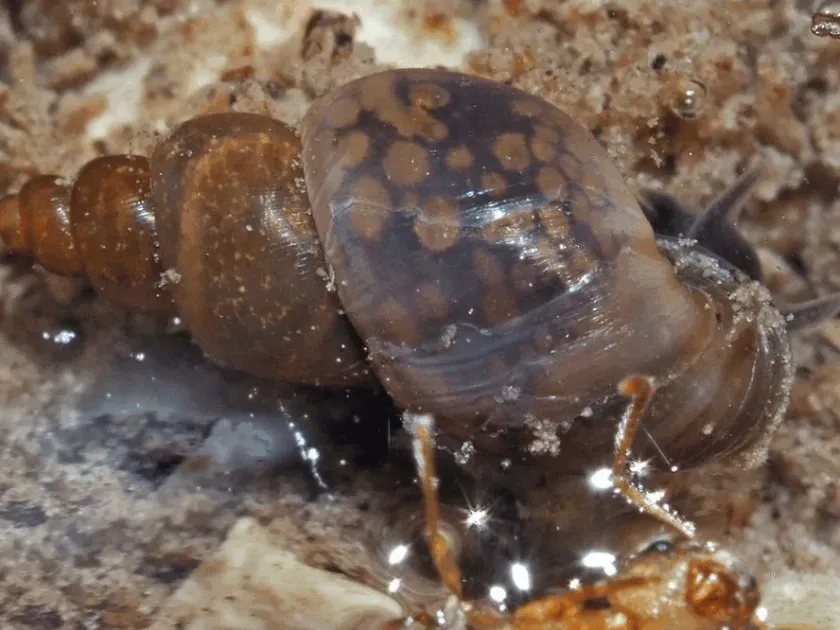
Galba truncatula, commonly known as the dwarf pond snail, belongs to the Lymnaeidae family and is a small freshwater and amphibious snail.
Its shell is usually 7-12 mm in length, spirally coiled, and light brown, making it inconspicuous against mud and damp soil backgrounds.
These snails are highly adaptable, possessing the ability to breathe atmospheric air, which allows them to colonize shallow puddles, ditches, and wet fields.
The reproduction rate is remarkably high; a single individual can deposit several egg masses throughout the warm season, ensuring rapid population growth.
The morphology of the snail includes a well-developed foot, which facilitates movement over various substrates, even outside of direct water sources.
What it damages
While Galba truncatula is not a primary crop defoliator, it causes damage in nurseries and damp garden beds by consuming young, tender plant tissues.
The primary agricultural concern is its role as an intermediate host for Fasciola hepatica, which causes liver fluke disease in grazing livestock.
In terms of horticulture, their feeding activity can destroy seedlings and contribute to the spread of plant pathogens through the soil and water.
Severe infestations in irrigation channels can lead to the clogging of drainage systems, disrupting water flow and soil aeration processes.
Plants growing in low-lying, poorly drained areas are at the highest risk of being damaged by these mollusks during periods of prolonged precipitation.
When it appears
The active season for Galba truncatula begins in early spring as soon as temperatures rise above 5°C and soil moisture is adequate.
Peak activity generally occurs during late spring and summer months when heavy rainfall keeps the surface soil saturated for extended periods.
During dry spells, the snails can estivate by burying themselves in moist soil or retreating into dried-up mud, emerging once conditions improve.
Autumn triggers a shift in behavior where populations move towards more stable water bodies or sheltered, deeper soil layers to prepare for winter.
The life cycle can be completed in as little as 3-4 weeks under optimal temperature and humidity conditions, leading to multiple generations per year.
Signs of infestation
The most common sign of infestation is the presence of glistening mucous trails on the soil or leaves, especially visible in early morning hours.
Irregular, ragged holes in the leaves of low-growing plants serve as clear evidence of feeding activity by the snails.
Small, dark, pellet-like excrement left on the soil surface is a reliable indicator of recent snail activity in the immediate vicinity.
Empty shells scattered along the edges of ditches or near drainage points often indicate a high density of the snail population in that area.
Persistent dampness and the growth of algae or liverworts on the soil surface are environmental indicators that favor the presence of these pests.
Control measures
Effective drainage improvement is the most critical step, as removing stagnant water drastically reduces the habitat available for the snails.
Application of lime to acidic soils can help discourage the presence of these mollusks, as they prefer neutral to slightly acidic conditions for shell maintenance.
Clearing vegetation from the edges of ponds and irrigation ditches prevents snails from finding shelter and suitable egg-laying sites.
Physical barriers like coarse sand or crushed eggshells can be used around garden beds to prevent snails from crossing onto the plants.
- Improve soil drainage systems.
- Maintain weed-free irrigation zones.
- Apply agricultural lime to soil.
- Use physical barriers to deter movement.
Taxonomy
- Latin name
- Galba
- Order
- Molluscs
- Family
- Lymnaeidae
- EPPO code
- GALBSP
Discussion
No discussions yet — be the first.