
Great pond snail
Limnaea
Description
How to identify
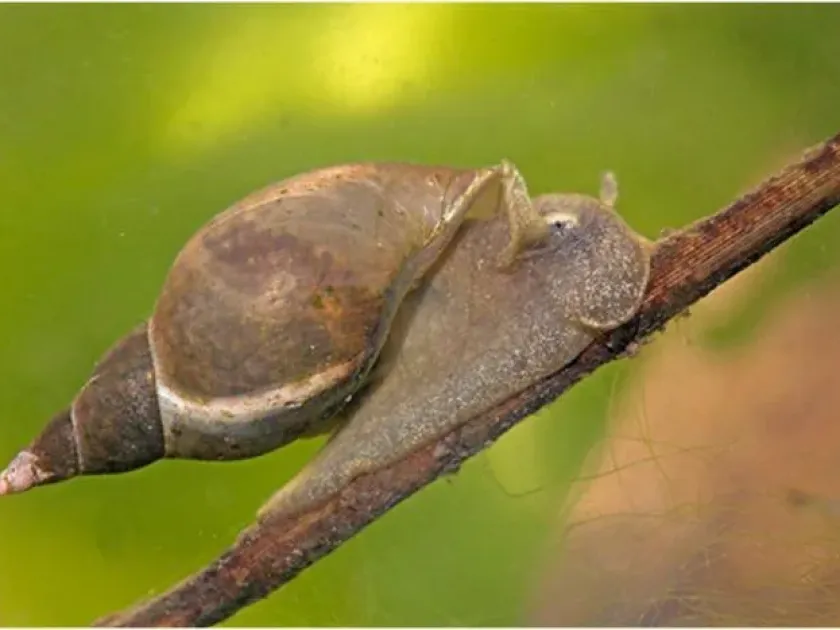
The Great pond snail (Limnaea stagnalis) belongs to the order of pulmonate gastropods of the family Lymnaeidae. It is a large snail with a characteristic right-coiled conical shell that can reach 50–70 mm in length.
The body is covered in mucus and appears grayish-yellow or brown. Key identification features include two broad, triangular tentacles with eyes located at their base.
These snails are hermaphroditic and highly reproductive. They lay eggs in gelatinous masses on submerged plant stems, rocks, or other solid surfaces within the aquatic environment.
They respire using a pulmonary cavity (lung), requiring the snail to periodically surface to intake atmospheric oxygen.
They prefer stagnant or slow-moving water bodies densely populated with aquatic vegetation, which provides both food sources and protection for reproduction.
What it damages
In agronomy, these snails are primarily problematic in aquaculture, aquatic plant nurseries, and rice paddies, where they feed on various hydrophytes.
The snails use their radula to scrape soft tissues from young leaves and stems, resulting in large, irregular holes or complete skeletonization of the leaf plates.
Feeding damage weakens plant vigor, retards growth, and creates entry points for bacterial and fungal infections that lead to tissue rot.
In closed systems or artificial ponds, massive outbreaks of pond snails can completely destroy decorative or fodder aquatic plants within a short period.
Beyond direct plant damage, these snails serve as intermediate hosts for various trematodes, posing significant health risks to livestock and waterfowl.
When it appears
The active life cycle of the pond snail begins in spring when water temperatures rise above 10–12 degrees Celsius.
The peak of reproduction and feeding intensity occurs during summer months, coinciding with the rapid growth of aquatic vegetation.
Throughout the season, a single individual can produce multiple egg masses, leading to exponential population growth under favorable conditions.
As autumn approaches and water temperatures drop, metabolic activity slows, and snails retreat to the bottom substrate to hibernate in the mud.
While deep water allows them to survive winter, shallow areas that freeze solid lead to high mortality rates, naturally limiting the population for the next spring.
Signs of infestation
The first sign of an infestation is the presence of gelatinous egg masses attached to the underside of floating or submerged leaves.
Leaf damage often appears as net-like patterns where the tissue is scraped to the epidermis, or large, irregular holes along the edges of the leaf blades.
During morning or evening hours, you can observe the snails moving slowly along stems or the sides of tanks and ponds.
Excessive mucus in the water and the presence of empty shells on the bottom are clear indicators of a dense snail population.
Wilting, yellowing, and decay of aquatic vegetation in damaged areas suggest that the snails have compromised the vascular system of the plants.
Control measures
The most effective strategy is the manual removal of adult snails and egg masses as soon as they are spotted in the water body.
Regular maintenance, including the removal of decaying plant matter and organic waste, is essential to deprive the snails of their primary food supply.
Biological control can be implemented by introducing natural predators such as certain species of fish (e.g., carp) that consume juvenile and adult snails.
In cases of severe infestation, molluscicides may be used, though these should be handled with extreme caution due to their potential impact on the aquatic ecosystem.
Lowering water levels in ponds or rice fields in late autumn helps expose snails to freezing temperatures, significantly reducing the overwintering population.
Taxonomy
- Latin name
- Limnaea
- Order
- Molluscs
- Family
- Lymnaeidae
- EPPO code
- LYMNSP
Discussion
No discussions yet — be the first.