
Quesada sodalis
Quesada sodalis
Description
How to identify
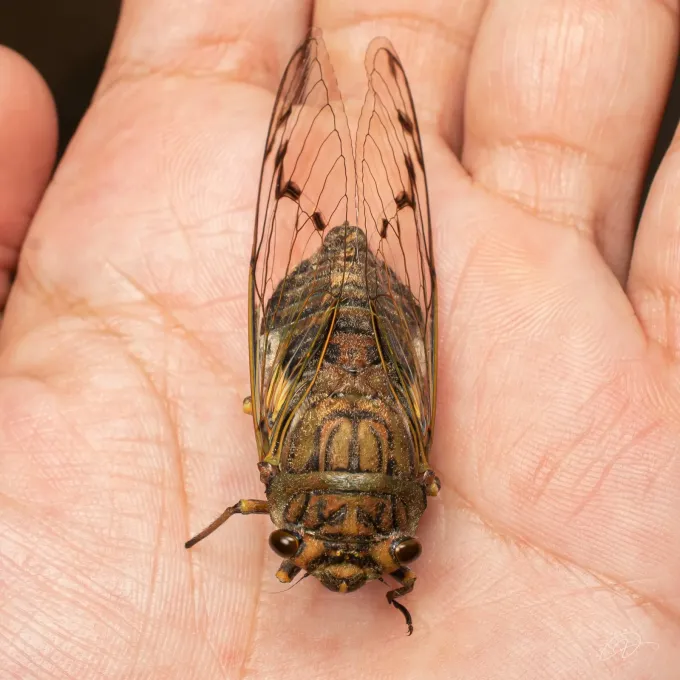
Quesada sodalis is a large species of cicada belonging to the order Hemiptera and the family Cicadidae. These insects are characterized by a robust body, transparent wings with distinct venation, and highly developed auditory organs used for communication.
The adult insect is equipped with a piercing-sucking mouthpart designed to penetrate tough plant tissues. This anatomical adaptation allows them to tap into the nutrient-rich phloem of various host trees.
The nymphal stages are spent entirely underground, where they live in close association with the root systems of their host plants. These nymphs possess strong, fossorial forelegs adapted for digging through soil.
The life cycle is long, involving several developmental stages (instars) beneath the surface, followed by a final molt where the nymph emerges as a winged adult.
Identifying the species often relies on both visual morphology and the distinct, high-frequency acoustic signals produced by males during the breeding season, which can serve as a biological marker.
What it damages
Quesada sodalis is known to infest a variety of woody plants, including commercially valuable species like coffee and cocoa, as well as various fruit trees. The damage is cumulative and affects both above-ground and below-ground plant parts.
The underground nymphs feed on roots, extracting essential fluids and minerals. This feeding activity suppresses plant vigor and makes the host tree susceptible to secondary stresses like drought or soil-borne pathogens.
Adult females cause direct mechanical damage to young shoots during oviposition. They cut slits into the twigs to deposit eggs, which often leads to dieback or breakage of the affected branch.
High population densities can result in significant yield losses due to the physiological strain placed on the tree, characterized by reduced metabolic activity and loss of sap.
The entry points created by the insect's mouthparts and oviposition slits also create pathways for fungi, bacteria, and viruses, which further complicates the health of the orchard.
When it appears
The emergence of adults is highly seasonal and often triggered by the onset of rainy seasons. This climate dependency is crucial for synchronized mating and egg-laying.
Adult insects are most active during the warmer daylight hours, when the temperature facilitates their flight and reproductive signaling. Their presence is usually concentrated over a few weeks of intense activity.
Because the nymphs remain underground for an extended period, the appearance of adults on the surface can be sporadic or cyclic, depending on local environmental conditions.
Once the reproductive cycle is complete, the adult population declines rapidly. However, the legacy of their activity remains evident in the form of damaged twigs and weakened trees.
Planning agricultural interventions requires knowledge of the local emergence patterns, which can vary significantly depending on microclimate and regional geography.
Signs of infestation
The primary auditory sign of a population present is the loud, rhythmic chirping or buzzing produced by males in the canopy, which is often detectable over long distances.
Visual signs of damage include longitudinal scarring on twigs, which marks the sites where females have inserted their ovipositors to lay eggs.
Wilting of foliage and necrotic spots on young shoots are indicators of extensive feeding damage, as the plant struggles to maintain fluid transport to its extremities.
The presence of emergence holes in the soil beneath the canopy is a clear indicator that nymphs have recently surfaced to complete their final transformation.
General tree decline, characterized by stunted growth and yellowing leaves, often points to long-term root damage caused by high concentrations of feeding nymphs.
Control measures
Managing Quesada sodalis requires a multi-faceted approach that integrates physical, chemical, and biological control methods to mitigate damage.
- Pruning and destroying branches that show signs of oviposition to limit the next generation.
- Applying systemic insecticides during periods of adult emergence to reduce overall population density.
- Maintaining healthy soil conditions and potentially using soil-based biological controls, such as entomopathogenic fungi.
- Implementing regular monitoring and scouting to track population surges before they reach economic injury levels.
- Enhancing orchard biodiversity to support natural predators that feed on both adults and nymphs.
Taxonomy
- Latin name
- Quesada sodalis
- Order
- Hemiptera (bugs, aphids, leafhoppers)
- Family
- Cicadidae
- EPPO code
- QUESSO
Discussion
No discussions yet — be the first.