
Giant cicada
Quesada gigas
Description
How to identify
The Giant cicada (Quesada gigas) belongs to the Cicadidae family of the Hemiptera order. It is a large insect, and its body length, including the wings, can reach significant dimensions, making it one of the most prominent insect species in its native range.
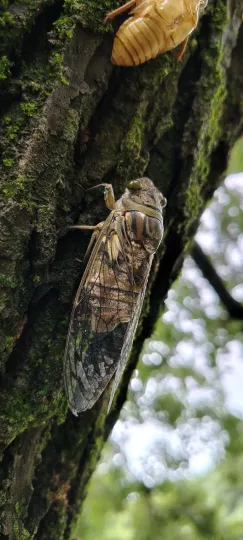
Adult specimens possess a tough chitinous exoskeleton and transparent, heavily veined wings. A key feature is the specialized sound-producing organ used by males to attract females, creating a loud and intense buzz that can be heard over long distances.
The insect's life cycle is extremely prolonged, which is typical for many members of the family. Larvae spend several years underground, feeding on the sap of the host plant's root system, before emerging to the surface for their final molt.
Adult coloration typically ranges from dark brown to olive-green, providing excellent camouflage against tree bark. The head is broad with large compound eyes situated on the sides, facilitating rapid visual detection of movement.
This species is found primarily in the tropical and subtropical regions of the Americas. Its agronomic importance is due to the significant damage the population causes to perennial tree plantations.
What it damages
The primary crops affected by Giant cicada infestations include commercial citrus plantations, particularly orange and grapefruit orchards. The pest has also been observed on coffee trees and various ornamental forest species.
Damage is caused by both larvae and adults. Larvae, living in the soil, feed on roots by sucking nutrient-rich sap, which leads to general tree decline and reduced yields.
Adult cicadas damage young shoots and branches. When laying eggs, females make incisions in the bark, which often causes the twigs to wither and creates entry points for secondary infections such as fungi and bacteria.
During mass infestations, premature fruit and leaf drop are common, along with a significant reduction in the aesthetic quality of the harvest. Affected trees become less resistant to adverse climate conditions.
The economic loss stems not only from direct harvest reduction but also from the necessity of premature orchard replacement due to root system degradation and chronic plant stress.
When it appears
Adult activity peaks during the summer months, which coincide with the rainy season or the peak sap flow period for most host crops. This is when mass emergence of adults from the soil typically occurs.
Reproduction and egg-laying processes are protracted, requiring regular monitoring throughout the entire growing season. The larval stage, occurring underground, can last from one to several years, making infestation outbreaks difficult to predict.
Signs of infestation
The first sign of infestation is the characteristic deafening buzz of the males accompanying their presence in the orchard. The sound intensity increases significantly during the morning and evening hours.
Empty exuviae, the shed skins left behind by larvae after their transformation into adults, can often be found on tree trunks and lower branches. This is a clear indicator that the population is actively developing on-site.
Bark damage manifesting as longitudinal slits left by females during oviposition often leads to localized necrosis of branches. In these areas, sap or gum exudation may be observed.
Visual weakening of the canopy, leaf yellowing, and stunted shoot growth in the absence of obvious disease can also signal root damage caused by larvae.
The presence of 1–2 cm diameter holes in the soil around the base of the trees indicates larval emergence for metamorphosis.
Control measures
Controlling the Giant cicada is challenging due to the hidden lifestyle of the larvae. Effective management relies on agrotechnical practices aimed at disrupting the pest's soil development conditions.
- Deep cultivation of soil around tree bases to disrupt larval development.
- Manual collection and destruction of adults during the early stages of emergence.
- Use of light traps at night to reduce the adult population.
- Application of biological insecticides based on entomopathogenic fungi.
- Ensuring optimal fertilization and irrigation to boost tree vigor and immunity.
Chemical control requires strict adherence to pre-harvest intervals to prevent pesticide residues in the fruit. Contact insecticides are only effective against adults during their peak flight period.
An integrated pest management (IPM) system involves combining population monitoring, destruction of breeding sites, and the preservation of natural enemies within the agroecosystem.
Ongoing agronomic oversight allows for keeping the population density below the economic injury level, preventing severe long-term damage to perennial plantations.
Taxonomy
- Latin name
- Quesada gigas
- Order
- Hemiptera (bugs, aphids, leafhoppers)
- Family
- Cicadidae
- EPPO code
- QUESGI
Discussion
No discussions yet — be the first.