
Quesada
Quesada
Description
How to identify
The genus Quesada consists of large insects belonging to the family Cicadidae within the order Hemiptera. These insects are widely recognized for their significant size and the ability of males to produce intense acoustic signals to attract mates.
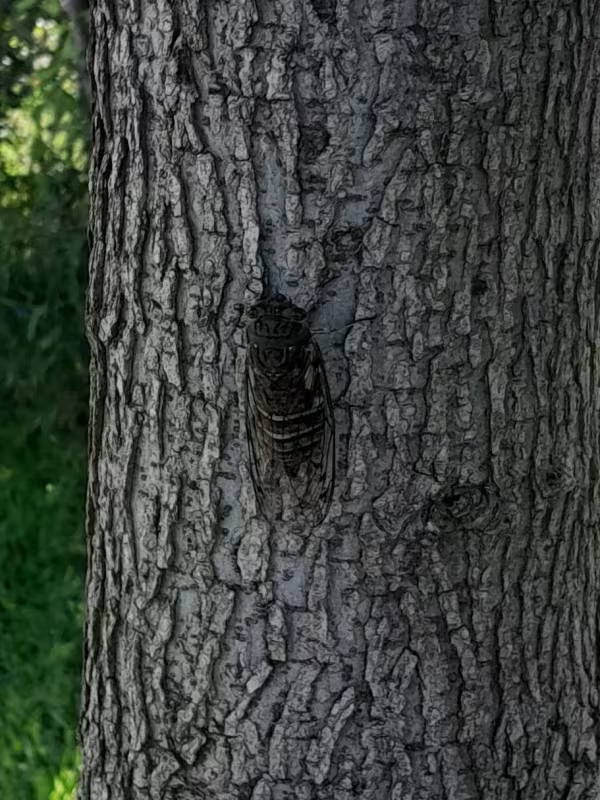
Morphologically, these cicadas are characterized by a robust body structure, transparent wings with prominent venation, and large, widely spaced compound eyes. Their coloration often serves as camouflage, allowing them to remain undetected on tree trunks.
Their life cycle involves several developmental stages, starting from eggs deposited in plant tissues, followed by a prolonged nymphal stage that occurs underground. During this time, the nymphs feed on plant roots for several years.
Adults possess a piercing-sucking mouthpart designed to feed on xylem sap. This specialized anatomy enables both nymphs and adults to effectively extract nutrients from the host plant's vascular system.
After emerging from the soil, the adults live for a relatively short time to facilitate reproduction. Their presence is often revealed by their distinctive, loud singing, which can reach high decibel levels in dense populations.
What it damages
Quesada species are considered harmful phytophagous pests for various woody plants and agricultural crops. They are particularly noted for causing significant damage to coffee plantations and citrus orchards in tropical regions.
Underground nymphs cause primary damage by feeding on root systems. This sap depletion weakens the host plants, leading to stunted growth, nutrient deficiencies, and increased susceptibility to other environmental stressors.
Adult feeding on branches and shoots significantly stresses the plants. Continuous extraction of sap reduces the vigor of the tree, potentially leading to leaf chlorosis, twig dieback, and reduced overall crop yields.
Egg-laying habits also contribute to the damage. When females insert their ovipositors into the bark or woody stems to deposit eggs, they create structural lesions that may allow secondary pathogens, such as fungi or bacteria, to enter.
In cases of heavy infestation, the cumulative impact of root feeding by nymphs and structural damage caused by adults can result in the loss of productive branches or, in severe instances, the death of young saplings.
Control measures
Managing Quesada populations requires an integrated pest management (IPM) strategy due to the difficulty of targeting nymphs hidden in the soil. Prevention and monitoring remain the most effective components.
Cultural practices, such as deep soil tillage during the fallow period or between planting rows, can help disrupt the nymphal stages and reduce the population density within the soil before they emerge as adults.
Chemical control involving systemic or contact insecticides can be applied during the period of adult emergence. Precision timing is crucial to effectively reduce the reproductive population before egg-laying is completed.
Biological control methods include encouraging natural predators such as insectivorous birds, spiders, and parasitic wasps. Maintaining a balanced ecosystem within the orchard helps naturally suppress cicada population growth.
Continuous monitoring using auditory surveys or visual counts is essential for early detection. By tracking emergence patterns, farmers can apply management interventions only when necessary, minimizing costs and ecological impact.
Taxonomy
- Latin name
- Quesada
- Order
- Hemiptera (bugs, aphids, leafhoppers)
- Family
- Cicadidae
- EPPO code
- QUESSP
Discussion
No discussions yet — be the first.