
Eurasian bullfinch
Pyrrhula pyrrhula
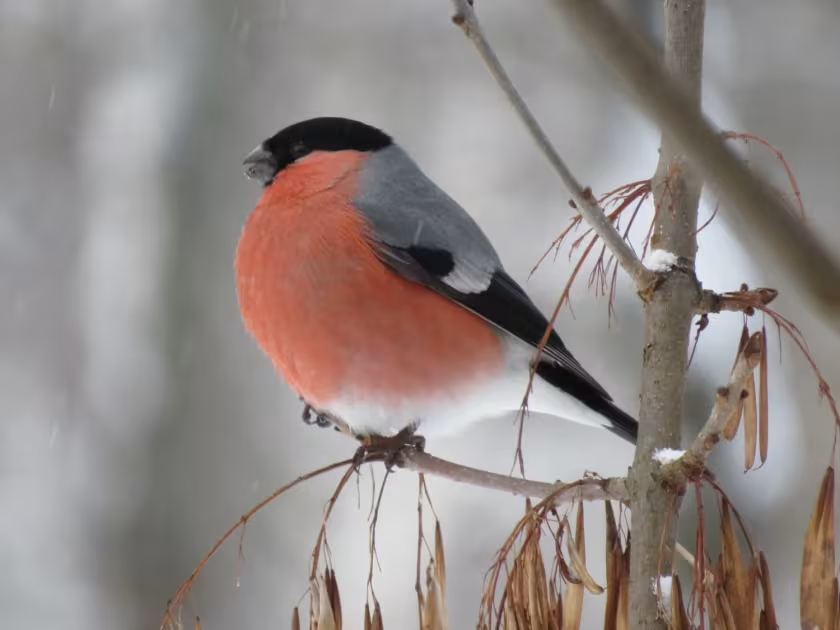
Description
How to identify
The Eurasian bullfinch (Pyrrhula pyrrhula) is a member of the Fringillidae family. It is a stocky bird characterized by a short, strong, and rounded bill, specifically adapted for cracking seeds and buds.
Adult males are distinguished by their bright red underparts, black crown, and grey back. Females display more muted brownish-grey plumage, providing natural camouflage in forest habitats.
These birds are largely resident or nomadic. During winter, they often gather in flocks and move towards gardens and human settlements to seek food when natural forest resources become scarce.
The biology of the bullfinch is tied to woodland environments, but their winter foraging behavior makes them significant agricultural pests in temperate fruit-growing regions.
Their life cycle includes breeding in dense forests, while the winter phase sees them shifting their diet to the energy-rich buds of various fruit and ornamental tree species.
What it damages
Bullfinches primarily target fruit trees such as apple, pear, cherry, plum, and apricot. The reproductive buds of these trees serve as a vital source of nutrients during the cold season.
Damage occurs when bullfinches consume these buds, which leads to a direct loss of the potential harvest. In severe cases, a single flock can strip a tree of a significant portion of its future blossoms.
Beyond fruit trees, they may also damage ornamental shrubs like lilac or viburnum. This aesthetic damage impacts the visual quality of landscaping and can weaken the shrubs.
Mechanical damage caused by their feeding can leave twigs vulnerable to pathogens and secondary infections, potentially leading to localized tissue death or deformities in the branching structure.
The severity of the damage is highly dependent on environmental factors, such as the availability of alternative food sources and the harshness of the winter weather.
When it appears
The period of greatest risk from bullfinches in orchards is from mid-winter to early spring, specifically January through March, as birds seek extra energy to prepare for the breeding season.
The duration of this threat correlates with the persistence of snow cover. When natural seeds are buried under snow, bullfinches rely heavily on the accessible buds of fruit trees.
The peak activity occurs as buds start to swell in late winter. This physiological change in the tree makes the buds softer and more palatable to the birds.
Feeding behavior is most active during daylight hours. Bullfinches can be quite persistent, systematically moving through the branches of an orchard to feed on the most developed buds.
As spring approaches and vegetative growth begins, bullfinch activity tapers off, and they move back to their natural nesting territories to begin the next phase of their life cycle.
Signs of infestation
A primary indicator of bullfinch presence is the accumulation of empty bud scales on the ground or snow beneath trees. This indicates targeted feeding on the reproductive buds.
Close inspection of branches reveals clean, surgical-like removal of the bud center. The twigs might look stripped in the most productive zones of the tree canopy.
The presence of noisy flocks, often highlighted by the bright red feathers of the males, is a clear visual sign that the orchard is being visited by these birds.
One may notice thin, broken twig tips, which occur when birds snap off the ends of branches to reach specific buds that are otherwise difficult to access.
The cumulative effect is a thinning canopy or a reduced number of healthy, flowering clusters, which is highly diagnostic of avian feeding patterns in late winter.
Control measures
Visual deterrents such as reflective ribbons, shiny CDs, or predator-shaped decoys are effective initial strategies to discourage bullfinches from settling in the orchard.
Physical exclusion is the most reliable method. Protecting the most valuable trees or vulnerable branches with fine-mesh netting is highly recommended for small-scale garden operations.
Sonic devices that emit predator calls can deter birds from larger areas. It is crucial to frequently randomize the sounds to prevent birds from becoming habituated to the noise.
Providing alternative feeding stations away from the orchard can successfully divert the birds' attention, keeping them satisfied without damaging fruit-bearing wood.
- Utilizing laser deterrent systems.
- Stringing bright, reflective lines through the canopy.
- Pruning and removing damaged wood to prevent fungal entry.
Taxonomy
- Latin name
- Pyrrhula pyrrhula
- Family
- Fringillidae
- EPPO code
- PYRRPY
Discussion
No discussions yet — be the first.