
Eurasian bullfinch
Pyrrhula
Description
How to identify
The Eurasian bullfinch (Pyrrhula pyrrhula) is a member of the finch family (Fringillidae) within the order Passeriformes. These birds are known for their distinctive appearance and social behavior in winter.
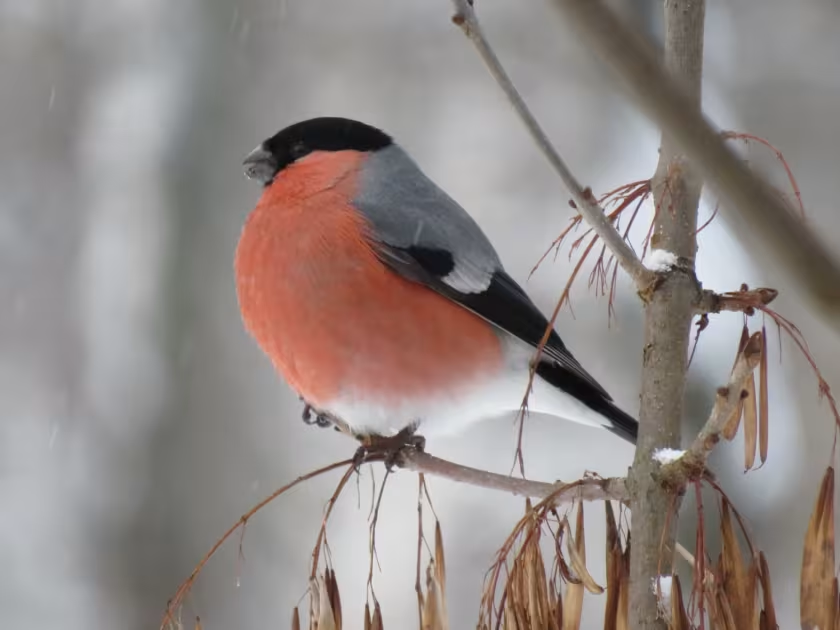
Males are easily recognized by their vibrant red breast, while females exhibit more subdued brown-grey plumage. Both sexes possess a short, thick, conical bill designed for husking seeds and buds.
During the warmer months, bullfinches inhabit dense forests, but as temperatures drop, they frequently move into gardens and orchards searching for food sources.
Their biological adaptation to cold winters makes them a potential threat to horticulture, as they shift their diet towards tree buds when other food supplies are scarce.
Understanding their seasonal migration and feeding patterns is crucial for any gardener or orchard manager aiming to preserve their fruit crops.
What it damages
Bullfinches primarily target fruit trees, including apple, pear, plum, and cherry. They specifically select and consume the nutrient-rich flower buds, which are essential for fruit production.
Beyond fruit trees, these birds can also cause damage to ornamental bushes and berry-bearing plants like honeysuckle or lilac if natural food sources are depleted.
The peak period for this damage is mid-to-late winter and early spring, before the onset of the growing season when natural vegetation begins to flourish.
A flock of bullfinches can consume thousands of buds in a relatively short period, leading to a significant reduction in potential yields for the upcoming season.
This feeding behavior not only impacts the harvest but can also affect the structural growth of young trees by removing primary apical buds.
Signs of infestation
The most evident sign of a bullfinch presence is the accumulation of bud scales and debris scattered on the ground beneath the canopy of fruit trees.
Upon closer inspection of the branches, one will observe buds that have been hollowed out or completely removed, leaving only the small, bare woody stalk.
The presence of noisy, social flocks moving through the canopy of the orchard is a clear indication that these birds are currently feeding on the trees.
Damage is often most concentrated on the outer, more accessible branches of the tree, as these provide an easier perch for the birds.
If you notice sparse canopy development or an unusual absence of buds in late winter, it is highly likely that bird predation is the cause.
Control measures
Visual deterrents are commonly used to protect orchards, such as reflective hanging objects, holographic tape, or decoy predators like hawks or owls.
For high-value fruit trees, the most effective mechanical control is the installation of protective netting over the crown of the tree to physically exclude the birds.
Implementing a diversionary feeding program by placing bird feeders with seeds or berries in distant areas of the property can successfully distract them from the orchard.
Acoustic deterrents that broadcast distress calls of predators can be utilized in larger commercial orchards to discourage bullfinch flocks from settling.
Proactive orchard monitoring during the transition from winter to spring is essential to ensure that timely intervention measures are applied before significant bud loss occurs.
Taxonomy
- Latin name
- Pyrrhula
- Family
- Fringillidae
- EPPO code
- PYRRSP
Discussion
No discussions yet — be the first.