
Lantern bug
Pyrops candelaria
Description
How to identify
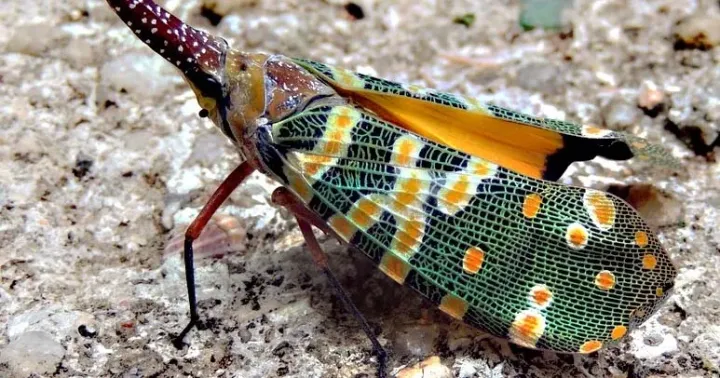
The lantern bug, scientifically known as Pyrops candelaria, belongs to the family Fulgoridae and is easily recognized by its distinctive elongated head appendage.
These insects are medium to large in size, often measuring up to 8–10 cm in wingspan, with highly colorful and patterned forewings.
The forewings are typically greenish or yellowish with numerous black spots, while the hindwings feature a bright orange base with black margins.
They possess a waxy, hydrophobic covering that protects them against desiccation in their native tropical forest habitats.
The nymphs go through several molting stages, gradually developing their wings and adult coloration while remaining on host trees.
What it damages
Lantern bugs primarily feed on the phloem sap of various tree species, with a particular preference for Longan and Lychee trees.
By piercing the bark with their specialized mouthparts, they drain essential nutrients, leading to a decline in plant vigor and health.
Severe infestations can result in premature yellowing of leaves, stunted growth of new shoots, and overall physiological stress for the host tree.
The honeydew excreted by these insects promotes the growth of sooty mold, which blocks photosynthesis and lowers the quality of the fruit.
Repeated feeding cycles can cause the bark to crack or bleed sap, leaving the tree susceptible to secondary fungal or bacterial infections.
When it appears
The life cycle of the lantern bug is intrinsically linked to the warm and humid conditions prevalent in its geographical range.
Active feeding usually peaks during the growing season when the host trees are producing fresh, nutrient-rich sap.
Eggs are laid in clusters on the trunks or main branches, covered with a protective secretion that aids in survival against environmental factors.
Nymphal development typically occurs in the months following the monsoon or heavy rain periods, matching the flushing cycle of trees.
In many regions, they exhibit a seasonal pattern of migration between host trees, driven by nutrient availability and reproductive needs.
Signs of infestation
Presence of adults on the main trunks of trees is the most visible sign of an infestation, often occurring in large, conspicuous clusters.
The accumulation of sticky honeydew on the leaves and branches below the insects is a clear indicator of a feeding colony.
A darkening of the branches due to the development of sooty mold fungi, feeding on the honeydew, provides visual evidence of long-term presence.
The discovery of discarded nymphal skins (exuviae) attached to the bark is a reliable marker for active infestation cycles.
Unusual sap leakage from bark punctures, which often attracts ants and wasps, indicates where the lantern bugs have been feeding.
Control measures
Regular visual scouting of tree trunks is essential for early detection, allowing for quick intervention before the population explodes.
Mechanical removal of egg masses during the dormant season significantly reduces the population of nymphs in the following spring.
Chemical control involving systemic or contact insecticides may be applied, though targeting the early nymphal stages is most effective.
Integrated Pest Management strategies should encourage the presence of natural enemies, such as spiders, birds, and specialized parasitoid wasps.
Maintaining tree health through proper fertilization and irrigation helps trees recover from feeding damage and makes them less attractive to insects.
Taxonomy
- Latin name
- Pyrops candelaria
- Order
- Hemiptera (bugs, aphids, leafhoppers)
- Family
- Fulgoridae
- EPPO code
- PYRSCA
Discussion
No discussions yet — be the first.