
Lycorma meliae
Lycorma meliae
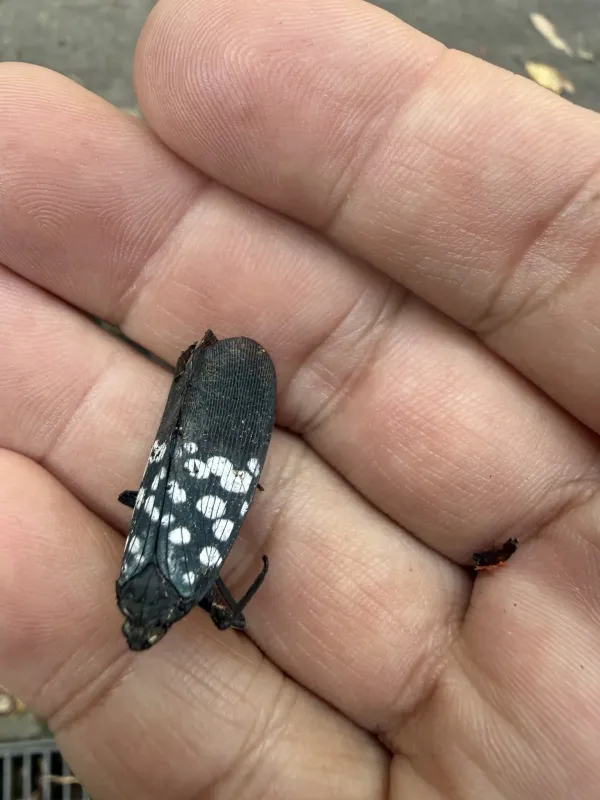
Description
How to identify
Lycorma meliae is a species of planthopper belonging to the family Fulgoridae. As a member of this group, it possesses a characteristic morphology that includes a piercing-sucking mouthpart used to feed on the xylem and phloem of host plants.
The life cycle of this insect consists of the egg, nymph, and adult stages. Nymphs of early instars are typically dark with distinctive spots, which provides them with effective camouflage against the bark of host trees.
Adults are highly mobile and capable of jumping, which serves as a primary defensive mechanism when threatened. Their size and coloration allow them to blend into their environment, making detection difficult for the untrained eye.
Understanding their taxonomy and behavior is essential for accurate identification. They are distinct from other related species, and professional entomologists rely on specific morphological features to confirm the presence of this pest.
The insect thrives in environments where its host trees are abundant. Its population dynamics are closely linked to the availability of these specific woody plants throughout the growing season.
What it damages
The primary host for Lycorma meliae is the ash tree, hence the species name. While it shows a preference for ash, its host range can expand under high population pressure, affecting surrounding vegetation.
The damage caused by this pest is primarily through direct sap-feeding. This persistent loss of nutrients leads to systemic weakness, reduced growth rates, and increased susceptibility to other environmental stressors.
Heavy infestations result in the production of large quantities of honeydew. This substance promotes the growth of sooty mold on leaves and stems, which blocks sunlight and interferes with the plant's ability to perform photosynthesis.
Prolonged feeding causes premature leaf yellowing and eventual leaf drop. In severe cases, the vitality of the entire canopy is compromised, leading to dieback of branches and, occasionally, the death of the tree.
Economic damage is significant in urban forestry and nursery settings, where the aesthetic value and long-term health of trees are paramount. The cumulative effect of sucking insects can be devastating to younger, less established trees.
When it appears
The activity cycle of Lycorma meliae is strictly correlated with the phenology of its host plants. Egg hatch typically occurs in the spring, coinciding with bud break and the beginning of active sap flow in trees.
Summer marks the peak of adult activity, during which the insects are most active in feeding and mating. During this period, the insects are more visible on the trunk and primary branches of the host tree.
By autumn, the adults focus on reproduction and oviposition. The eggs are laid in clusters, often protected by a grayish, waxy secretion, which ensures their survival throughout the winter months until the next season.
Warm and temperate conditions favor the development of the nymphs during the spring. Monitoring weather patterns helps in predicting the timing of egg hatch, which is critical for implementing timely control measures.
Once winter sets in, the population enters a diapause state as eggs. This overwintering strategy allows the species to persist even in regions with cold winters, making early spring intervention highly recommended.
Signs of infestation
A primary indicator of infestation is the presence of sticky honeydew on the leaves and bark. This substance often attracts ants and wasps, which can serve as a secondary sign of the pest's presence in the tree canopy.
The appearance of sooty mold, a black, velvet-like fungal growth, on the surfaces of leaves is a clear sign that the tree has been subjected to a long-term infestation of sap-sucking insects.
Yellowing, curling, and early wilting of leaves during the peak of summer, despite adequate soil moisture, often point to heavy feeding by Lycorma meliae nymphs or adults on the shoots.
Visible egg masses on the bark of trees are a definitive sign of an established population. These masses appear as flat, mud-like smears that are often overlooked by casual observers.
Gradual thinning of the canopy and lack of annual terminal growth are symptoms that indicate the tree is struggling due to the energy depletion caused by the pest's activities.
Control measures
Integrated Pest Management (IPM) is the most effective approach to handling Lycorma meliae. Mechanical control, such as scraping off egg masses in late winter, significantly reduces the population for the upcoming season.
Chemical control involving systemic or contact insecticides can be effective if applied when nymphs are small and highly vulnerable. Targeting the early stages is crucial to preventing population explosions.
Biological control, such as encouraging natural predators or utilizing entomopathogenic fungi, is being researched as a sustainable way to keep populations in check without widespread chemical usage.
Quarantine and strict movement regulations of nursery stock and wood materials are essential to prevent the spread of this pest to non-infested areas, as human activity is the primary vector for long-distance dispersal.
- Installing sticky traps on tree trunks to capture nymphs during their upward migration.
- Maintaining tree health through proper fertilization and irrigation to improve resilience.
- Regular canopy scouting during the growing season to detect early infestation sites.
Taxonomy
- Latin name
- Lycorma meliae
- Order
- Hemiptera (bugs, aphids, leafhoppers)
- Family
- Fulgoridae
- EPPO code
- LYCMME
Discussion
No discussions yet — be the first.