
Palm bug
Asarcopus palmarum
Description
How to identify
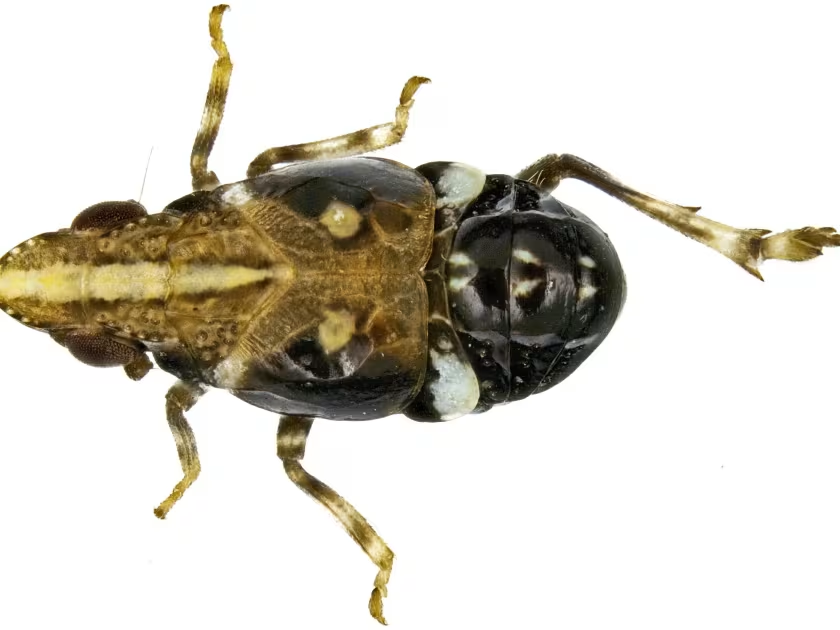
The palm bug (Asarcopus palmarum) is a member of the order Hemiptera and the family Dictyopharidae. Adults are characterized by their elongated shape and a distinct head projection that distinguishes them from other insects found on palm trees.
The coloration of this bug ranges from light brown to yellowish-gray, allowing it to blend seamlessly into the texture of palm bark and leaf stalks, making it difficult to detect with the naked eye.
Measuring between 10 and 12 millimeters in length, these bugs have wings that are folded flat against their bodies, giving them a sleek appearance when resting on the plant surface.
Nymphs are smaller versions of the adults but lack developed wings. They tend to hide deep within the crown or at the base of the petioles, where the microclimate is more stable.
They possess a piercing-sucking mouthpart designed specifically to penetrate the tough vascular tissues of palm species to reach the nutrient-rich sap.
What it damages
The primary host of Asarcopus palmarum is the date palm (Phoenix dactylifera), though it can affect various decorative palm species found in ornamental landscapes and nurseries.
The pest feeds by extracting sap from tender tissues, which leads to nutrient loss and interferes with the normal growth and development of the palm’s fronds.
Heavy infestations lead to the formation of chlorotic spots, which eventually coalesce, causing the leaf tissue to become necrotic and brittle, negatively impacting the tree's overall vigor.
In addition to direct feeding damage, the wounds created by the bug's mouthparts serve as entry points for secondary pathogens, such as fungi and bacteria that cause crown rot.
In high-density populations, the bug causes severe stunted growth, loss of foliage, and in extreme cases, the decline of the tree, especially in young or stressed palms.
Signs of infestation
The first signs of an infestation often include yellowing leaves and a lack of luster, which suggests that the plant is struggling to transport water and nutrients efficiently.
The accumulation of honeydew on the leaf surfaces, produced by the bugs during feeding, promotes the growth of sooty mold, which appears as a dark black film on the palm fronds.
Visible scarring and small, circular puncture marks on the petioles and leaf bases are clear indicators that a population of these insects is actively feeding on the tree.
If the crown of the palm appears sparse or shows premature leaf drop, it is a strong indicator that the vascular system has been compromised by prolonged feeding.
Finding cast skins (exuviae) of the nymphs near the base of the fronds is a reliable sign that the pest is completing its life cycle on the host plant.
Control measures
Strict phytosanitary measures are essential to prevent the spread of this pest, particularly through the movement of contaminated nursery stock between different regions.
Chemical control usually involves the application of systemic insecticides that are absorbed by the palm, providing protection against sap-feeding insects over a sustained period.
Cultural practices, such as the regular pruning and disposal of dead or damaged palm leaves, help to eliminate potential harborages for the bugs.
Biological control strategies, involving the introduction or encouragement of natural predators, can effectively manage bug populations in integrated pest management programs.
- Systematic monitoring using sticky traps in the palm canopy to detect early populations.
- Targeted insecticide treatments focusing on the leaf bases and the crown area.
- Maintaining optimal soil health and hydration to help palms resist and recover from insect damage.
Taxonomy
- Latin name
- Asarcopus palmarum
- Order
- Hemiptera (bugs, aphids, leafhoppers)
- Family
- Fulgoridae
- EPPO code
- ASARPA
Discussion
No discussions yet — be the first.