
Lycorma imperialis
Lycorma imperialis
Description
How to identify
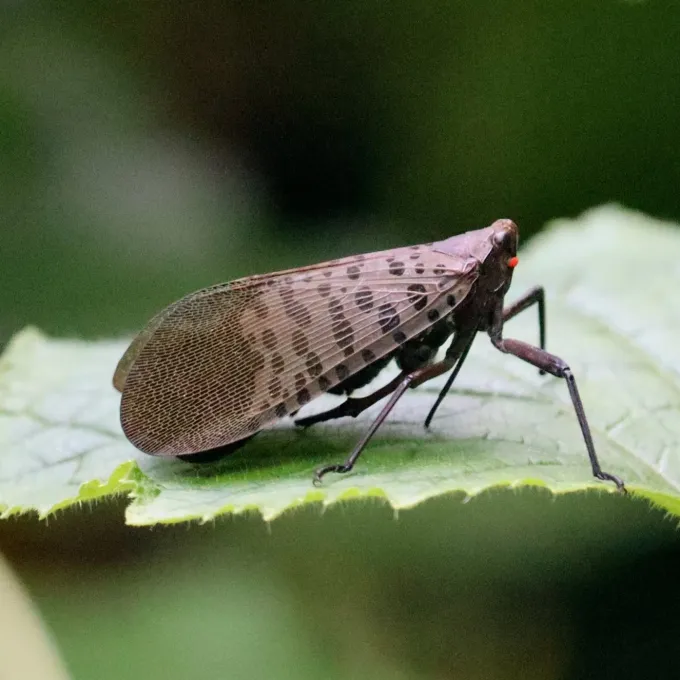
Lycorma imperialis belongs to the Fulgoridae family within the order Hemiptera. The adult stage is characterized by distinctively colorful wings and a prominent head process typical of planthoppers.
The insect undergoes hemimetabolous development, passing through egg, nymph, and adult stages. This cycle is influenced by seasonal environmental factors, primarily temperature and host availability.
Eggs are typically laid in clusters on bark or solid structures and are often encased in a protective secretion that hardens to shield them from extreme weather.
Nymphs go through several instars, changing appearance and size before reaching the adult stage, which allows them to effectively colonize new host plants.
Due to its specialized feeding habits, identification focuses on inspecting preferred host trees during peak seasonal activity windows.
What it damages
Damage is caused by both nymphs and adults using piercing-sucking mouthparts to feed on the xylem and phloem sap of young twigs, leaves, and tree trunks.
The pest targets a diverse range of host species, including fruit trees, various decorative woody plants, and specific forest tree species.
Heavy infestations lead to significant plant stress, stunted growth, reduced vigor, and in severe cases, branch dieback or the death of younger trees.
A major indirect impact involves the secretion of honeydew, which fosters the growth of sooty mold, blocking light and hindering the plant's photosynthetic capacity.
Seedlings and young nursery stock are particularly vulnerable to sap loss, making early intervention critical for preventing long-term damage.
When it appears
The insect overwinters as eggs deposited on tree trunks or inanimate surfaces, with hatching typically occurring in early spring as temperatures rise.
Nymphs emerge just as buds break and sap begins flowing, providing the necessary nutrients for their initial development and rapid growth.
Adult activity peaks in late summer and early autumn, a period marked by active feeding and dispersal of the population to new nesting sites.
By late autumn, adults focus on mating and egg-laying, ensuring the survival of the next generation through the winter months.
Monitoring efforts should align with these life cycle milestones to ensure the highest success rate in detecting and treating infestations.
Signs of infestation
Presence is frequently signaled by the accumulation of sticky honeydew on foliage, which eventually promotes the growth of black sooty mold.
Visual detection of greyish or clay-like egg masses on the bark of susceptible trees serves as a primary warning sign for property owners.
General plant decline, including leaf yellowing and premature leaf drop, often points to chronic sap depletion by high insect populations.
Observation of insects congregating on tree trunks, especially during the quiet hours of dawn or dusk, confirms active colony presence.
The presence of sooty mold on the understory plants or soil beneath tree crowns is a secondary indicator of high pest density above.
Control measures
Mechanical destruction of egg masses during the dormant winter season is considered the most reliable method for reducing the population size.
Systemic or contact insecticides are recommended during the nymph stage to mitigate impact, provided they are applied according to local agricultural regulations.
Sticky bands installed on trunks can effectively intercept moving nymphs as they travel upward to feed on the tender growth of the crown.
Quarantine measures for moving nursery stock are vital to prevent the unintentional spread of this pest into non-infested regions.
Integrated Pest Management (IPM) practices, emphasizing biological controls and habitat management, provide a sustainable approach for long-term population suppression.
Taxonomy
- Latin name
- Lycorma imperialis
- Order
- Hemiptera (bugs, aphids, leafhoppers)
- Family
- Fulgoridae
- EPPO code
- LYCMIM
Discussion
No discussions yet — be the first.